Welcome to BookView Interview, a conversation series where BookView talks to authors.
Recently, we interviewed Davidson Loehr about his writing and his recently released book, Hollow Gods: Why Liberalism Became a Destructive Religion, a meticulously researched, thorough critique of the American left. (Read the review here.)
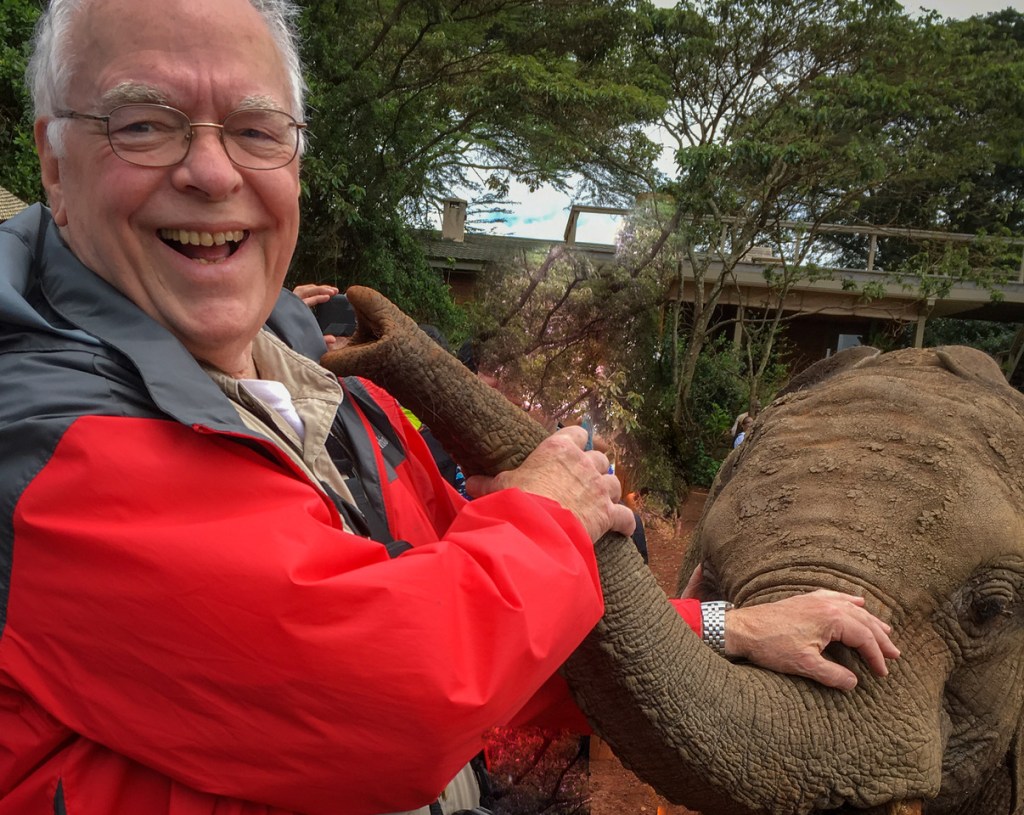
Davidson Loehr is a Renaissance Man—or just someone who never grew up. A professional musician from ages 16 – 21, playing clarinet, alto and tenor saxophone in rock ’n roll combos, Dixieland, jazz, and dance bands, before enlisting in the Army at 21. He wanted the best and most challenging experiences he could get, and all of his jobs during that 43 months came from arranging interviews with Colonels, convincing them that the Army could get more of its money’s worth out of him doing it his way. It worked every time.
While in Germany, he attended the 7th Army NCO Academy in Bad Tolz, which was the Army’s best, held in the building that had been General Patton’s WWII headquarters. Then after nine months in Germany, back to the States for six months in Artillery Officer Candidate School: another excellent and challenging experience. After OCS, nine months as Assistant Brigade Adjutant for a 4,500 man training brigade. Sent to Vietnam, another interview, which made him the Vietnam Entertainment Officer, with the small office that handled all USO shows that toured the country except the Bob Hope show (which was so big it had its own office), working with some childhood heroes, like Roy Rogers, Dale Evans, Martha Raye, Jennifer Jones, Arthur Godfrey, and Jimmy Boyd. But after a few months, when an OCS classmate was awarded the Purple Heart and Silver Star, his cocky little world came crashing down. Now he saw war as an archetypal event, this as his only chance to experience it, and felt that if he returned home without having experienced war, he wouldn’t want to live with himself. So after the next arranged interview, he served his final seven months as combat photographer and press officer with the 11th Armored Cavalry Regiment in Xuan Loc. He also got to know Co Rentmeester, LIFE Magazine’s Vietnam War photographer, and convinced him to shoot a photographic feature on the Black Horse Regiment (11th Armored Cavalry—in the June 2, 1967 issue). Those seven months remain sacred for him; the first five months, merely a whole lot of fun.
In August 1967, after returning from Vietnam, like many vets, he was a little lost for about a dozen years. He completed his degree in music theory at the University of Michigan, then did Master’s work at North Texas University to learn jazz arranging. But for him, music wouldn’t be a fulfilling career. So he spent time studying with half a dozen of the best people-photographers in the country, then owned a high-priced portrait and wedding photography studio in Ann Arbor.* But that also got boring, so he sold the studio and learned carpentry and woodworking until he decided woodworking made a better hobby than profession.
What, then? Surely not religion! He was through with religion at age six, when he decided it was a dishonest and irrelevant subject. But thirty years later, he grew to realize that if it could be done honestly, it could be challenging enough to fill a lifetime. He still wanted the best—and so, an M.A. in “Methods of Studying Religion” and a Ph.D. in theology, philosophy of religion, philosophy of science, and Wittgenstein’s “language philosophy” from the University of Chicago, then a year as a staff hospital chaplain and 23 years as a Unitarian minister, retiring in 2009. He has been a Fellow in the liberal Jesus Seminar since 1992. And in 2014, he joined a new group, the International Big History Association (IBHA), where he has presented papers and written a chapter for their 2022 book, Science, Religion, and Deep Time. Davidson’s chapter is on “The Nature of Humans, Science, and Religion.”
Website: https://atmospherepress.com/books/hollow-gods-by-davidson-loehr/
Because of its critical nature, do you think liberals or conservatives have more to learn from Hollow Gods?
Conservatives will be more likely to like the book, because of its searing critique of liberalism. But if liberals can see how seriously and dangerously they have been betrayed by the kind of politicians George Soros is paying to back, there is a chance for a revolt within the Democratic party, a chance to tell the difference between real, healthy Democrats and the destructive and deadly socialists who live only to see the America we have loved die.
Religion is a huge theme in Hollow Gods, and your educational background is in religion and philosophy. When did your interest in studying religion begin, and what fueled it?
Ha! I was through with religion when I was six! I thought it was just a dishonest bunch of crap (that’s another story). It wasn’t until I was 20 that I finally heard a bright, honest, relevant and gifted preacher. I didn’t know such creatures could exist. His name was John Wolf, and he was the minister of the biggest Unitarian church in the country—in Tulsa, Oklahoma. I realized that, while bad religion is a bad thing, if it’s done honestly and deeply, religion can open the doors to our deepest and most important levels of identity, duty, and behavior. It isn’t a coincidence that some version of the Golden Rule is found in almost every religion on Earth. That rule, that caring, fair, and reciprocal behavior is in our genes. It predates our species and can be found in many hundreds of (especially) social species, as we can see in hundreds of YouTube videos of many animal species. Eons ago, we projected those behaviors onto our gods and religions for safekeeping. Some of this is easier to see with a lot of the Greek gods, who are so clearly projections of psychological and natural forces.
I enlisted in the Army when I was 21, then after my 43 months there, finished my undergrad degree in music theory … and became lost. I had been a combat photographer in Vietnam, and learned that I had a pretty good “eye” for photography. So I went around the country studying with some of the best “people” photographers, and opened a high-class and high-priced portrait and wedding photography studio in Ann Arbor around 1971. I was gifted, and won the only contest I ever entered, winning First Place over 900 other professional portraits submitted in the statewide contest at Cobo Hall in Detroit. I still have a dozen or so of the big prints I had on the studio walls, on the walls in my house, and am almost amazed at how good I was!
However, by 1976, I was bored to death, sold the studio and taught myself carpentry and earned sort of a living with that for a few years. But I was lost. I knew I needed a profession that fed the world but also fed me, and photography could only score .500. I took a whole series of tests from a psychologist who worked with “people in their mid-30s considering a career change” (since that’s how old he was when he decided to go to graduate school and earn a Ph.D. in psychology). He said my interests and aptitudes matched those of people who were successful and satisfied in eight different fields! Crap! I said I wanted the One field. He said there wasn’t just one and never would be. He said to study these eight, read a little about them. I would need the most challenging and potentially fulfilling, and he was pretty sure it would involve a few years in a relevant graduate school. Crap.
I had done almost all of the eight in one form or another: photography/art, teaching, woodworking/carpentry, music, a couple others. But one of the eight surprised the hell out of me: Religion. It had been 16 years since I left that large Unitarian church in Tulsa. I called John Wolf. We had had a good relationship back then. I told him my situation, and said I was thinking of going into this religion racket. “Why?” he asked. Well, because I think if it’s done well, it could help people answer what I believed were the two most important questions in life: Who, at my best, am I? and How should I live, so that when I look back I can be glad I lived that way? “That’ll do,” he said. But John, the problem is that I don’t know a damned thing about religion, and I hate being ignorant, especially if it’s to be my career. I needed to understand this religion business pretty deeply. I needed the best Ph.D. education in the country. Where should I go, John?
In one of the most memorable exchanges of my life, John said, in his Tulsa drawl, “Well, that’d be the University of Chicago.” Oh. I didn’t know Chicago had a university. A few seconds of silence, then “Jeezus Christ! I’ll tell you what to do. Call information in Chicago. If the university exists, go there!” I did, it did, so I did. And it was exactly what I needed. After a year as a hospital chaplain in downtown Chicago (while writing my dissertation) and 23 years as a Unitarian minister, I know it was exactly the right profession for me. Religion, understood well, can ask the deepest questions and uncover the most demanding and life-giving answers that exist.
Do you feel that churches or other religious bodies could learn something from reading Hollow Gods, in addition to readers particularly interested in its political implications?
Absolutely. They could learn how to talk about religion in ordinary language, and find that it becomes more universal and appealing, as well as easier to understand.
What philosophers or writers do you like to read? What book or books have had a strong influence on you or your writing?
My Ph.D. dissertation was titled The Legitimate Heir to Theology: A Study of Ludwig Wittgenstein. I’ve read all of Wittgenstein’s books and studied with his most influential student, Stephen Toulmin. Wittgenstein taught that if you can’t say what you mean in ordinary language, you don’t really know what you’re talking about. I think that’s especially true in religion, and in politics.
Were your parents interested in literature? Did they read a lot? What books did you have in the house?
This was a surprising question! As I think back on it, there were hardly any books in our houses. That really stunned me. But no, my literary and intellectual mentors were a handful of great teachers (and, of course, John Wolf). I was lucky to be able to study with a bunch of really good, world-class professors at University of Chicago, and several of them had deep and powerful influences on me. I have been a Fellow in the very liberal Jesus Seminar since being asked to become one in 1992, and in 2014 I joined the pretty exciting International Big History Association, and have been a regular presenter and was asked to write a chapter for our 2022 book Science, Religion, and Deep Time. My modestly-titled chapter shows, at least, the breadth of my concerns and studies: “The Nature of Humans, Science, and Religion”.
What was an early experience where you learned that language had power?
John Wolf’s sermons, when I was 20-21. Reading Shakespeare and a few other great writers. Reading some of Wittgenstein’s best stuff. Here’s an example of Wittgenstein’s distinctive brilliance and power:
Imagine this game — I call it “tennis without a ball”: The players move around on a tennis court just as in tennis, and they even have rackets, but no ball. Each one reacts to his partner’s stroke as if, or more or less as if, a ball had caused his reaction. (Maneuvers.) The umpire, who must have an “eye” for the game, decides in questionable cases whether a ball has gone into the net, etc., etc. This game is obviously quite similar to tennis, and yet, on the other hand, it is fundamentally different.” (Last Writings on the Philosophy of Psychology, vol. I, p. 110. [“The philosophy of psychology” was Wittgenstein’s term for epistemology])
As the back cover of Hollow Gods states, you are a lifelong liberal; yet you decided to write a thorough critique of the American left with this book. What led you to decide that you needed to write a book on this topic? Was there a straw that broke the camel’s back, so to speak?
Good question. There are now two “Democratic” parties. One is still the old liberal party. But the other is the Marxist socialist party. Unfortunately, it has taken over the Democratic party, speaks for it and pulls President Biden’s puppet strings. Unlike all real Americans, it doesn’t want to make America great, doesn’t want it great at all. The sole aim of the socialists is to destroy our capitalism and democracy, impoverish and disempower the country, reduce education to indoctrination, replace the goal of excellence with mere mediocrity: equity. They have succeeded in this. Our students rank quite low compared with all XXXXXXXX nations. In fact, virtually everything the “Democrats” are doing is dictated by that socialist agenda. Why does the government want us to use electricity rather than gas? There is no climate crisis. It has been called the biggest hoax in human history. The planet has always been, and is, self-regulating. But the climate change hoax is a brilliant cover for spending the entire economy into bankruptcy, lowering citizens’ net worth, and the rest.
These things have been recognized by many others, though I’m not aware of others identifying everything the “Democrats” are doing as straight brutal socialism, with the sole goal of dumbing us down and making us dependent on the government for more and more necessities. So, why will we be pushed into electric cars, electric stoves, with the government monitoring our thermostats? Because the first rule in totalitarian governments (the Democrats are calling it “one-party rule”) is obedience. And when we disobey, the government can and will turn the electricity down or off.
So it isn’t as simple as criticizing/exposing the political left. We are perhaps 60-80% solidly socialist now, and another four years of the Marxist socialist rule will cement our socialism: a form of government which has never worked. In fact, studies have estimated that the twenty or so socialisms of the past hundred years have murdered at least 170 million of their own citizens. This isn’t just an intellectual or political issue. It’s a question of destruction or survival.
Is there a chapter in Hollow Gods that you had particular enjoyment writing? If so, why that chapter?
Maybe 3, 6 and 7. In Chapter 3, speaking in the royal “We” made it vividly, almost hilariously, obvious how narcissistic, unrealistic, and downright silly “we” liberals have been to believe that we can substitute our special knowledge and wisdom for that of the omniscient but mythical God. Researching and writing Chapter 6 made me far more aware than I had been of the nature, the insult, and the harm that liberal racism has done and continues to do. Whites started it when they had lost the respect they had long enjoyed as the brightest, wealthiest (etc). The sad and repulsive irony is that by treating blacks as permanently inferior, they have dehumanized them. Shelby Steele’s saying that we have turned blacks into “pets” and “Sambo” dolls hurt just to read it, and hurt more deeply as I could observe examples of white liberals setting blacks up as spokesmen for the liberal ideology—Hakeem Jeffries, as the most flagrant example.
And I liked the little Chapter 7, making some distinctions that are important and perhaps surprising. What do we mean by a “human”? WHAT ARE THE OTHERS??
What do you hope readers will take away from reading Hollow Gods?
A lot:
An understanding of how liberalism’s (at least socialism’s) destructive lostness came from shrugging off God and religion but being unable to find deep, broad and noble replacements. When liberals began playing God, without the wisdom of a god, they began two centuries of narcissism and sociopathy.
How liberals, but especially the Marxist socialists posing as Democrats, have destroyed K-12, college, and graduate school education in the US and replaced it with indoctrination into the socialist mindset and an absolutely mediocre, stunted kind of miseducation centered on the idea that only the ideals of the far
Left are counted as good, and contrary opinions must be fought, shouted down, and destroyed. We read of this occurring on college campuses every week. The students believe there is only that one answer, and they were not taught to question it, or to earn the right to criticize those who disagree with them (something I learned from Wittgenstein’s student Stephen Toulman.)
How this simple-minded ideology created journalistic news media that sees itself as a bullhorn for the ideology of the far left.
How this same mindset had contributed to the adversarial political picture we have, where Democrats can actually admit they intend to establish “one-party rule”, then disempower and crush those “MAGA Republicans” who still want to make America great again.
How Liberal racism is doing such harm to, especially, black people, reinstating a culture where race is destiny and the blacks are identified as permanently inferior, what author Shelby Steele has called the act of liberals turning blacks into “pets” and “Sambo dolls”.
How this faux liberal socialism has shallowed and narrowed religion so much it can no longer envision beings or a society and world that are capable of becoming well-developed intelligent and superior beings.
Finally, why we should no longer vote for Democrats or give them power that they are guaranteed to misuse—even while realizing that they have essentially already won, and—for at least the next generation—we’re screwed.
***
 BookView Review
Leave a comment