Welcome to BookView Interview, a conversation series where BookView talks to authors.
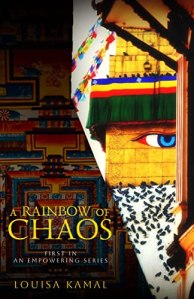
Recently, we interviewed Louisa Kamal about her book, A Rainbow of Chaos: A Year of Love & Lockdown in Nepal, an insightful memoir about finding love and happiness during the COVID lockdown. (Read the review here.) Louisa has spent over half of her life living and working in Asia—Thailand, Japan and now Nepal.
A native of Manchester, UK, and a holder of a Master’s degree in English literature from the city’s university, Louisa Kamal has spent over half of her life living and working in Asia—Thailand, Japan and now Nepal. Often referred to by friends as the builder of ‘cultural bridges’, Louisa is passionate about both preserving and promoting understanding of traditions and rituals, especially those associated with Tibet, which she first visited in 2012. A winner of various awards for haiku and short stories, A Rainbow of Chaos is her first full-length book. Louisa currently lives in Kathmandu with Arjun and their dog, Maya, enjoying trekking, badminton and photography in her free time.
Facebook: Louisa Kamal: Writer & Photographer (https://www.facebook.com/LouisaKathmandu)
Website: https://louisakamal.com
Instagram: @louisakamalwriter
When did you realize you wanted to write a memoir about your experiences living in Nepal?
Initially, it was not a conscious choice at all! When I realised a few days before the actual introduction of lockdown in Nepal, on 24 March 2020, that I was, quite literally, trapped here for an unforeseeable length of time, I knew that I had to structure my days somehow, give them a pattern and a purpose. And so I started on a routine of walking around the streets of Thamel, the tourist hub of Kathmandu, every morning during the time permitted for locals to shop for essentials, recording all that I saw both visually, through my camera lens, and mentally. The rest of the day was then mostly spent in lightly editing the best of the morning’s images and writing a diary in which I blended my own experiences with the facts and figures for COVID-related issues in Nepal. After a couple of months of meticulously doing this, by which time the pivotal shift in the relationship between Arjun and me had also occurred, I realised that I wanted to do more than simply write a record for myself: I wanted to share it. So the idea of turning my notes and memos into a book gradually emerged.
Did writing this memoir help you process things you hadn’t realized you needed to process more fully? If so, what was that experience like?
Let me answer the opposite question first, if I may: did it help me process things that I had realised needed processing? That answer is a resounding ‘yes’, especially where the myriad emotions that overwhelmed me in the days leading up to the imposition of lockdown were concerned. Everything happened unbelievably quickly, at a speed that was exponentially fast, until the eerie lull after the storm fell once lockdown had actually been imposed: at that stage, I had no option but to resign myself to what had happened. Consciously journalling everything, step by step, was an enormous aid to processing and, ultimately, accepting everything.
As for helping me to process things that I hadn’t realised needed processing, I think that paramount here is the breakdown of my marriage and the ethics of loving and living with a person while still being legally married to someone else. The issue is extremely complex and delicate, of course: I have many friends who, until they read the book, had no idea of all the emotional baggage that I had, and therefore ‘outing’ myself in print was quite scary in that respect. I am still grappling with this issue—and it is one which will come progressively more to the fore in the sequels, as my fight for a divorce and just division of assets becomes increasingly tortuous and stressful—but I am now aware that writing it all down is, in the end, a way of making peace with myself and, even if he does not accept it, also with my ‘ex’.
How did you decide what anecdotes or details to keep in the book? Were there any details that you wanted to include but had to cut out?
Apart from two issues, I found the choice of what to include in the book or not relatively easy. Those two issues were how to portray the intimate side of my relationship with Arjun; and whether or not to be explicit about my age. In the case of the former, one of my two beta readers, a friend from school days, advised that ‘less is more’ in such cases and so I toned down what I had already written and followed that personal guideline for future chapters. It is a decision that I have not regretted at all and I hope that readers are comfortable with my approach. As for whether to reveal my age—or, more specifically, the exact age gap between Arjun and myself—I turned to my subject editor at Atmosphere Press for advice. She recommended me to keep matters as I had written them—that is, making it clear that there is a considerable age gap but not going into any more detail than that. She felt that to do otherwise would be to possibly cause a negative and unnecessary shift in the readers’ focus: after all, if this all-too-often contentious issue of an older woman-younger man relationship is not an insurmountable obstacle to Arjun and me, why should I allow it to dominate the reader’s mind in any way?
What was the most difficult thing about writing A Rainbow of Chaos? What about the most rewarding thing?
Undoubtedly, one of the most difficult things was having the determination and motivation to continue: to continue writing; to continue sending it to publishers who either rejected it or remained persistently silent; to continue with the endless rounds of proofreading once it had been accepted by Atmosphere Press; to continue to push for the layout designs that I wanted. There were countless occasions on which I felt like giving up, on the premise that it wasn’t good enough; that no one was going to want to read it; that it was all just a massive waste of time and energy. But I did continue every time I felt like stopping, and that’s when the real magic moments occurred: seeing my photograph transformed into a stunning cover design; branding myself with the help of my Nepal-side designer through a beautiful lotus—kamal—logo; holding the proof copy of the book in my hands and feeling quite overcome by the weight of all the emotions and experiences it contained. I have no regrets whatsoever!
You have lived in many places throughout your life, both in the UK and Asia. What’s one thing you would tell someone who’s thinking about a move to a different country?
In short, ‘embrace the culture’! In that single, simple phrase, myriad related matters, like respect, understanding, immersion, and open-mindedness, are embedded. When I went to live abroad—in Bangkok, Thailand—for the very first time, the most important decision I took within my first fortnight there was not to apply for membership of the British Club. Yes—not to apply. It was exceedingly tempting to do so: I was desperately homesick and was finding it difficult to adjust to a whole range of issues including the climate and food, both of which were extremely hot! And yet, somewhere deep inside me, a voice was saying, ‘Why come here if you want to try to replicate life back home?’ Since then, whether in Thailand, Japan or now here in Nepal, I have studiously avoided becoming a part of ex-pat communities per se. If I meet and genuinely like fellow foreigners, all well and good. Otherwise, I find and treasure friendship on whatever level with locals; shop primarily in the neighbourhood markets; and endeavour to blend in with the community in which I live as much as possible in terms of dress, manner, language and habits. Not to do so is, in my opinion, not only tinged with arrogance but also to miss out on so many of the enriching experiences that living cross-culturally has to offer.
What do you hope readers will take away from A Rainbow of Chaos?
From the comments and feedback I have received so far, it seems that different readers take away different things, different elements from the book. Inevitably, for most readers it will, of course, evoke memories of their own particular experience of COVID-19, as the pandemic was something that affected everyone on our planet, to one degree or another. From that shared baseline, readers have highlighted a range of things which spoke to them most strongly: the struggle and determination to find joy and light in the midst of so much darkness—the rainbow in the chaos; the inspiration that I gave them to pursue their own goals, however unconventional; and even, in one case, the problems inherent in having a partner who is much less motivated and disciplined than oneself. I am more than happy to learn that A Rainbow of Chaos can speak to readers in such diverse ways.
A Rainbow of Chaos is described as “the first in an empowering nonfiction series.” Where do you envision the series going from here?
I am currently in the process of writing the sequel, Rainbows in the Eyes, while simultaneously living through what is destined to become the basis of the third book in the series. One of my major concerns is how to maintain the reader’s interest, how to distinguish the sequels from the original. After all, Rainbows in the Eyes will pick up where A Rainbow of Chaos left off, and 2021 plunged both Nepal and me into an even worse phase of COVID than that which we had struggled through the previous year. Right now, I am trying reinvent the flashback technique which was the basis for A Rainbow of Chaos, using it in the sequel to provide insights into the earlier stages of my life, and thus enabling the reader to gradually learn more about what has made me the person I am today. As for the third book—right now I am thinking of abandoning my original working title of For Every Storm, A Rainbow in favour of Swallow the Sunset, Drink the Rainbow—the mood will become increasingly dark as my fight for legal freedom grows ever more tumultuous and distressing. Will there be more than a trilogy? Impossible to say at the moment: a lot depends on my readers, but I really hope so!
***
 BookView Review
Leave a comment