Welcome to BookView Interview, a conversation series where BookView talks to authors.
Recently, we interviewed David A. Collier about his writing and his recently released novel Earth’s Ecocide: Desperation 2647, an exciting, often unsettling SF tale about environment, family, perseverance, and tenacity. (Read the review here.)
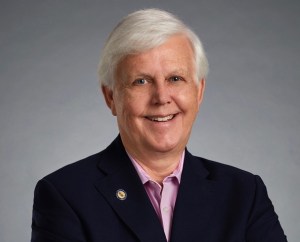
David A. Collier earned his PhD from The Ohio State University. For forty-one years, he taught all levels of students as well as participants in executive programs within the business schools of Duke University, the University of Virginia, The Ohio State University, Florida Gulf Coast University, and The University of Warwick in the United Kingdom. His research has attracted over 37,000 reads and 4,000 citations. After decades of authoring award-winning research articles, business cases, and five college textbooks, he wanted a new challenge: writing novels that make a difference. David is the author of a science fiction series (www.theentity.us), Earth’s Ecocide, as well as Romance in My Rambler using the pen name David A. Bourbon.
Twitter: https://twitter.com/AChampoid
LinkedIn: https://www.linkedin.com/in/david-a-collier-371205205/
Website: https://www.theentity.us
The prose and story in Earth’s Ecocide: Desperation 2647 is backed by a good amount of science. How did you conduct that research before diving into the writing?
My undergraduate degree was a Bachelor of Science in Mechanical Engineering. I spent most of my early academic years reading math and science and astronomy. My favorite college engineering course was thermodynamics. We studied how the heat shield on the Mercury space capsule worked. I find it ironic that the study of heat intrigued me as a twenty-year-old college student. Now I write science fiction novels about Earth’s sequestering of heat and the long-term consequences. Being retired, I read every day at least one article on astronomy, artificial intelligence, global warming, or genetics. I’m always reading and pondering our future.
Oh! I have many hours of research on the technical background of my novels. Science content in science fiction doesn’t need to be perfect, just believable, and that requires content knowledge and attention to detail.
Why did you decide to write in this genre to support your mission statement? Can you talk about the strengths of fiction over nonfiction to communicate a social message?
Science fiction is the only way to propel the reader into the future. We as a species have no idea how special we are in the universe, no idea at all! And Earth’s rare, balanced, fragile, and priceless biosphere is an absolute jewel in the universe. I marvel every day at the diversity, strength, and perseverance of Earth and the life on it—it never quits.
Fiction can help establish that emotional connection between people and humanity and Earth’s biosphere. A champoid™ is a person who champions our humanoid species and supports and protects Earth’s biosphere. I discuss this issue in my author’s note in Earth’s Ecocide: Desperation 2647. Facts and technical data, like my research and textbooks, do not create an emotional connection for most people. Fiction is the best way to create champoids and speed up solutions for mitigating and controlling AI and climate destruction. Champoids will push for AI and climate related laws and regulations to enhance our survival.
Before writing fiction, you wrote nonfiction in the form of research articles and textbooks. What did you learn from that writing style that you carried into your fiction writing?
Wow! Very different! That’s why I wanted to write novels, a new challenge. It’s the difference between night versus day. For example, can you find the ‘emotion’ in our 776-page textbook, Operations and Supply Chain Management (Cengage)? Or any of my research papers? My answer to the second query is I learned attention to detail matters in novel and textbook writing. In both space-time arenas, readers will catch the errors, inconsistences, and weak logic.
How did you develop the characters in Earth’s Ecocide: Desperation 2647?
I wanted the dominant characters in the novel series to be smart strong women. In 2647, Vela Paris is a single mother (husband died in a scuba accident) raising a daughter, Livia, and son, Kutter. In 2147, it’s Mattie Hickory and in 3147 it’s Ula Torg.
Further, I wanted intelligent robots to play a key role in the stories, so in 2647, NILA is the family home comfort robot. This allows me, the author, to explore and compare robot thinking and behavior to human capabilities.
In 2147, it’s two intelligent farm robots, ATTICUS and ETHEL, who see no purpose in the family’s pet goat, named Titan. He only eats weeds. In 3147, it’s robots, JORT, ATO, BOT, STX, and Imperium robot warriors and NAIT8. Notice that robots play a larger role in each story as we go from 2147 to 2647, and 3147. With the help of climate destruction, the Imperium robot society eradicates humans from Earth during a ‘last battle’ in 3147.
In addition, I wanted young people to play a key part in each story, and hopefully attract young readers. In 2147, Ethan is 10 and Jillian Hickory, his sister, is 8 and the voice of the cryptic orb. Jillian is present in all series novels as the voice of the enigmatic orb. Livia is 17 and her brother is 22 in 2647. In 3147, Yot Torg and Koa Poland are in their late twenties, while Ilo and Qan Torg are 8 and 16 years old.
I also had fun writing about the pet goat, Titan, in 2147, and a police dog named Jax in 3147. By the way, the goat and doggie never get hurt at my wife’s insistence! Her love for dogs and cats is beyond belief! I have learned much by watching our doggies, my wife, and myself falling in love with our pets. What level of consciousness is required to love? And contrast the pet’s ability to love with the robot’s ability to love. And does a doggie have a soul? How about a robot? I bring up such issues in the novel series, but the reader must ponder, and maybe answer, such profound queries for themselves.
What was an early experience where you learned that language had power?
In my early years, I read and studied only science and math. But somehow (don’t remember) in college (probably a course), I read Mein Kampf (My Struggle) by Adolf Hitler. All I can remember now is that the book shocked me, and I learned of the power of the written word. I’m a futurist, not a history buff, so others can better explain the impact of that book on humanity.
What authors do you like to read? What book or books have had a strong influence on you or your writing?
My response to an earlier question answers most of this question. I’ve read H.G. Wells and Ernest Hemingway’s novels, and of course, everything I could find on operations, quality, and logistics management for my research and textbooks. I write and do not know if my writing is like or based upon author or book(s) A, B, or C.
What is one thing you suggest every person do to help fight against the climate crisis?
VOTE for government officials who champion sustainability, tough regulation of AI and climate polluters, and try to protect and terraform Earth’s biosphere, and therefore, fight for human survival and well-being. It takes time to research each candidate and dig into the details of their voting record. But government is most often the bottleneck in achieving global AI and climate goals.
Earth’s Ecocide: Desperation 2647 is the second installment in a series. Can you give us a sneak peek of what to expect in the next novel?
At the end of Earth’s Ecocide: Extinction 3147, humanity no longer lives on Earth. The Imperium robot nation aided by climate destruction now controls Earth’s biosphere (called the upside).
Intelligent robots are better suited for life on Earth than the human species. The collective robot society eradicates humanity with “no agony, no sympathy, and no apologies.”
Ceva is the name of the planet that orbits a star in the massive Antoinium galaxy, 49 billion light years from Earth. For a variety of reasons, the Cervian civilization has no hierarchical social classes, no national borders, a global and integrated economy, strange bodies and planet terrain, and common goals of well-being and survival. Past human families learn from the Cevians how to cherish and protect a planet’s biosphere and live in Plato’s world of forms. In Earth’s Ecocide: Ceva, humans reclaim Earth from the diabolical Imperium robot nation with the help of a cryptic orb.
***
 BookView Review
Leave a comment