Welcome to BookView Interview, a conversation series where BookView talks to authors.
Recently, we interviewed Rachel Stone about her writing and her recently released book, THE BLUE IRIS, an intricate exploration of love and friendship with grace. (Read the review here.) Her writing placed first in the 2022 OBOA Writing Contest and has appeared in international literary and visual arts journals, magazines and blogs.
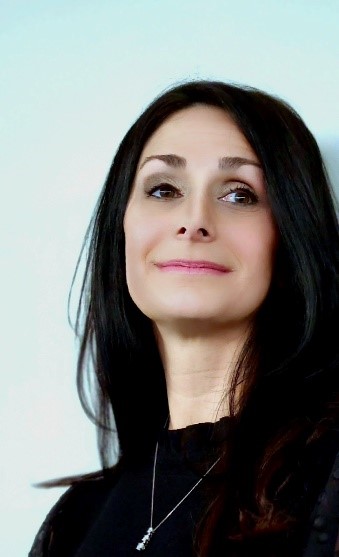
Rachel Stone writes stories of hope and redemption, often set against vibrant Canadian backdrops. Her writing placed first in the 2022 OBOA Writing Contest and has appeared in international literary and visual arts journals, magazines and blogs. She holds degrees in psychology and industrial relations, and once worked seven summers at a flower market.
Rachel is an active member of the Women’s Fiction Writers Association, and proud co-founder of a local initiative supporting new and newly-immigrated families in need. She lives near her hometown of Toronto with her family, and on weekends you’ll find her along the shore of Georgian Bay, belting nineties pop rock from her paddleboard. The Blue Iris is her first novel.
To learn more, visit Rachel’s website at www.rachelstoneauthor.com.
How different was your life one year ago?
I’d reached my absolute lowest point as a writer. I’d been working on The Blue Iris for five years—developmental edits, extensive rewrites, countless revisions. I’d sent well over a hundred queries over multiple rounds. Simply put, the book was all out of road, but it wouldn’t let go of me. I tried to work on other manuscripts, but I was still going to bed and waking up thinking about this one.
A writer friend suggested I workshop my pitch and opening chapter through the Women’s Fiction Writer’s Association. My immediate reaction was no way; I’d flogged that package to death already, and I was just so done with the whole querying process. But shelving the book was breaking my heart, so I thought, okay, one more push. Then I’ll figure out how to move on for real.
Three months later, I had multiple offers in hand. I pretty much walked around crying for two weeks! It still doesn’t feel real. I’d revamped that pitch a million times — who would have thought it needed a million and one?
Tell us a little about how The Blue Iris first came to be.
The Blue Iris was born from personal crisis. I was about to return to corporate life after extended maternity leave, when I received some alarming medical results. The next steps were unclear, and suddenly life felt really, really short.
I cancelled the return to work pending further tests, but I was desperate for distraction. I enrolled in creative writing courses, where I intended to focus on creative non-fiction. A novel was nowhere on the horizon! But once the seedling of this story took root, it became impossible for me to look away. I never wanted to work on anything else.
Was shifting your focus to writing therapeutic?
It was transformative on every level. I’ve always been an overthinker, but writing full-time put me on a whole other plane. I got lost in the process, aligned like I’d never been before. With the fictional world of The Blue Iris consuming me, I had no room to stress about what might lay ahead in the real world.
Meanwhile, my medical situation stabilized—and then the area of concern, a rare benign orbital tumour, appeared to be inexplicably shrinking. That’s a phone call I’ll never forget! Writing The Blue Iris had this massive impact on my soul, and now here was tangible proof it was healing my body, too.
Tell us some more about your book.
It’s about a group of vibrant but broken people who converge on the Blue Iris Flower Market in Toronto, where they unearth deeply rooted secrets and finally come to own their hardest truths. It’s an interwoven story of love tested beyond its limits, chosen family, and the beauty that grows in letting go. There’s a big, juicy ensemble who bring all the feelings, a steady stream of surprises, and the setting was inspired by a former Toronto flower market where I worked for seven summers.
What makes this book important right now?
One of the book’s timeliest themes revolves around what I call the “What’s Next Complex.”
Tessa, my lead protagonist, is twenty-six with loads of education and ambition, but no clear idea of to how to apply it. I think we all struggle with this, especially as we approach thirty and this stressful notion kicks in that we should “have our life figured out.” But thirty today is SO different than it was for previous generations. In many ways, it’s the new twenty! So here we have all these bright, educated, ambitious young people concerned they’re not meeting a wildly outdated timeline, and beating themselves up over it.
As Tessa and the rest of the characters’ struggles illustrate, nobody ever really has it all figured out by any age. It’s more about getting good with our pasts than trying to see too far ahead, and shedding ill-fitting expectations we’ve set along the way so the future that’s meant for us is free to unfold.
What do you hope readers will take away from Tessa’s struggle?
You don’t have to map it all out in advance! You can change course as needed.I walked away from my entire career at age 37 and started from scratch. I didn’t come close to hitting my stride until my early forties. Just keep showing up. Be open, work hard, bring your best to everything you take on, but as you go, pay close attention to what lights you up inside. Forget about trying to see the whole journey from the start — it’s your path. It’s not going to pass you by! It only becomes clearer as you go.
How do you begin a book?
In the places that refuse to be ignored. There’s always one or two “lightning rod” scenes that spark with energy right off the bat, and won’t quit nagging at me—even if I have no idea how they connect just yet.
With The Blue Iris, it was a scene that ended up midway through the third act between Tessa and another character, who shows up unannounced carrying over two hundred Sterling roses, bringing some really tough decisions to a head. That scene is where my synapses first started firing; from there, I began to see the whole story gradually taking shape. It was like falling under hypnosis. It’s probably my favourite scene in the whole book for that reason.
What sort of a relationship exists between you and the characters you created in The Blue Iris?
In a word: OBSESSION. Which carries such a negative connotation, but for writers I don’t think it’s a bad thing at all. In fact, I think some degree of obsession is necessary if you expect to carry a bunch of imaginary people from inception all the way to publication. There are just too many reasons to give up along the way, and too many editorial passes required. Obsession, and a certain dogged relentlessness, is how you keep pressing forward.
I’m more attached to The Blue Iris ensemble than is probably normal after six years of breathing life, pain and redemption into them, and I expect a lot of writers feel the same way. On top of that, I credit them for getting me through a really tricky time. Even the characters I set out to dislike have my heart—maybe more so—because it was important to me that their motivations were understandable (even when their actions were inexcusable). Sending them into the world feels strangely like dropping your baby off at kindergarten for the first time. You just have to hand them over and pray you’ve prepared them well enough.
***
 BookView Review
Leave a comment