Welcome to BookView Interview, a conversation series where BookView talks to authors.
Recently, we interviewed author and foodborne disease expert specializing in the prevention of foodborne diseases, Nicholas A Daniels about his writing and his recently released book, Outbreaks and Pandemics: The Life of a Disease Detective, a deeply profound memoir that not only builds awareness about creating food safety policies and procedures and their enforcement but also reveals how much can be achieved through determination, will, tenacity, and perseverance.(Read the review here.)
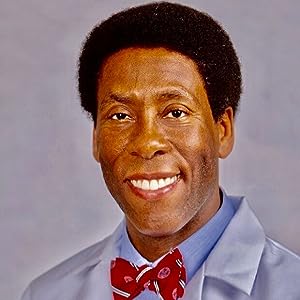
Nicholas A. Daniels, MD, MPH, is a foodborne disease expert specializing in the prevention of foodborne diseases. Dr. Daniels has a Bachelor of Arts in Biochemistry from Cornell University, a Master of Public Health from Yale University, and a Doctor of Medicine from the University of Washington, Seattle. Dr. Daniels completed his residency in the department of medicine at the University of California San Francisco and is board certified in internal medicine. He held a fellowship at the Centers for Disease Control and Prevention in the Division of Foodborne, Waterborne, and Environmental Diseases, National Center for Infectious Diseases and has served as a medical disease detective and consultant for the World Health Organization in Southeast Asia. He was a Professor of Medicine at the University of California San Francisco and San Diego. He is currently a senior associate consultant and Associate Professor of Medicine at Mayo Clinic, Scottsdale, Arizona.
Your background in writing before penning Outbreaks and Pandemics: The Life of a Disease Detective has mostly been in academic writing. What made you decide to write this book, which is part scientific profile, part memoir?
You are correct that before I wrote Outbreaks and Pandemics: The Life of a Disease Detective, I had written extensively for medical journals, such as the Journal of the American Medical Association (JAMA), the Journal of Infectious Diseases, Clinical Infectious Diseases Journal, and many other medical journals, as well as writing book chapters and publishing medical conference abstracts. Instead of writing exclusively for medical and public health readers, I decided that I wanted to write for a broader audience. I strongly feel that doctors and public health officials need to write more for a general audience to educate and inform people about important public health issues.
I wrote my memoir because I wanted to tell my life story, which could potentially impact others, as well as to convey lessons in compassion and humanity. Moreover, I felt that writing about real-life stories of disease detectives could highlight human achievement in the field of public health.
Furthermore, I wanted to highlight my journey from an inner-city neighborhood to the Ivy League. My American dream journey as I became a medical doctor, disease detective, and an international public health expert that took me across the globe to tackle public health challenges and mysteries related to a variety of infectious diseases. I hoped that my story could be inspirational for others with a humble, disadvantaged, and resource-limited beginning. It is still possible to succeed and attain the American dream through hard-work, perseverance, and strong determination.
What have you learned from academic writing that helped you write Outbreaks and Pandemics, even though the style is so different?
Medical and academic writing is extremely structured and follows scientific methodology. You first provide the background and your rationale for the project, and you explain how your study will add to the medical literature. Then, you present your research findings or results, and present your conclusions and lesson learned, how science has been advanced by your findings, along with take home points for the reader.
Similarly, have you learned anything from writing Outbreaks and Pandemics that will help your academic writing?
Memoir writing is less structured and more free flowing. I greatly enjoyed writing Outbreaks and Pandemics: The Life of a Disease Detective. It allowed a more creative style of writing. With academic or scientific writing, it never felt like my true voice was speaking. Whereas with Outbreaks and Pandemics: The Life of a Disease Detective, I believe that my personality, my essence, and my spirit permeated throughout the book, and it allowed readers to gain a better understanding of my real character and what I feel passionate about.
Outbreaks and Pandemics is more accessible to a general audience than many other books that have been written by doctors and scientists. Was that a conscious choice on your end? How did you achieve that accessible tone throughout the book, especially considering your writing background?
Absolutely. My primary goal was to create a book about public health issues, which was accessible to a general audience, unlike other books typically written by doctors and scientists. Throughout my 25 years of medical practice and as an epidemiologist, I have always had an ability to explain complex medical topics in a simpler way; so that persons, without a scientific background, can grasp concepts discussed in my book. For many people, medical jargon may seem like a foreign language—but it does not have to be that way, if concepts are presented in a simpler, more understandable way.
As a foodborne disease specialist, is there were only one thing you could tell people to protect themselves against foodborne illness, what would it be?
It is important for people to realize that our food supply is truly global, and people should not assume that every country in the world has similar food safety policies and oversight that we have in the United States and in Europe. Because of increasing globalization of our food supply, how interconnected we have become on many levels, and the ease of international travel, we are likely to continue having outbreaks and pandemics, and to see more emerging and re-emerging foodborne and respiratory viral diseases. In addition, the overuse or inappropriate use of antibiotics in the human population and in animals, and the growing antibiotic resistance that we are seeing in both humans and in livestock will become an even bigger public health problem in the future. We have a dwindling supply of antibiotic options to treat many common infections. The public should also assume that raw or undercooked meat, poultry, fish, or shellfish and many fruits and vegetables are likely contaminated with microbes that could make you seriously sick. Therefore, it is important to clean, thoroughly cook food, and prevent cross-contamination of food products during the preparation process to reduce your risk of acquiring a foodborne illness.
Over the summer, when I was in Buffalo visiting my family, one of my brothers told me that his friend, who he had previously suggested my memoir to, told him that “my book may have saved his wife’s life,” and to “thank me for writing the book.” His wife reportedly had cancer and her immune system was suppressed from chemotherapy, which placed her at high risk for acquiring infections. Her caregiver, who regularly prepared her food, and who on occasion would serve her undercooked eggs and meat, posed a health risk to his wife. After reading my book, he became more aware of the harms of raw or undercooked foods and the increased risk of infection. Feeling more knowledgeable and empowered, he decided to speak with his wife’s caregiver and he requested that she thoroughly cook all food provided to his wife, since she was at high-risk for foodborne diseases and complications. It is for reasons such as this that I felt strongly that I wanted to reach a general audience who needed more valuable information about foodborne diseases. Food safety information is lifesaving for some people, since it is an important public health issue.
What’s next for you?
My next project is to write a science fiction book about a pandemic in the future, which ravages the global human population. This book will have suspense and thriller effects, with dire medical and public health implications. Again, the book will highlight the importance of disease detectives in solving and controlling outbreaks and pandemics, since they are the backbone of our public health system. Now and in the future, disease detectives will remain extremely important for discovering and controlling emerging infections.
There has always been a constant battle between our human existence on Earth and various opportunistic microbes. The greatest human pandemic threat is from respiratory viruses that jump from animals to human population through close contact, viral mixing between human and animal viruses, or the accidental or intentional release of animal pathogens from laboratories to which humans have no immunity. The area of origin of future animal to human transmission is most likely to be Asia, the Middle East, or Africa, where humans are often in close contact with live birds and other exotic animals at home and in the marketplace.
New outbreak and pandemic battles are on the horizon, and my next book will create a scenario where we explore how prepared we are to combat these microbiological challenges to save humanity from extinction.
***
 BookView Review
Leave a comment