Welcome to BookView Interview, a conversation series where BookView talks to authors.
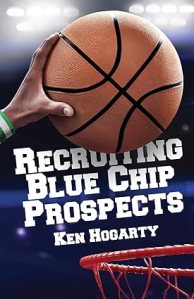
Recently, we interviewed author Ken Hogarty about his writing and his recently released book, Recruiting Blue Chip Prospects, a riveting and thoughtful journey through the world of high school sports. (Read the review here.)
Retired San Francisco high school teacher and principal, Dr. Ken Hogarty has since had numerous stories, memoirs, features, satires, and comedy sketches published in Underwood, Sport Literate, Good Old Days, Cobalt, Sequoia Speaks, Woman’s Way, the S.F. Chronicle, Points in Case, Glossy News, and The Satirist. He lives in SF’s East Bay with his wife Sally.
Twitter: https://twitter.com/HogartyKen [though I detest Elon Musk]
Facebook: https://www.facebook.com/profile.php?id=61552062991460 [just getting coached into a fuller presence]
Website: Kenhogarty.net [still updating back pages]
Recruiting Blue Chip Prospects explores the realities of college sports team recruitment, something most people in the US witness from the outside but never learn the intricacies of. What kind of personal experiences or research was integral to the process of writing this novel?
I have always loved sports. Many of my short memoirs published the last five years focus on sports. Another memoir will become a chapter in a book in the Historic Baseball Stadium Series about SF’s Candlestick Park.
I started writing Recruiting Blue Chip Prospects over thirty years ago, motivated by my lifelong love of sports, my experience teaching high school, and my opportunity to watch my high school teams compete in one of the most competitive sports leagues in California (the West Catholic Athletic League).
The league has produced renowned professional athletes in many sports. One personal observation will suffice to illustrate that point: In prep baseball games I watched personally over the years, Tom Brady was a better hitter than Barry Bonds.
I have seen a number of athletes through the college admissions process as a teacher, counselor, and principal. My granddaughter got a D-1 soccer scholarship after her East Bay high school graduation.
While principal of Sacred Heart Cathedral Prep in San Francisco, I participated, during a seven-year span, in trophy ceremonies for the Fighting Irish’s five Nor Cal championships and four California state championships won by boys’ and girls’ basketball teams. We also won Nor Cal volleyball championships three times during those years.
SHCP’s 2008 team, ranked as the number one girls’ high school team in the nation by USA Today, was listed among the top 25 all-time girls’ basketball teams in a 2020 national story by Kevin Askeland. Askeland wrote: “The Fighting Irish defeated teams from six different states along with some of the top teams in California, including Archbishop Mitty [San Jose], Sacred Heart Prep (Atherton), and St. Mary’s (Stockton) on the way to a state championship and a 33-0 record.”
Students got recruited off that team and many others over the years.
The plural use of “prospects” in the novel’s title, however, suggests a broader perspective beyond sports that fueled my writing of this story.
Sports shouldn’t be the be-all-and-end-all in high schools. Rather, athletic teams should be one of many interests available for students to pursue, ideally to further learning beyond the classroom.
Moreover, schools, each with a culture of its own, are all as much a social as well as academic experience.
Clearly, blue chip prospects emerge in many areas at the high school level and beyond.
This novel emanates also from my desire to tell a story about those other blue chip prospects, and about the rich, if not always harmonious, culture of one school so that readers can compare it to their own high school experience, the most common rite of passage in the broader American culture.
Though I taught and administered at one school (it changed completely over time to a coed prep school) for my entire career, I visited many schools over the years as part of accreditation teams and in my role as an evening/weekend college professor observing student teachers.
I also conferenced with many other principals and Athletic Directors over the years, a number of times about sports related concerns. In fact, Ron Nocetti, the Executive Director of California’s CIF, which oversees all prep sports in the state, is a former student of mine who taught with me for a couple years before moving to Sacramento.
I also had heard the real voices of various students over the years since the school in which I spent my career and which served as something of a model for the novel’s school enjoyed a diverse student body in which students interacted well with one another.
Not wanting to carelessly appropriate the speech or concerns, for example, of African Americans, I thought I could carefully weave many voices into the story (dialogue, as well as detail, in full being one of the main guidelines in my storytelling) honestly through the point-of-view of a classroom teacher in the story who had dialogued with many students through the years.
Have you always been interested in college sports recruitment, or was this interest something that developed relatively recently? What was the catalyst for your interest?
Glibly, my interest in college sports recruiting might have started in college. In a game against Long Beach State, I, along with my fellow rowdy St. Mary’s yell leaders, led a call and response to taunt the opposing coach throughout about allegations and investigations about recruiting violations.
Jerry Tarkanian, who would later solidify his nickname of “Tark the Shark” when he recruited, many thought with illegal enticements, a team that would go undefeated and win a national championship at UNLV, already was in the crosshairs by my senior season in college. In truth, maybe feeling so sanctimonious came about to justify why my college team lost so much.
My disdain for illegal college recruiting, also so apparent in football, reached fruition as I realized money was becoming more important than morals in sports (and that maybe it always had been) and that the ideal notion of student-athletes remained just that, an ideal in the real world.
The notion clashed with the values my family and school taught me as a youth. Fighting for the good and victorious, which could triumph over evil on the field and off, had also been at the heart of the Chip Hilton and Bronc Burnett Sports Series I devoured as a reader when young.
The notion that the good would triumph seemed mirrored in my real world of sports I grew to love. Hadn’t I seen that first-hand when my 5th grade CYO team won a Nor Cal CYO baseball championship when I tripled in the first extra inning and scored the game’s only run?
In basketball, as noted above, I had watched many games played by Bill Russell’s University of San Francisco team. Besides being great, the team also showed its disdain for injustice by often playing at least three African Americans at the same time, flouting unwritten rules of the time that held that college teams were expected to play a majority of white players.
The University doing that shouldn’t have surprised me since I had already heard from coaches and parishioners about the great USF football team of 1951, which sent almost a quarter of its roster to the NFL and eventually saw four players and its young publicist, Pete Rozelle (who would become the Commissioner of what became the preeminent sports league in America) enshrined in the pro football hall-of-fame.
The 1951 team was undefeated and uninvited. It turned down an invitation to the Orange Bowl game, then one of the four most prestigious New Year’s Day games, because the invite came with a stipulation that the team compete without its two African American players, Ollie Matson and Burl Toler. The answer, delivered by USF’s student body president Bill Henneberry, a backup on the team and an alum and future coach at my high school, was, “Hell no!”
In short, sports could teach lessons that didn’t shy away from exposing the faulty versions of truth of others.
Do you have a favorite scene or sequence in Recruiting Blue Chip Prospects?
A last scene before the framing chapter to return the novel to the present is a favorite. I won’t speak more about the drama that takes place near the American River thirty miles north of Sacramento therein because I’d have to issue a spoiler alert.
In making that chapter choice, I suppress the urge to equivocate and include other scenes: 1) the scene and discussion at the Berkeley Pier between Patrick and Suzie, his girlfriend and herself a recruiter for a cause dear to her heart; 2) scenes where Patrick visits T.R.’s house and neighborhood; 3) the banter among students and a teacher and the Dean after a “Nerd Basketball” pick-up game; 4) a New Year’s party that features intriguing performances among adults and, separately, youngsters; 5) various scenes at the American River in Sacramento; 6) A.P. English Lit. classroom scenes that speak about works of literature that foreshadow events in my story.
The sequence most notable would be the novel’s conceit in which a piece of Patrick’s writing, most often a newspaper story, is near the beginning of each chapter. Among other things, this allowed me to move the narrative arc of the sports seasons along efficiently and tellingly while leaving the rest of the chapters themselves, for the most part, to focus on character development and evolving relationships in myriad scene-by-scene constructed settings. This also allowed for plot advancements emphasizing connections among various sub-plots that meld into the novel’s thematic whole.
What was the hardest part about writing this book?
Finding the time to finish it, which didn’t come about until after I retired as a teacher, counselor, program moderator, and principal. During those years, I had also been a collegiate teacher (at USF where I got my Doctorate in Education and also at Holy Names College) in education and English, while also raising my daughter Erin myself through her high school years.
When actually finishing and then editing and reediting this novel, I struggled with the time period since I had started the novel over thirty years ago and I had left too many details vague when I started reworking it over the years.
Bryce Wilson, an extremely effective Atmosphere Press editor, worked with me to focus on a particular year that I could frame from the present. We went back and forth over numerous opportunities to incorporate details from the specific year 1991.
The research to specify detailing was fun, looking at the music, dress, sporting scene, current events, political situations and many more very specific nuances of the time and place to blend subtly into the narrative.
After deciding, for example, that movies and TV shows from the era didn’t always provide the best guidance for teen dress, I turned to yearbooks I had from my school to get a better sense of what a diverse array of students wore when out of the school uniform in 1991.
I even, for one scene in the novel, needed to research jokes that were popular in 1991. My daughter had always added to the notoriety among former students of my classroom jokes, which she calls “Dad” jokes, described in a James Patterson novel as having punchlines that are “too apparent.”
Before publishing this novel, you have published many shortform pieces including stories, memoirs, and satire. What made you decide to turn to writing a book-length work?
Actually, the two went hand in hand. After retiring and wanting to write, I pulled out the fragment of a story I had started years ago. “Pseudonym,” a short story I’m still proud of, got accepted by Woman’s Way, a magazine with the largest circulation in Ireland. At the same time, I had also pulled out my novel to decide if it was worth revisiting after about fifteen years of being “on the shelf”.
While looking at my novel, maybe about a third to a half finished but with a direction set at its core, and thinking about the short story, a friend pointed me to a reprint on the website of John Thorn, the official historian for major league baseball who had been Ken Burns’ primary consultant on his epic nine-part series about baseball. Thorn reprinted an article quoting Merritt Clifton:
Ken Hogarty may have pinpointed the key difference between baseball and most other sports in his unpublished MA thesis at then Cal State, Hayward, on “Baseball as Metaphor” (1977). According to Hogarty, the primary conflict in baseball is individual versus society, whereas the primary conflict in most other sports is nation versus nation. The model for most other sports is war, Hogarty observed, with the individual subordinate to the group, while baseball he compared to the classical western. The lone cowboy-outlaw, the batter, rides into town to confront a hostile posse of nine. Usually, society triumphs and the anarchic cowboy is buried in his dugout, the symbolic Boot Hill. Sometimes, however, the cowboy-outlaw shoots his way into the bank, first base. Sometimes his gang then shoots him back out of trouble with a succession of hits that finally bring him home. Once in a while, a particularly valiant cowboy shoots his own way clear through town with a home run. The umpires, in Hogarty’s view, represent God rather than human authority. Dressed in their dark suits, they arbitrate justice.
Hogarty’s model clearly explains why baseball should have appealed to U.S. immigrants. Often as not, they came to America in rebellion against authority back home. Many had themselves been outlaws, of one sort or another. They could identify with the ambitious batsman/gunslinger who takes ’em all on. And, as they gradually gained property and responsibilities, they could identify with the home-team defense, too.
Clifton had talked to me about my MA thesis. He must have related it to John Thorn when both were involved in the baseball sabermetrics movement.
Actually, my thesis was published (and back then it was difficult finding a professor who would go to the mat for a thesis dealing with baseball literature, but I found the person in Jacob Fuchs).
Seeing MLB’s historian praise my work motivated me to pull out my thesis, update it, edit it, and submit it. It was published in Sport Literate and later earned a semi-finalist designation by Cobalt as they assessed the best baseball writing of 2021.
The essay’s main claim is that baseball became the national pastime because, for better or worse, it reenacted America’s frontier experience.
That, and the publication of many different types of writing including a number of snarky political satires (e.g., “If Trump were Catholic, His Confession”) and parodies (e.g., “The Age of Nefarious,” song lyrics redone for Baby Boomers from the lyrics from the musical “Hair”) became parallel tasks as I simultaneously worked on my novel (and a play I was writing). I’ve always been comfortable with multi-tasking when doing things I love.
All my shortform publications, including a number of short stories with school settings, motivated me to have the confidence to finish the long ago started novel that became Recruiting Blue Chip Prospects.
What have you learned from writing shortform pieces that you carried into writing your novel?
Edit, edit, edit. (and then edit some more)
Make stories tight; No “lard.” (I have religiously taught students Richard Lanham’s Paramedic Method from his Revising Prose. Among other things, it strives to eliminate needless passive voice, emphasizes strong subjects and verbs, and typically gets sentences moving fast.
Follow, when possible, the principles of New Journalism [1) detail in full; 2) dialogue in full; 3) scene-by-scene construction; and 4) third person narration while focusing on a single character].
Get a story as tight as can be (in this interview I’m allowing myself to meander and story–tell, since it’s in my spoken rather than written voice).
Almost all of my eighty shortform pieces had to be edited, typically reducing word counts (sometimes with a specific request from editors who otherwise liked a piece). Some pieces had sat on Submittable for months before I edited them better on my own to help them find a good home.
The lesson, however, was clear. The teacherly voice in me tended to overwrite since some students in a classroom needed a point made three different ways to sift through to find the one that would unlock meaning for them. I learned to synthesize and avoid this when editing for publication.
I took (in the last steps with the help of my Atmosphere editor) a tentative last draft of Recruiting Blue Chip Prospects from over 90,000 to 80,000 words before adding back approximately one or two thousand while interpolating details–in–full specific to the novel’s time and place as noted above.
Who (or what) are your writing inspirations?
I loved teaching The Odyssey and the Arthurian Legends (and spin-offs such Madeline Miller’s Circe or Marion Zimmer Bradley’s Mists of Avalon). The frame in my novel pays tribute to a certain degree to the frame in Homer’s telling of Odysseus’ return to Ithaca. I sometimes consider that work and its shift of point-of-view in the middle books, along with Shakespeare’s plays with five acts (intro, rising action, climax or reversal, falling action, and conclusion built around a clear conflict), to be the structure templates for much good narrative.
Favorite novelists run the gamut from Faulkner (his “Rose for Emily” is my favorite short story) and Hurston to Allende and Marquez. I’ve recently enjoyed the guilty pleasure of police procedures or mystery series such as the Bosch series by Michael Connelly or the James Patterson series (particularly, the Women’s Murder Club Series, set in SF).
Back in the day, I did love Creative Non-Fiction (CNF) as found in the New Journalistic writings of Hunter Thompson, Truman Capote, Tom Wolfe, and others, and with a similar viewpoint though in a fictional genre, outrageous novels by Tom Robbins.
I taught with (and actually was his English Department Chair at my ripe old age of 24) Tobias (we called him Toby – he said he was named after a Toby mug) Wolff from 1973-75 at my high school. I could relate many a story involving Toby, myself, and fellow teacher Steve Wilson, who posthumously provides the name for the teacher in my novel.
What’s next for you and your writing career?
In other words what am I going to do when I grow up?
I love playing with different genres. Besides writing a newspaper column and just retiring as the editor of a local monthly, my wife Sally is quite a good actress. I have written a play, but I joke that I might have to die before having it published or performed since it deals, in a school setting, with some troubling subjects.
I’ve also had the pleasure these last months working with a former student, Shannon Rowbury, a one-time American record holder in the women’s track 1500m. Shannon raced in the finals at three Olympics – Beijing, London, and Rio.
I’m helping her put together incredible vignettes to form a book-length memoir of her experiences and to issue a call to action to all who want level playing fields in sports. She was an All-American at Duke after, of course, being recruited out of high school.
I am writing background pieces to sift through Shannon’s personalized accounts of back stories and fascinating insights about experiences most could only imagine. They make fascinating points. Shannon crossed the finish line sixth of nine in London’s 2012 1500m finals, but as it turned out she was one of only two finishers never convicted of blood doping or taking illegal substances. An ESPN writer called it “the dirtiest Olympic race ever run.”
Obviously, Shannon has misgivings about her two official fourth place finishes in Olympic competition, but despite her lack of a medal (she did win a bronze in a 2009 World Championship in Berlin), she carried on most positively, creating a non-profit (Imagining More) with her husband
Pablo and having worked to get Nike to change their maternity and health policies for their runners when Shannon was pregnant after the Rio Olympics.
Before that, women on Nike’s teams could only keep health insurance if they had a certain number of positive track finishes, obviously difficult in the last stages of pregnancy.
It’s such a pleasure working with a former student on this. So many students have important stories they’re living.
My daughter has suggested I write a full-length work, fiction or non-fiction, about the ‘50s and ‘60s and growing up in San Francisco. I have mined that time and place for many shorter memoirs. And, after all, my 21st birthday (12/6/69) was the day some said “the music died,” the Altamont concert in the Bay Area.
Maybe I can combine two ideas and do a police procedural about that time and place. A number of classmates did go on to become police officers.
Like I say, when I grow up, I’ll decide what’s next …
—
Thank you for your interest, Ken
Can you provide links to any of these:
Twitter: https://twitter.com/HogartyKen [though I detest Elon Musk]
Facebook: https://www.facebook.com/profile.php?id=61552062991460 [just getting coached into a fuller presence]
Website: Kenhogarty.net [still updating back pages]
 BookView Review
Leave a comment