Welcome to BookView Interview, a conversation series where BookView talks to authors..
Recently, we interviewed Felix Purat, author of calm Before an Earthquake, a mellifluous tale of weltschmerz, halcyon narcotics and dreams forsaken at a good old 420 smoking sesh.
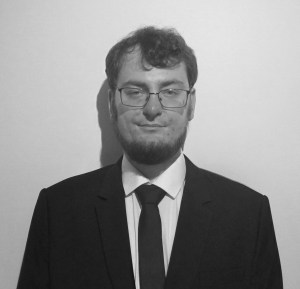
Life has been a fascinating journey for Felix Purat. After a decade of writing poetry and traversing around Italy, France, Greece, the Czech Republic, Slovakia, Germany, Croatia and other countries, this Californian émigré has settled down in Poland to make his two lifelong dreams come true: start a family and publish novels. Calm Before an Earthquake: A California Tale is the start of that dream.
Calm Before an Earthquake is a mellifluous tale of weltschmerz, halcyon narcotics and dreams forsaken at a good old 420 smoking sesh. A story of three teenagers – Brad the jock; Adrianna the punk; and Felipe the immigrant – whose last partaking of subversive friendship leads inextricably to their dooms, Calm is the story of inflexible fate as dictated by the ‘end of history’ syndrome; of the perseverance of the individual against stereotypes; and the fertility vs. sterility of philosophizing based upon popular culture. Visit https://swampratbooks.com/bookshop/ to get a copy of Calm Before an Earthquake.
Felix is currently completing his second novel, Tale of a Muse that Fought an AI, along with his first satire, The Taco Psychosis. Other projects include essays – both on Substack and book form – poetry and a play. Visit https://timelessfelixpurat.substack.com/ for updates, essays and more.
Do you think someone could be a writer if they don’t feel emotions strongly?
History favors the sensitive in writers. And history 100% favors the sensitive in poets. I don’t think this applies to journalists as much. That may be why so many great authors started out as journalists. Authors who aren’t poets, anyway. But writers have come in all shapes and sizes. The commonality is that the lion’s share of writers are outcasts of some kind. Their sensitivities make them outcasts; or their exile makes them sensitive. The end result is much the same.
How crucial is it to have a working title before you begin a project?
For me it is crucial. A novel is as much a concept as it is a story. Writing, in this sense, is much like theology. If I don’t give my ideas a title of some kind, they don’t form very well in my mind and eventually disintegrate. With poems it is different: though not a tradition in the Anglosphere, it’s normal in many cultures for poems to be untitled. Even so, this rule doesn’t apply to poetry collections. Except for those that have simply been titled Poems.
Calm Before an Earthquake, published this year, is your first novel. How did you decide on this title?
My novel is set on June 29, 1989. That is its historical dimension. As that day was 111 days before the Loma Prieta earthquake, my working title was basically that. It was specific. But it wasn’t very literary, as you can see. It later occurred to me that our common idiom, ‘the calm before the storm,’ could salvage this mundane working title. It was familiar, almost cliché, but different and alien. Thinking back, I’m amazed I managed to think of it. Calm itself blends both cliché and the authentic; the title does as well.
Tell us a little about how this story first came to be. Did it start with an image, a voice, a concept, a dilemma or something else?
If I had to choose from the phenomena you list here, it would be a dilemma. Calm is a survivor from the time when my reading diet was heavy on the existentialists. Sartre in particular. No matter where I looked back then, life itself was a dilemma and the inability of others to recognize it was something fake. Life is also a dilemma for every character in the novel.
Do you find writing therapeutic?
I find completing the story therapeutic because in a world that condones so much destruction – both physical and metaphysical – creativity in and of itself is therapeutic. I don’t think therapists would be able to use music and poetry so successfully as they do today if our current society of destruction wasn’t as it was. Creation is a fundamental human act and many problems in the world can be resolved by showing people the path to creation. This also makes creation an act of rebellion, though historically this facet of our era is an inversion, therefore an aberration.
The writing process itself is more of a visceral necessity than an emotional one. Reading is much more therapeutic. Many writers understand that: the reason why a good share of contemporary literature appears to follow therapeutic directives rather than artistic ones.
How did publishing your first book change your process of writing?
I’m not too conscious of a change in the writing process, except to switch gears project-wise: my imminent second novel, Tale of a Muse that Fought an AI, is a different affair. What I call a ‘Tale of Unicity.’ The experience in general is more important. As an independent writer, I had to rethink my entire self-publishing trajectory once I got a sense of people’s attitudes to Calm.
Are you a feeler or a thinker?
I am a feeler living in an era that has demanded a thinker of me. And it shows: I like to think of my stories as a kind of “emotional literature of ideas.” As I think about it, I believe this is one of those shared commonalities all my stories will possess. Stories that, otherwise, are all very different: at least as I envision them.
Funnily enough, some on Substack think I have a future as an essayist. I’m still getting used to the idea. But I like it. It means I get to follow in the footsteps of one of my idols, Milan Kundera. Perhaps essays can soak up any thinking that conflicts with the emotional side of novel writing. Bulgakov had a similar dualism, except he alternated between fiction and plays. He couldn’t do one without the other.
Do you try more to be original or to deliver to readers what they want?
I always wish and aspire to be more original but have read enough to know that pure originality works its magic only when it’s ready. And not a moment sooner. So for now, I aspire for both. I believe Calm leans more to the artistic side. But it does give certain readers what they want. Music lovers, nostalgic people who miss the 80s and fans of California in particular; a large segment of the populace.
I think most readers are capable of “wanting” a lot more than creative writing programs tell writers to deliver: I respect and believe in the intellectual curiosity of readers, especially now that podcast consumption shows that the majority of ordinary people actually love learning things and being intelligent. Circling that interest back to literature is something we writers have to learn to do better. The “target audience” approach might sell copies, but it also needlessly compartmentalizes the readership while suffocating the desire for adventure.
The subtitle for your novel is ‘A Californian Tale.’ What in particular attracted you to this “genre?”
I like to think I’m coining the genre. (laughs) But all ambitions aside, I have felt a deep need to find my own way to make sense of my home state and my relationship to it. I consider both John Steinbeck and Richard Brautigan as favorite authors, but they had their way of relating to the state and what was going on. I need mine, and I don’t know of any other California author that gives me the same feeling. I am basically doing what Toni Morrison did when she felt there weren’t enough stories about Black women.
I am proud to be from the West Coast: even now, as it gets an increasingly bad rap due to socio-politics. And though I do not live there anymore, I want to bolster its regional strength and distinctiveness with stories like Calm. My Californian Tales – and there will be more! – seek to pursue the following aims alongside my personal aims while, of course, telling a story; 1) create fertile ground for a homegrown Kafkaesque form of expression; 2) attempt to systematize – artistically of course – a hitherto-elusive state heritage that millions of Californians do not have a strong grasp of, something only accomplished before by Bret Harte; 3) enrich the folkloric side of the place I was born in just like those who came before me; and 4) portray a California connected to an interconnected world; globalization, if you will.
The third reason is why I call them ‘tales’ when they are novels. This was the precedent Steinbeck set with The Pearl. It, Cannery Row and his early work are my little ‘genre’s’ most direct precedents. California fiction, curiously, is often at its best when in shorter form. Kind of like Irish fiction.
Which scene or chapter in the book is your favorite? Why?
Difficult to choose! I very much like the back and forth between the aged hippie and the first-person protagonist all throughout the novel. It is a friendly clash between generations and worldviews. And it gives the story a philosophical dimension without using philosophical language. This has its effect on the story of Brad, Adrianna and Felipe as well; though they are GenXers, elements of Boomerness and Millennialness are projected onto them. Funnily, I think that would give many Xers a good chuckle since they always say nobody cares about them.
My favorite chapter is toward the end; but I can’t say what it is without spoiling it.
Does your family support your career as a writer?
I am blessed to have my loved ones supporting me. Well, my baby daughter isn’t old enough to express her support in coherent language as of yet. But I think she’ll be proud of her daddy down the road. My friends have also been awesome.
What makes this book important right now?
At a time when California as a state is declining hard – as well as the nation itself – many in my state are no doubt asking themselves: ‘how did it come to this?’ The way King Theoden does in the Lord of the Rings movie in Helm’s Deep as the nation of Rohan, once full of proud horsemen riding the plains, is driven to hide in the fortress. Soul searching is needed.
Without giving an answer – that’s a task for public intellectuals, not novelists, though novels can help – Calm is about one of the most defining conditions of the post-1989 era: Francis Fukuyama’s ‘end of history’ concept. If there is an Aesopian moral to the story, it is this: there is no end of history as long as individuals are doomed. Each one of us has a history. The stagnation of world history doesn’t translate into the stagnation of our own histories. And we shouldn’t let that happen insofar as we have the ability to control that. To do so is the same as accepting fate as understood by Vasily Grossman. And it’s not a good fate.
What do you hope readers will take away from this story?
Along with the aforementioned understanding and how the novel attempts to make sense of the legacy of the ‘end of history,’ I want readers to take away a different perception of my state than the usual clichés. Something that isn’t just about superficial celebrities, unserious postmodern experiments or any of the other symbols that enable people to view California with every emotion except seriousness. Of course the iconic California stuff isn’t absent from Calm. But it’s under interrogation, even though it doesn’t look like it’s under interrogation. Unlike other authors, however, I’m a kind interrogator. Much is acquitted.
I also want readers to experience a darker side of California that hasn’t really been present in literature since the noir era. Outside of that, I think most people don’t really put “California” and “tragedy” in the same sentence: but tragedies happen to people all the time in my state, just like anywhere else.
And like its predecessors going back to Melpomene, tragedy is what makes this novel universal.
 BookView Review
Leave a comment