Welcome to BookView Interview, a conversation series where BookView talks to authors.
Recently, we talked to Cynthia J. Bogard about her writing and recently released Beach of the Dead (Heartland Trilogy #2), a deeply personal look at love, friendship, human connection, regret, and redemption. (read the review here).
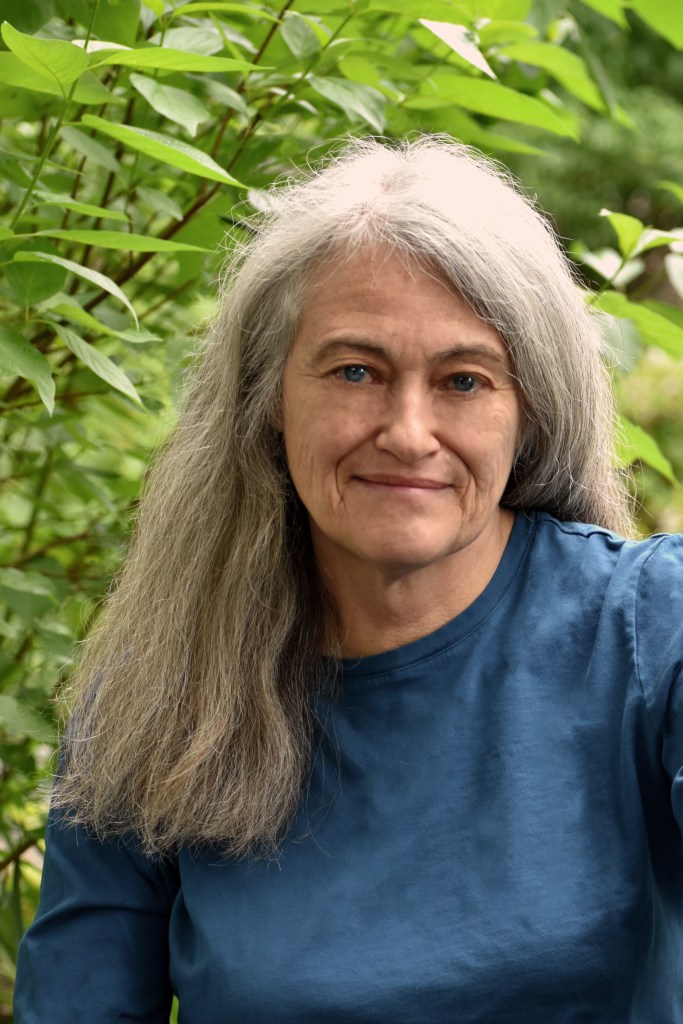
Cynthia J. Bogard has reinvented herself as a novelist after a successful career as a Professor of Sociology and Women’s Studies at Hofstra University in New York. Born and raised in rural Wisconsin she’s lived in Kuwait, Greece, Mexico, New York, Texas, Vermont, and in Madison, Wisconsin.
World traveler, longtime feminist and environmentalist, Greece, mid- 20th century jazz, and Mother Nature are all close to her heart. These days, Cynthia lives with her spouse and two rescue dogs in Montpelier, Vermont.
Visit www.CynthiaJBogard.com for news about Cynthia and her works.
Also by Cynthia J. Bogard
A History of Silence, Book One of the Heartland Trilogy (Atmosphere Press)
What inspired the premise of your book?
Beach of the Dead (Book Two of the Heartland Trilogy), was inspired by my writing mentor and reader Maggie Shopen Thompson who told me she was concerned about what would happen to Jane, a central character in my debut novel, A History of Silence. In the last pages, Jane commits a murder and, after first considering suicide for her crime, she is inspired by a vision to head across the Texas border to Mexico instead. Maggie asked, “What happened to Jane?” — and suddenly, I had to know the answer to that question. I dedicated the book in part to Maggie for inspiring me to find the answer.
Tell us a little about how this story first came to be. Did it start with an image, a voice, a concept, a dilemma, or something else?
Beach of the Dead began with a question: What happened to Jane? But in short order, I knew where she would run to when she made it to Mexico. In the novel, Jane’s female professor had mentioned a Mexican idyll she’d spent a winter break in some years earlier – Zipolite. Jane decides to make for that beachside hamlet. Zipolite means “beach of the dead” in the indigenous language of the people who live there because of a notorious riptide just offshore. I spent a season there many years ago when it was a small village of stick huts. So, besides the question, Beach of the Dead started with the image of a simple but beautiful place where cultures intermingle, and life takes on a rhythm that has enjoyment of nature at its center. Using this setting builds tension right from the start — Jane is a murderer on the run, yet she’s wound up in paradise.
How does your ethical outlook inform your writing?
I’m a sociologist and women’s studies professor by training. Both disciplines are concerned with social justice, with determining the causes of social inequality and the remedies for injustice. I’m a longtime feminist, so women’s rights and struggles are central to what I care about and want to write about. In this novel, I deal with some heavy, but interesting ethical questions such as: Is murder in self-defense justifiable? How do we heal from trauma? Is it ever okay to live a lie? What price do individuals and societies pay when people aren’t allowed to love who they will? What is our collective responsibility to the other creatures of the world? Beach of the Dead suggests answers to these questions.
What do you hope readers take away from this story?
That love and family can come in many forms. That, with love and support, people can overcome terrible trauma and tragedy. That humans can love one another across culture, race, class, and sexual identities if there is open-mindedness and the will to do it. That the only way out is through. That nature is our true mother. That solidarity is the crucial ingredient to move us toward justice and equality.
Do you try more to be original or to deliver to readers what they want?
I tell the stories I feel compelled to tell. I’ve led a decently unconventional and varied life, so I bring some originality to my stories because of my biography. I’m interested in having my readers reflect on and discuss the ideas in my books. I’m not interested in writing predictable stories because I wouldn’t find it fun to write them. If writing isn’t fun, why write?
What’s next for you?
Beach of the Dead is the second book in a trilogy (although either book can be read on its own). So, writing the third book would seem an obvious answer to this question. I had an idea to write the third book in two timeframes, one that continues from shortly after the second one ends in 1986 and one that was a took place in the 60s and 70s. As it turned out, I had so much of a story I wanted to tell about the earlier time frame that the next book, Raising Hel, will be the prequel to the first book, A History of Silence. Maddie, Roz and Thorpe will all be in the prequel, as well as some new characters, like narrator Hel(en). The third book in the trilogy (to be titled Longing for Winter) will have to wait.
Thanks very much, Bookview!
***
 BookView Review
Leave a comment