
From the Blurb:
In Arizona, where the sun beats down 300 days a year, boys are becoming men.
With moments of dry humor, this new story collection by award-winning author Gregory D. Williams provides a glimpse of boyhood and its lingering effects inside the man. The gentle irony and characters’ keenly observed dilemmas reflect life in the dry heat of
the Sonoran Desert.
When a Little League player takes direction from the team’s star female player, he learns about “rounding
the bases.”
Seeking revenge, two boys set up a sting operation to catch a neighborhood bully, only to discover that their plan has deadly consequences.
A medical student conducting a breast exam struggles to subdue his teenage fantasies.
A man propositioned at a local Starbucks learns that even in middle age, the dry heat of love still burns.
And there are more. If you like classic American stories that have the authentic feel of your favorite jeans, then you’ll love the nine funny, wise, and humane short stories in this collection. Buy Gregory D. Williams’ A Dry Heat today, and take a deep dive into the lives of boys and men.
*For readers who enjoy the fiction of William Trevor, Alice Munro, Tobias Wolff, Ron Carlson, Margaret Atwood, Raymond Carver, Robert Boswell, and
Charles Baxter.
Buy now
Read the review
Who We Were at Twelve
My friend Benjamin and I were spies. We were sixth-graders in 1964, and for the first three months of that year, he was the station chief, and I was his protégé in our two-man neighborhood spy ring. On weekends we scaled redwood fences, hid behind oleander and juniper hedges, air conditioner compressors and above-ground swimming pools. We perched on sturdy branches deep within the canopy of our neighbors’ orange and grapefruit trees, consuming the pilfered fruit until our tongues and saliva thickened and we could unload a loogie like an eighth grader. We were the repository of Linger Lane’s backyard secrets. Those were careless days.
Benjamin coined our last mission “Operation Domino.” It was an elaborate two-phase plan, which I suspected he’d been designing for some time. Friday, the first night of Easter Break, I knocked on the door at Headquarters, his bedroom.
“Albert,” he said.
“Einstein,” I responded.
He cracked the door. After allowing me in the darkened room, he retrieved the spiral-bound Top Top Secret notebook from behind the Encyclopedia Britannicas. Benjamin laid the notebook open under the light of his goose-neck lamp. Across two pages he’d drawn a schematic: his backyard, the Andersons’, and the Ciprianos’, all in a row, with fences and alley behind. I knew immediately this was about revenge on Adam Cipriano, a classmate and the only other sixth grader on the block.
* * *
I’d met Adam near the end of Christmas break, a couple days after my family moved from a downtown apartment near the Phoenix hospital where my father worked. It was our first house, but my second school that year. My mother pried me away from afternoon reruns and sent me to the curb with a can of black paint, a brush, some stencils, and her hope: “You just might make a new friend while you do this.”
That’s what I was afraid of— making friends—something that had not been easy for me.
I was eleven, small boned, with my mother’s narrow, angelic face, and quiet. In a week, I’d be the new kid again.
Except for the four-foot high wagonwheel bordering the small porch, our house was identical to the other single-level, asphalt-tiled, brick boxes on the street. They even had the same floor plan. I laid the stencils on the curb in the order my mother had prescribed—4-6-2-6—and staked our claim with zeal, aligning and realigning. I wanted the number perfect. Adam peddled over on his new, black Sting-Ray. Of course, I didn’t know who he was then. He was just a kid with dark, wide-set eyes and eyebrows seemingly cut from black construction paper and pasted to his forehead. His bike made a rat-ta-tat sound from cards he’d clothes-pinned to the fork, something I liked to do. Remember, you can stop the world with that smile of yours, I heard my mother say. I smiled from my crouched position, and Adam stopped. But before he spoke, I sensed trouble—he’d used perfectly good baseball trading cards. Now they were ruined. He straddled the crossbar and said, “What’s your name?” emphasizing your.
I stood and rubbed my palms on my jeans, resisting the urge to run. “Rick,” I said. It sounded like an apology. “What’s your name?” I took a step back from this boy no taller than me but twice my girth. His ankles were thick as salamis.
He sighted through the viewfinder of a Kodak Instamatic, which was looped around his wrist. “Puddintane,” he said. “Ask me again and I’ll tell you the same.” He laughed and took a photograph of my stricken face. Then, mouthing sound effects, he gunned his handlebar throttle and attempted a pathetic wheelie over the curb. His effort smudged my freshly painted numbers, causing him to laugh even louder as he circled me a few times before charging across the street to his house, where he dismounted in one motion, allowing his bike to crash into the carport.
I ran inside.
“Oh, I’m sure it’s not that bad,” my mother said while scrubbing the sink. “Let’s clear this up. Shall we?”
In a few minutes, we stood on the Ciprianos’ porch, my mother in her Capri pants, my baby brother babbling on her hip, my kid sister and me silent behind her. My mother spoke at some length in the same diplomatic voice I would intone to my advantage in later years. She spoke of boys being boys and getting off on the wrong foot and how Adam probably didn’t realize he’d smudged my impeccable, curbside artwork. But Mrs. C stiffened. She pulled Adam securely to her side and said she didn’t appreciate her angel being accused of something he said he didn’t do. And my mother bristled at the suggestion that her son was the liar in this affair. “He’s never, ever lied to me,” she said. And that was the truth. I depended on my parents’ adoration to bolster my shaky confidence. Mrs. Cipriano concluded with a brief sermon, capping it with the phrase our Lord in Heaven shall be our judge, and slammed the door in our faces.
My mother dragged us back to our house in a quick-paced huff. She leaned against the kitchen sink and folded her arms. “That boy’s going to be trouble,” she said. “And that mother! Oh!” She turned the faucet on and roughed up a bar of soap. “I’ve known boys like him. He won’t change. It’s like I’ve always said, ‘Who you are at twelve is who you’re going to be.’” She stomped her foot, turned, and, while scrubbing her hands, said, “You are never to play with that boy. Understand? You are never to enter that house.” She didn’t wait for my affirmation. We both knew I wouldn’t disobey. I went back outside so my mother could slam kitchen cupboards in private.
I was feeling pretty low. Not only had I not made any friends, I had an enemy. And I’d never heard her maxim—who you are at twelve is who you’re going to be. It jarred my literal mind. I’d be twelve in less than a year. I was still an inch shy of five feet. I couldn’t throw a curve ball or ride a unicycle. The thought of forever being stuck with these deficiencies spurred me to inaction. I sat on the curb.
It was then that Benjamin ambled from the shadow of an orange tree in his front yard and sat by me. He was a head-and-a-half taller and thin as a pencil. “Don’t worry about Wheezy,” he said. “He got me with that Puddintane routine, too.”
“Wheezy?”
“Adam. He’s got asthma. Thinks it’s a secret, but I’ve seen him use his inhaler.” Benjamin looked toward Adam’s house. “He must have gotten the camera for Christmas. I like it. I’m surprised the ignoramus figured out how to use it.”
He looked me over, while I basked in what felt like a safe zone. “Rick what?” he asked.
“Huh?”
“Your last name?”
“Zwieback.”
“Anybody ever call you Swayback?”
“Yeah,” I said, lowering my head.
“That won’t do. I’ll come up with something.”
The street was quiet except for the doves cooing in the citrus trees. Benjamin surveyed the neighborhood, filling me in on names and occupations. (He already knew my father was a doctor.) Across the street, Mrs. Grant—code name Fudgesicle Lady—lived alone with her dachshund Patsy on one side of Benjamin. On the other side were the Andersons, then the Ciprianos. Both Mr. and Mrs. Anderson delivered the mail. Their seventeen-year-old daughter Amy was going steady with Tony Cipriano, Adam’s fifteen-year-old brother. Both were in high school.
“See the Anderson’s mailbox?” Benjamin said.
I looked across the street. “No.”
“That’s because it’s not there,” he said. “Tony annihilated it with his mom’s Beetle. Showing off for Amy.” He pursed his lips and shook his head. “Ironic, isn’t it.”
“Yes,” I said, although I had no idea what he was talking about, much less what “ironic” meant.
He pointed to the house next to the Andersons’. “Of course, that’s where the Ciprianos live. They’re trouble.”
“That’s what my mom says.”
“I’ve had them under surveillance. You ever spy before?”
I hadn’t, so Benjamin coached me. We spent hours crouched behind fences, and he taught me to shift my weight so my feet didn’t fall asleep in case we had to run. When I ate oranges, I threw the rinds into the giant oleanders behind the alley—leave no trace. Often, our missions began by crawling through Mrs. Grant’s dog door and taking a fudgesicle from her freezer. “We live off the land,” Benjamin said. “We appropriate when we have to.” He told me I’d see some amazing things, and he was right—like the father who boiled dead chickens to make vertebrae necklaces for his Indian Princess tribe or Mrs. Grant’s dachshund Patsy who ate a whole ham and then threw it up. Benjamin cataloged the intelligence in the Top Top Secret notebook. But nothing could beat spying on Tony and Amy when they made out. Amy was a blonde with vanilla skin. She’d tap the horn of her Fairlane and wave as Benjamin and I walked to the bus stop in the morning. I’d smile and wave back. Once, when it rained, she gave us a lift down the street. She smelled like baby powder.
The times her parents were out, Tony hopped the fence with the exuberance of a jungle cat. Fully clothed, he and Amy writhed on a beach towel in her backyard or on the couch in the family room, their lips rarely parting as Tony’s hands explored her chest. Fortunately, she never closed the curtains across the sliding glass doors. It was a scene more explicit than anything on TV. What Tony and Amy did was the kind of hard-core action James Bond was up to in the theaters, or so I imagined.
To Benjamin there were two enemies in the world, the Soviet Union and Adam Cipriano. I was never as concerned with Russian spies, but in Adam we had a common loathing. That was about all we had in common. Every week Benjamin checked out books from the library and actually read them—The Hobbit, Kidnapped, Animal Farm, and many others. He read them leaning against the backstop while I played tetherball or swung from the metal rings at recess. Blue ribbons from past science fair projects were tacked to his corkboard, and a lighted globe sat on his desk. He used words like appropriate, surveillance, and ignoramus—gargantuan words that set my skin buzzing with their capacity to simultaneously impress and confuse. On many weekend nights, I lay in a near trance on his bed as he drew long, ominous groans across his cello and recounted wild tales of his father working for the CIA and kidnappings in Prague. Growing in his refrigerator was a super-secret bacteria destined for Khrushchev’s orange juice. He was clearly the smartest kid in sixth grade, if not the whole school. And he was my best friend.
He started calling me “Watson,” a reference to Sherlock Holmes’ companion, but it didn’t take at school. Adam dubbed me “Midge,” short for Midget. I figured Midge was better than Wheezy and not any worse than Gimp, Cross-eyes, Dumbo, Bugs, or Stick. And it was far better than “Rat.” That’s what Adam called Benjamin. He wasn’t a snitch. It was the particular way he looked in the class picture on Mrs. Oldmeyer’s bulletin board. I noticed it my first day of class. In the photo (taken before I arrived) Benjamin’s nose and mouth protruded, and he looked skittish. Not so much like a rat, but more like a turtle who’d lost his shell: a long neck and narrow sloping shoulders. He was shaped like a boy who peered through fences.
About the second week of January, the class photo disappeared. Presumably stolen. Mrs. Oldmeyer was aghast that a sixth-grade thief resided in our midst. She pointed a jiggly arm at the empty space on the bulletin board and laid down some heavy shame on the perpetrator, claiming that Lee Harvey Oswald had been a thief as a child and look where it got him. Even though she
loitered around Adam’s desk, I was sure it was Benjamin who’d stolen that photograph. He hated it. But I was wrong. The next day, it was back on display. The thief had drawn whiskers under Benjamin’s nose and an impressive wedge of cheese near his mouth. Two tiny rat hands with spiny fingers grasped the cheese. A blue caption read Mmmm good.
Later, at the far end of our lunch table, Gimp, Stevie, and Bugs laughed while Adam put on a show. He held his Sloppy Joe to his mouth, took small, rapid bites, and extended his neck, glancing from side to side as if a predator lurked, and said, “Mmmm, good.”
Benjamin’s eyes seemed to glisten, and I was afraid he might cry. “Should we tell Mrs. Oldmeyer?” I asked.
“No.” He took a couple gulps from a milk carton while staring at the ceiling, then wiped his mouth with his sleeve. “My people have suffered worse.”
“What people,” I said. “What are you talking about?”
“Persecution, Watson.”
About a month later, at recess, Benjamin and I stood behind a circle of kids as Adam regaled them with the old Tony-smashed-Amy’s-mailbox story. “I could drive a clutch better than that,” he said. At one point he popped poor Gimp on the head, demonstrating how Mr. Cipriano had whacked Tony a couple of times with the rings on his sausage fingers. “He was G-R-O-U-N-D grounded,” Adam said, rising up on his toes as he grinned.
Benjamin whispered to me, “Observe, Watson.” Then shouting over my head, he said, “Does Tony know you squealed on him?”
Adam looked scared and plowed through the kids to face us. “Who says?”
“No one says.”
“Was it Midge?” Adam shoved me, and I stumbled back, tripping and landing on my back as the bell rang. “No way I squealed on Tony,” he said walking away. “He’d murder me.”
Benjamin extended his hand. He grinned, much like Adam had. “Sorry, Watson,” he said as he helped me off the ground. “Retribution. It flows downhill.” I looked up “retribution” that night.
A few days before Easter break, Benjamin’s Science Fair entry—“The Effect of Ultraviolet Light on Microorganisms”—won the blue ribbon. He’d worked on it for weeks; a three-panel masterpiece. There were drawings of exploding nuclei and photographs of cottage-cheese-like organisms growing on blood agar in Petri dishes his father brought home from the lab.
(Microbiologist was his father’s “cover-job.”) One dish looked like the super-secret bacteria destined for Khrushchev’s orange juice.
I won an honorable mention for a project Benjamin had used in fourth grade—a model atom bomb. It wasn’t much more than a star-pattern of dominoes, which exploded outward by tipping the center one over. “It’s a metaphor,” he said. Kids crowded the display in the cafeteria after lunch, setting up and knocking down the dominoes. To my delight, several of the popular girls thought the entertainment thrilling. After school on Thursday, Benjamin and I stopped by the cafeteria to set up the dominoes for Parents’ Night, but the dominoes were gone.
“You know who took them,” he said. We rushed to his display.
Someone had stuck small toy rats in the middle of the Petri dishes. On one, Benjamin’s school picture was taped to the head. In red Magic-Marker a caption read Mmmm good.
Benjamin’s shoulders slanted at a steeper angle than usual. I knew going to Mrs. Oldmeyer was out. “What are we going to do?” I said.
He collected the rats and threw them in the trash. The blood agar had depressions. He put the lids in place and arranged the dishes just so. On the bus ride home, he stared out the window for some time. Finally, he said, “Retribution, Watson. Retribution.”
Friday evening, as we examined the schematic of the Andersons’ and Ciprianos’ backyards, he outlined the plan. “Our objective is to take a picture of Tony and Amy making out. That’s Phase One.”
“What about Adam?”
“That’s Phase Two. It’s best you stay in the dark in case you’re captured during Phase One.” He reached behind the encyclopedias and pulled out a Kodak Instamatic.
“That’s Adam’s camera,” I said.
“Nope. It’s mine,” he said.
“You stole it?”
“I bought it—for the Science Fair.” He extended his long neck. “Makes sense, doesn’t it?”
(to be continued)
***
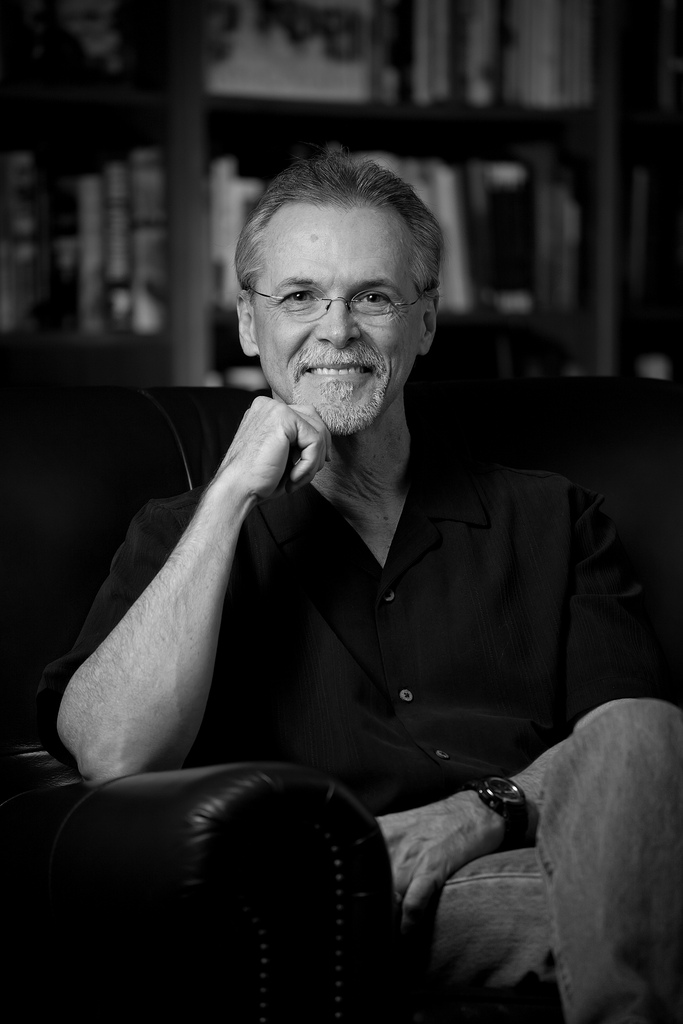
Gregory D. Williams, M.D. is the winner of Georgia College’s 2008 Arts and Letters Prize for Fiction. His fiction, essays, and poetry have appeared in Blue Mesa Review, Elysian Fields, American Fiction, Bosque, and the Journal of the American Medical Association. A graduate of Stanford University and the University of Arizona Medical School, he grew up in Phoenix, Arizona. Dr. Williams’s specialty was anesthesiology, and he was the son of an anesthesiologist. The author passed away in 2020.
 BookView Review
Leave a comment