Welcome to BookView Interview, a conversation series where BookView talks to authors.
Recently, we talked to Julia Soplop about her writing and her soon-to-be released, Information Crisis, a brilliantly told, eye-opening read that provides a much-needed perspective about the present-day information crisis. (Read the review here). work has appeared in numerous publications, including National Geographic, Summit Daily News, and Skiing.
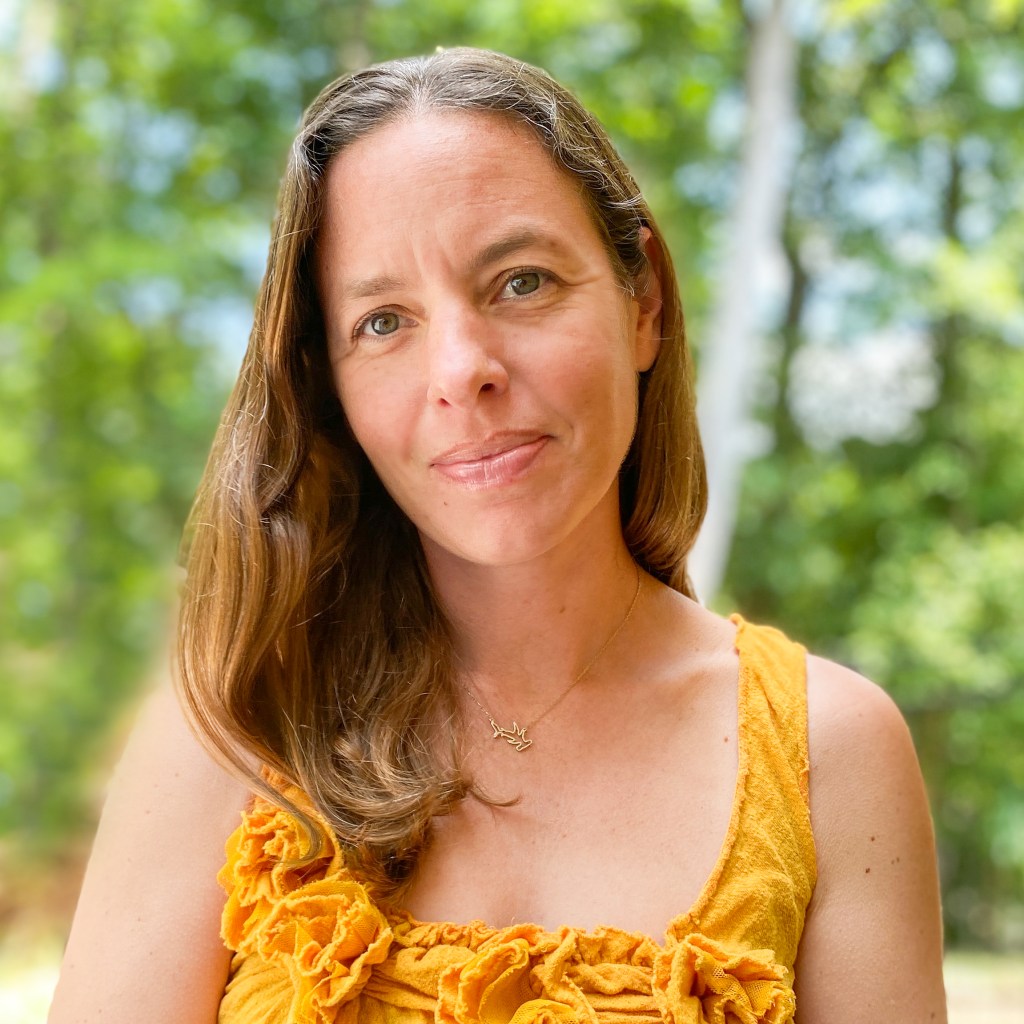
Julia Soplop is a science writer and the author of “Equus Rising: How the Horse Shaped U.S. History,” winner of an Independent Book Publisher Award and a Feathered Quill Book Award. Her work has appeared in numerous publications, including National Geographic, Summit Daily News, and Skiing. She also develops thought leadership for organizations that address issues of scientific or social concern. She holds a bachelor’s from Duke University and a master’s from the medical journalism program at UNC-Chapel Hill. She lives with her husband and three daughters outside of Chapel Hill, NC.
You can find Julia online at www.juliasoplop.com and on Instagram at @juliasoplop
Tell us some more about your book.
I think of “Information Crisis” as a sort of hybrid format in that it’s both an analysis of the (mis)information crisis in which live and a roadmap for navigating it. By that I mean, it investigates the vulnerabilities that prevent us from making accurate sense of scientific information and applying that information to benefit ourselves and our communities. And it also serves as a tool to reduce those vulnerabilities by providing guides to both science and media literacy, as well as illustrating common, and therefore recognizable, ways that different actors across society prey on our scientific misunderstanding for their own gain.
What inspired the premise of your book?
When I started writing about science more than 20 years ago, I naively thought that helping people to better understand the subject was simply a matter of translating technical jargon into digestible language. Over time, though, it became clear to me that translation is just one piece of the equation. Another large problem is this: The lack of science and media literacy in the U.S. is profound. I initially outlined this book in December 2019 as a small practical guide to consuming health and science news. Then the COVID-19 pandemic struck. The nation’s response at every level—government institutions, the media, the public—blew my mind. It showed that our relationship to scientific information is vastly more troubled than I had ever appreciated. I decided that, in additional to the practical guide I had originally outlined, the book would need to do a deep dive into this broader problem, its consequences, and what we can do personally and collectively to mitigate it for a better future.
What did you learn from writing this book?
This book transformed my thinking immeasurably, and I have a lot more writing to do to sort through some of the more existential questions it brought up for me. On a disappointing front, my research convinced me that many, or even most, people aren’t genuinely looking to make more accurate sense of the world around them. Instead, they primarily tune into information that supports their already held views, especially those tightly associated with their identities. On the flip side, I’m convinced that when people do have the desire to overcome these biases, seek accurate information, and apply it to make more evidence-based decisions, they can learn how to do so rather quickly.
Who is your intended audience?
Initially, I was writing the book for a curious general audience of non-scientists who were humble enough to think they might have a thing or two to learn about locating and deciphering credible scientific information. But as the project grew, I realized it had plenty to offer science communicators, as well. My hope is that in addition to being useful for non-scientists, the book will help to convince scientists, physicians, journalists, educators, and students of any scientific field that there is great value in learning to better articulate science to the public, and that it will give them some ideas on how to improve their communication skills. As just one example, the book offers checklists readers can use to evaluate the credibility of science news and information sources. Science communicators can use these checklists to evaluate the quality of their own work when writing for a lay audience.
What makes this book important right now?
False information is nothing new. However, technological advances now allow false information to spread faster and further than ever before, intensifying our confusion over what information we can trust to help steer our most important decisions as individuals and as a society. Add hyper-partisanship to the mix, and we’ve got a serious problem. As the meager and unsuccessful efforts by social media companies to safeguard users from pandemic-related misinformation demonstrated, no one is coming to save us from ourselves. With the rise of artificial intelligence in general, and large language models in particular, I anticipate that our information crisis will only increase in complexity. Each of us has a responsibility to learn how to effectively consume scientific information. Those who produce scientific information have a responsibility to articulate it meaningfully to the public. As recent events have illustrated, the stakes of not doing so are high—and sometimes even deadly.
Do you get nervous for people to read your work?
I’m always anxious to share my work with others. I suspect many readers will find that at least one subject I address in the book makes them uncomfortable, because it’s something they hold dear. It’s hard to admit that maybe your view wasn’t informed by quality evidence, but rather by misinformation, cultural identity, and/or manipulation by industries or interest groups. If I’ve done my job well by showing up with receipts for my analyses in the form of quality evidence, I hope I’ll earn their trust enough to make them eventually unclench their teeth, take a breath, and consider that, perhaps, it would be beneficial to rethink a stance or consumer habit based on evidence. In reality, though, I’m steeling myself to receive some angry emails.
What kind of research do you do, and how long do you spend researching before beginning a book?
I write research-heavy nonfiction. For “Information Crisis,” I read extensively for about a year as I was planning and outlining the book. But the research continued every day I was writing, so it was really a years-long process. It included reading academic journal articles, popular media articles, and books; sifting through data; conducting interviews with scientific experts; and getting my own hands wet—sometimes literally—participating in scientific research in a variety of ways. The endnotes tallied more than 900 by the time the book was done!
How many hours a day do you write?
When I’m in the thick of a book project, I write intensely for at least four or five hours per day, sometimes more, just about every day of the week. I often fall into the trap of thinking that if I write relentlessly seven days a week, I’ll reach a point faster when I can slow down and relax. But that point never seems to arrive, because I just hop right into the next project. I’d give this strategy five stars for productivity but zero stars for sanity. I’m working to develop more sustainable writing habits and setting boundaries around the weekends for future projects.
What does literary success look like to you?
While it would be fantastic to achieve great monetary success from my books, it hasn’t happened yet, and I don’t anticipate it will. My impetuous for writing isn’t commercial. It’s to put ideas that feel important into the world; to present complex subjects from perspective-shifting angles; to help people develop a more evidence-based understanding of issues that matter to them. I’m too insecure to call any of my writing a “success,” but it does mean a lot to me when people tell me they learned something from my work.
How often you read?
Constantly. My husband fears that one day, he’ll come home to find me stuck under a toppled tower of treasured books.
What’s next for you?
As I was nearing the end of this book, I started to crave a return to article-length work—projects I can start, finish, and remove from my brain space within a matter of days or weeks. I’ve recently begun to pick up more freelance writing assignments on various issues of scientific concern and have promised my family and myself a hiatus from writing books for a bit. You’ll notice I’m leaving the time frame nebulous…I’ve already got some vague ideas brewing for a collection of personal essays on those existential questions the project drummed up.
***
 BookView Review
Leave a comment