Welcome to BookView Interview, a conversation series where BookView talks to authors.
Recently, we talked to Jake Zortman about his writing and his debut novel, The Rise of The Legends, an intelligent, exhilarating, and wholly absorbing SF read. (Read the review here).
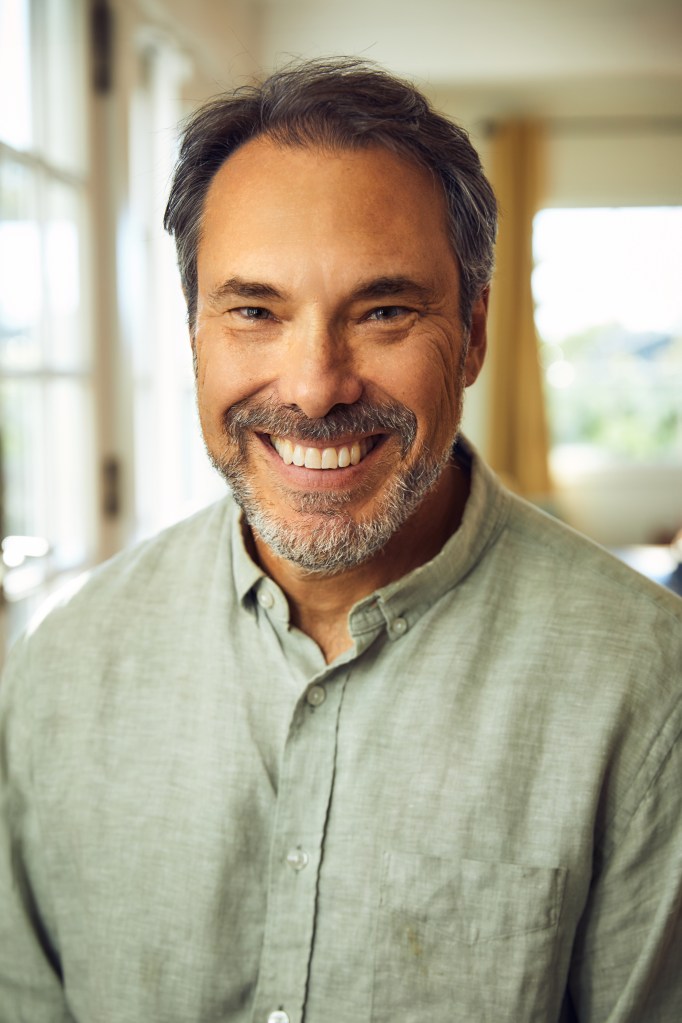
In Jake Zortman’s first novel, The Rise of the Legends, he pulls from his experiences growing up, moving a lot, and starting over again. He knew what it was like being the new kid in school, struggling with bullies, and the childhood challenge of finding your place in the world.
Jake developed a passion for storytelling and photography, marrying the interests with a degree in Broadcast Journalism. He’s enjoyed a successful career as a cinematographer, producer and director, and owns a production company in Los Angeles, CA.
When he’s not on set or writing, he’s sailing his boat off the California coast, mountain biking, or traveling.
Who and what ultimately inspired you to become a writer?
My father was a writer and I always looked up to him. I remember being a little kid and hearing him banging away on his manual typewriter; clack, clack, clack, clack, ding, whoosh! I also was an avid reader of fiction, mostly kids having adventures, and I love to tell stories, so it’s something I always thought I would do.
Does writing energize or exhaust you?
Actually, it energizes me. The only reason I don’t sit and write for longer periods is that I really don’t like sitting still. I finally found a process in which I write, then do some yoga, then write, then go the gym, then write, then go for a walk or bike ride. But while I’m doing the physical stuff, my mind is super active in my narrative. In fact, I don’t write in the evenings in general because I will have trouble shutting my mind off and going to sleep.
What inspired you to write this book?
I had a few inspirations. It started when I was talking to a childhood friend of mine at the beginning of the pandemic. He was really into flying drones and had started a zoom-based class for kids, teaching them coding and some basic STEM (Science Technology, Engineering and Math) stuff using drones. I logged in to watch and was really impressed by how the kids were into it. The program was called Drone Legends. The short version of the story is that we realized that kids enjoy learning when they can apply the lessons to doing something. In the time since, my friend, and now business partner Scott Buell, built an educational company called Drone Legends. “The Rise of The Legends” is an exciting narrative about a group of kids who stumble upon a message from the past in a series of riddles. There are all sorts of twists and turns, which I won’t go into here, but they use many STEM concepts to solve the riddles and get themselves out of difficult situations. In the story, they’re in an afterschool club called Drone Legends. It’s not a big part of the narrative but I did purposely tie it to the Drone Legends curriculum program so that kids in the program can imagine how they can use these concepts in adventures of their own, and so that readers connect with the idea that kids in the real world can be Drone Legends just like the characters.
Where do your ideas for this story come from?
I moved a lot when I was a kid. I started in new schools, in new cities, sometimes in the middle of the school year. I struggled to make friends and was often the target of bullies. Books were my escape. The tales of young boys going off into the world and having adventures crafted by Robert Louis Stevenson, Mark Twain and Jack London were favorites. I also really liked science fiction from authors like Robert A. Heinlein, Isaac Asimov and Edgar Rice Burroughs. “The Rise of The Legends” is a reflection of some of that, incorporating a bit of sci-fi, a little sailing adventure and shipwreck, mysterious messages and exploring underground tunnels. The characters deal with things that I did as a child, such as moving a lot and bullies. I even had some of the adventures they have, like exploring caves and finding Native American artwork on the walls. I grew up camping out, starting fires with flint and steel and cooking over them. I have a sailboat and love going to the islands off the California coast. All experiences reflected in the narrative. I introduced my sons to those kinds of things and noticed how much their young minds loved to explore and interact with the nature, to get dirty, use their hands, just do real stuff in the world. They also grew up with screens and video games, and we let them learn and have access to those things as well. I think it’s important for kids to be out in the natural world, but also to understand and embrace the technology that is an important part of the society they’re growing up in. This narrative reflects that – the characters use technology, even some that doesn’t quite exist yet, while also learning about the tools and lifestyles of people who lived in the pre-tech world. I want the reader to be excited and inspired to learn about and engage in both areas.
How many rewrites did you do for this book?
I’d have to guess because it’s not so cut and dried as a beginning to end rewrite. As I was writing, I’d realize that something that had occurred previously in the story needed to change, so I’d make myself a note. I’d go back and make my changes and in re-reading the chapter, end up changing all sorts of things, which then triggered other changes. This continued until I went to print, actually. I am sure, that if I start reading today, I’ll find something that I’d like to change. As an author, you finally have to put the pen down and run with what you’ve got or you’ll never publish. I did cut about 10,000 words from my first draft to the final!
Which scene or chapter in the book is your favorite? Why?
There are two chapters that cause an emotional response within me when I read them. In Chapter 28, “A Father’s Perspective” and Chapter 38, “R.I.P. Chaos” a character has gotten himself into a serious situation and comes clean to his father. In both cases the fathers accept and understand, offering wisdom rather than condemnation. In one case, the father tells a story in which he had taken a similar course of action as a boy, endangering himself and worrying his parents. It’s an act of love and understanding in which the father is helping his son to understand his own motivations and forgive himself for the harm he caused by sharing that he too has made similar choices. In the other instance, a character is expecting his father, who has always been hard on him, to react harshly to the situation he’d gotten himself into. His father surprises him with support, and suddenly the boy realizes that everything his father had put him through was out of love, to prepare him for exactly the situation he’d ended up in. I think I am playing out some deep emotional issues I have with my own childhood and father through these chapters, even though that’s not what I set out to do.
Which scene was most difficult to write? Why?
I’m not sure how other fiction writers go about their work, but for me, it just comes out. Actually, I often wake up in the middle of the night or in the morning with a complete narrative in my head, beginning to end. Or, so I think until I start writing. I always knew the plot points of this story. I knew where I wanted to go. I don’t use an outline or build character profiles. The way my brain works, I just need to start writing and see how the story evolves. I learn who the characters are through this process. So, the hardest part for me to write is the beginning of the novel and the little connective story points that are needed to lay the groundwork for the larger narrative. In this case, I know these five kids are going to end up as a team, having wild adventures. How do they meet? What makes them decide to form a team? What is a compelling way to bring everyone together and set up the main conflict in the story? The fun exciting stuff is easy, it’s the little things that are harder for me.
What makes this book important right now?
I think we are in a stressful time and our children absorb that more than we recognize. There is academic stress, a future of the planet sort of stress and socio-political stress. I try to address all of these in this novel. The title is what the story is about – a group of kids who rise to their potential – “The Rise of The Legends”. Every kid has the potential to be legendary. Every kid wants to engage the world. In this story, that’s what the characters do. The Legends put the things they’ve learned in school into action, showing that there’s a point to what they’re learning and it can be fun, rewarding and useful. The premise of the story is that these kids are destined to save humanity from things like climate change. It sets an example of how school age kids can take action rather than feel hopeless, drowning in the scary headlines about a desperate future. And there’s a consistent theme of understanding of one’s self and each other. Each character is figuring out who they are in a society that, at the moment, is preoccupied by labeling people based on their heritage, politics, beliefs, even the state in which they live. That’s one reason I created a fictitious American city, I never mention a state so there’s no judgement. The characters learn that it’s their uniqueness, their differences which gives the group it’s strength. And, that regardless of those differences, they believe in a common set of principles which motivate their actions. It’s a lesson I think an awful lot of adults could use today. It would be a shame if we lose the promise of being a nation made up of people, all with unique backgrounds, histories, challenges and beliefs who put the ideals of freedom, equality, opportunity and rule of law above all else. It’s a fair point to say that we’ve never quite been there, but it’s been our ideal and it’s a worthy one. We should make sure our children believe in it too.
***
 BookView Review
Leave a comment