Welcome to BookView Interview, a conversation series where BookView talks to authors.
Recently, we talked to Sarah P. Blanchard about her writing and her soon-to-be published debut mystery, DRAWN from LIFE: a novel, a gripping narrative of redemption, fortitude, and bravery. (Read the review here).
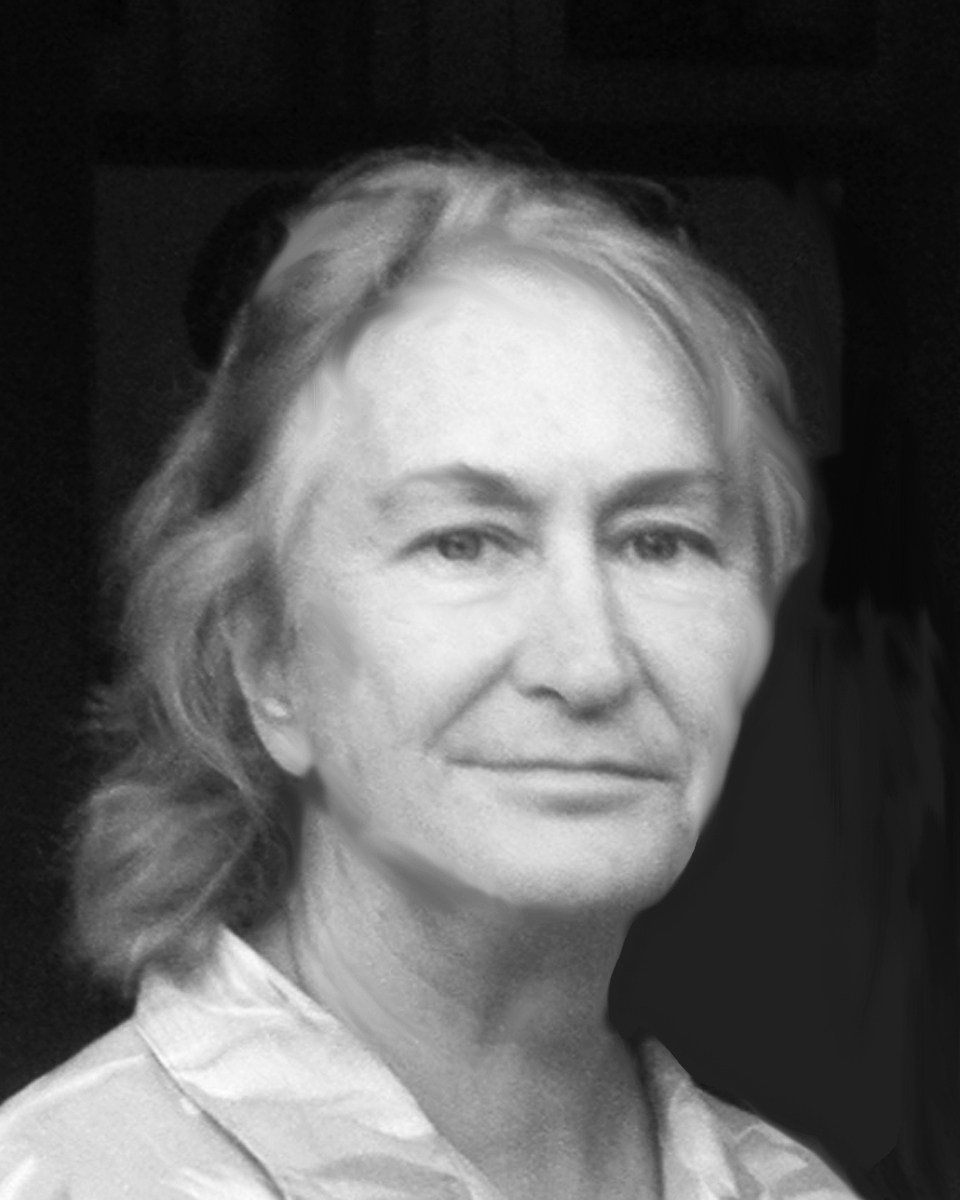
A New England farmer at heart, Sarah P. Blanchard also lived for several years on the Big Island of Hawaii and in the Blue Ridge Mountains of North Carolina, where Drawn from Life and many of her short stories are set. Rural life and the natural world have strongly influenced her writing, as have the works of Southern writers Barbara Kingsolver, Charles Frazier, and Ron Rash.
Sarah holds a B.A. in English and an M.B.A. in marketing. Before turning her attention to writing fiction, she worked for many years in communications and marketing. On side journeys, she has also been a volunteer firefighter, radio news anchor, talk show host, magazine editor, website developer, horse trainer, grantwriter, and facilities supervisor for a large astronomy observatory.
For five years, Sarah taught at the University of Hawaii-Hilo and also taught fiction writing in the College for Seniors Program, part of the Osher Lifelong Learning Institute at the University of North Carolina-Asheville.
Sarah has written three instructional books on horse training (1993, 2003, 2005; Howell Book House). Many of her poems, essays, short stories, and a novella have been published; recent works have appeared in The Write Launch, PenDust Radio, The Plaid Horse, Causeway Lit, and Sixfold. Her story “Playing Chess with Bulls” was one of five finalists for the 2021 North Carolina Writers’ Network Doris Betts fiction prize. She is active in several writers’ groups and workshops.
In her writing, Sarah is drawn toward flawed, compassionate characters who believe they must battle their demons alone; and complex antagonists who think they have nothing left to lose. Currently, Sarah lives and writes in the Blue Ridge Mountains of western North Carolina.
Website: sarahpblanchard.com
Facebook: facebook.com/SarahWritinginWeaverville
X/Twitter: Sarahs_lexicon
Tiktok: sarah_p_b_author
Q: What does literary success look like to you?
A: Success is learning how I’ve touched readers with the words I’ve written. When someone tells me my writing has made them cheer or cry or celebrate—or just think a little more—that is very gratifying. I loved it when one reader told me, “You observe everything so well that you bring the reader right into the barn and the bedroom.” Another reader said, “You’ve created a world of characters
Yes, I appreciate seeing the sales numbers rise. Mostly, though, I’m delighted to know my writing has reached a large audience and most of those readers seem to appreciate what I write.
Q: Tell us about your connection to western North Carolina, where Drawn from Life is set.
A: My husband and I first visited Asheville in 2013, three years after we moved to Raleigh from Hilo, Hawai‘i. We fell immediately in love with the Blue Ridge Mountains. At heart, I’m a farm girl not a city girl, so when we retired from the day jobs, we found a home next to cattle farms on the outskirts of Weaverville, just north of Asheville.
The opening scenes in this book depict a remote hunter’s cabin on a fictional mountain called Bishops Knob. I’ve ridden horses on many gravel roads just like the one in the book—narrow and winding, with steep drop-offs and hairpin turns. One lane, no guardrails. In winter, snow and ice make these tracks treacherous or completely impassable.
In writing about this, it struck me that the mountain roads in Appalachia can seem similar to many of the mountain roads in remote areas of the Big Island of Hawai‘i, where Emma’s detective is from. Different vegetation and rock formations, of course, but equally as treacherous.
Some of my favorite memories of childhood are times spent in the woods and fields of New England, where the natural world held a deep fascination for me. I’ve never stopped appreciating the allure of forests and fields.
Q: Who are among your favorite writers, books, and influences?
A: We have so many marvelous writers here in the South. Ron Rash, Wiley Cash, and Charles Frazier are three of my favorites, for their strong sense of place and the way they use place to build character.
Another writer special to me is Barbara Kingsolver, for those same elements but also the larger sweep of her stories through the passage of time—most notably in Demon Copperhead. Delia Owen’s Where the Crawdads Sing is also a favorite of mine, for her lyrical depictions of the natural world and the girl who grows and draws strength from it. On the grittier side of the mystery genre, Jonathan Kellerman’s psychology-steeped suspense stories have always intrigued me.
My parents were my best and earliest storytellers. I was born late in their lives, after four much-older siblings had grown and moved away. I enjoyed the reflective and solitary life of an only child—but with a far-flung extended family and experienced, at-ease parents who shared their love of the natural world, encouraged my creativity, and (usually) celebrated my independent spirt.
And of course there’s my husband Rich, grammar grinch and proofreader extraordinaire, who prefers science fiction but always has a bottle of bubbly on hand in the fridge for every success.
Q: How often do you base your characters on real people?
A: There’s always an element of “real” in my characters—write what you know, yes? Usually, though, my characters are created from a mash-up of several people. I’ll start with a person in mind, but then decide I’d like the main character to be a little more flawed, the villain to be more desperate or more complex. I also tend to change the names of important characters mid-way through, especially if the character develops into someone other than my first imaginings.
Q: If you could tell your younger writing self anything, what would it be?
A: Spend more time learning the craft and don’t be so damned shy about asking for help. When I was young, I was told I had a talent for writing vivid imagery. I won a statewide writing contest at age twelve and thought I was hot stuff. I was also painfully shy; any criticism of my work was received as that clichéd dagger to the heart. As a result, it took me a long time for me to realize that although I could craft a vivid vignette, I didn’t have the tools to produce a story. I finally began to catch on after taking a weekend seminar in writing screenplays, and began learning about beats and breaths, character arcs, and story structure. Once I paid more attention to the tools of the craft, I became more confident—and also more comfortable about receiving helpful criticism. I just wish I’d learned all that about two decades earlier.
Q: Do you read your book reviews? Do they please or annoy you? Can you learn from reading criticism about your work?
A: Yes. Both. Of course.
I read every review. Of course, not everyone will appreciate or even understand my writing, and that’s okay. I’m always open to honest, open criticism. If there’s a flaw in my writing—perhaps a plot point that didn’t work—I’d like to know. But if there’s a critique that isn’t particular useful, or just an expression of a reader’s bias, I’ll just set that aside.
For example, I wrote a short story about a teenage girl who rides rodeo bulls (“Playing Chess with Bulls”). One critic dismissed it as an improbable premise because girls simply weren’t capable of riding bulls. I just shook my head and moved on. That story won a readers’-favorite award and was a top-five finalist in a prestigious literary contest.
Q: How did you come up with the title?
A: I wanted to make my main character expose her vulnerability in a very visible, visceral way, that goes against what you would expect of a mousy bookkeeper—but I didn’t want to use the common tropes of self-abuse or self-harm. What’s more visible and vulnerable than posing nude for figure-study classes in an art studio? At that point, the title announced itself.
Q: What’s more important, characters or plot?
A: I always start with characters, because by knowing those people I can understand how they will respond to any element of plot. It’s their hopes and fears, strengths and flaws, that will drive the choices they make…and there’s the plot. Having an idea of the conflict and inciting incident is also important, or the story won’t get going. But first and foremost, I want vivid characters.
Q: Where did the idea for this book begin?
A: The main themes—guilt, atonement, reconciling a moral injury—go way back. When I was in high school, a teenage friend disclosed that his mother had always blamed him for the serious injuries she’d suffered in a car crash. He’d been a few minutes late leaving an after-school event and she’d had to drive around the block a second time, looking for him, and that’s when another driver smashed into her car. My friend carried the tragic injustice of this blame into his adult life, emigrating to the other side of the world to escape her undeserved vitriol.
A misplaced belief in agency—that we, or someone close to us, has real control over what happens in our lives—can cause tremendous heartbreak. I wanted to create a story that addressed that, featuring a character who gets stuck in the “should-have” and the “if-only” of regret. That
brought me to Alice Gregory’s article in The New Yorker (“The Shame and Sorrow of the Accidental Killer,” September 11, 2017).
I knew I’d found the core of my main character: an ethical, conscientious young woman burdened with the guilt of an accidental killer. Then I had to figure out how to get her unstuck from that. And I needed a worthy antagonist to propel the story forward. So I created her troublesome cousin.
Q: What was the writing process like for you?
A: The writing took three and a half years. I added characters and plot twists, researched PTSD, physical trauma, and various therapies. I talked with military veterans about moral injury. I also fell in love with my characters and gave them complex backstories. The book grew to 105,000 words and wandered down too many rabbit holes—all fascinating to me, but not all supporting the heart of the story. Editor Annie Mydla (Winning Writers) brought me back on track to emphasize the essential story: Emma must find the courage to confront her cousin. She can have help, but ultimately this has to be Emma’s story.
***
 BookView Review
Leave a comment