
From the Blurb:
Swiss homicide detective Angeline Devereux arrives on the scene of a murder in gloomy Lindenhof Park. The victim’s lifeless body is found shoved inside the wooden box normally home to the oversized wooden chess pieces for the outdoor chessboard. Devereux’s obsession to uncover the identity of the murdered man takes her to a small Czech village where the mystery continues to take bizarre twists and turns. Discovering a revenge plot between the victim and one of her suspects, she makes her way to a monastery, where she encounters a band of bow wielding monks. Once the hunter, she is now the prey.
While back in Zurich, as Devereux works on solving the murder, she also struggles to resolve her own internal demons and an evil past that continues to torment her.
Written with extraordinary detail and authenticity, Femme Devereux is a spellbinding page-turner, sure to entrance all armchair detectives.
Buy now
Read the review
It was a cold, blustery night in Bad Gaston with a hint of snow in the air. Mika, an intermediate skier, preferred the safer, manicured, well-lit main slope, while Devereux, an expert, loved to ski the treed terrain bordering it.
“Tonight, Mika, dearest, we ski among the trees,” she said, staring pointedly into his eyes.
“Oh, must we, Angy? Why not a relaxing run tonight?” he protested.
A surge of rage . . . suddenly overwhelmed her. Swiftly wrapping her hands around his head, she paused for an instant . . . then twisted his neck — with a gentleness belying her intent. She held him close, whispering in his ear, stroking his cheek, caressing his golden hair — irrationally telling him that she was sorry.
From where she sat, the park sloped slightly downwards towards the southwestern corner, and the outdoor chessboard — now surrounded by crime scene investigators. Someone sitting at her present location at the precise time of the murder would have had a decent though distant and partially obscured view of the entire event. The light from the low-hanging sun in the east cast long, thin, dappled shadows among the evenly spaced Linden trees. The air was icy, the mood gloomy, the park, as always — a perfect setting for a murder.
“Do you have a guest named Anton Keller?” she finally began.
“Does this concern him?” asked Frau Werner fretfully.
“Yes, it does,” replied Devereux, “and unfortunately, Frau Werner, there is no delicate way to put it. Anton Keller is dead. He was found stuffed inside a wooden box in Lindenhof Park.”
Devereux winced inwardly at her own blunt and callous wording.
Frau Werner spilled her tea.
“Was it his heart?” asked Frau Werner finally, ignoring the spill.
“No,” replied Devereux, “he was murdered.”
No one, no matter how agile, had a heart attack, then stuffed themselves inside a wooden box, or — jumped into the box and then had the heart attack, thought Devereux. It just wasn’t that common
The room was bright, cozily furnished with a single German Renaissance bed — thick quilt and giant down pillows, neatly made up — lying against the southern wall. A narrow window looked to the east directly onto Lindenhof Park with an unobstructed view of the outdoor chessboard in the southwestern corner, tucked under a canopy of Linden trees.
It suddenly struck Devereux how shrunken Anton’s world had been. Each morning, he would look out through his window and watch the predawn shadows play beneath the Linden trees before heading for the park, ten to fifteen minutes away, where he would perform the solitary function of setting up the chessboard. What’s behind this shrunken world? she wondered. No one
lived in such a dungeon — unless they were hiding from something.
Sometimes, when she was alone, she would toss her Fedora onto her desk and examine herself in the mirror, fascinated by her own image, in particular, her full head of rusty reddish-brown hair, and wondering whether the evil — that seemed to be slowly growing within her — was visible in the glint in her eyes, the twist of her lips.
Devereux was a young girl in the dream, throwing her arms around her mother’s hips, tucking her head between her mother’s exposed, full-rounded breasts — in a moment of sublime contentment.
“My little angel,” her mother had whispered before pushing her away in rejection.
A crisp night breeze sweeping in through the open window made her shiver. She stood still for a moment, wondering why she was reacting to Frau Werner in the way that she was. Something about the woman affected her! Finally, she realized what it was. Frau Werner reminded her of her mother, the mother she hardly knew. Her mother had died in her late twenties when Devereux was ten years old — and one of Devereux’s lasting memories was of her mother in a green silk nightgown. Is that the connection with Frau Werner — nothing but the color of my mother’s nightgown? she thought.
With the blues singer’s words — I want a little sugar in my bowl, I want a little sweetness down in my soul — drifting softly through the open window . . . in the direction of Lindenhof Park — she sank deep down into dark unconsciousness.
Foibles thought Devereux — her mind lapsing into momentary light-headedness. The man left cookie crumbs on the floor! I wonder if that was what got him murdered. Poor man left cookie crumbs on the floor of the wrong person. See what foibles can lead to!
Doktor Sarka immediately withdrew a small green book from his gray nondescript trench coat and a pencil and, putting the lead tip to his lips, made an entry in the book. Devereux felt an instant pang of remorse. What trouble have I gotten myself into, and perhaps Professor Cerny, as well? she wondered.
“Don’t worry, Inspektor,” said Sarka calmly, aware of her concern. “I just remembered that I must bring cheese home tonight and made a note to that effect.”
“May I take a peek?” asked Devereux mischievously.
“Why not?” replied Sarka with a grin, laying the book on the table.
Devereux leaned over. On the last page was the word “sýr,” the Czech word for cheese.
So, there it was, confirmation that an Anton Sykora had died in 1944 and that the mayor had been telling the truth — leaving Devereux with the paramount question still unresolved: Who was the man murdered in Lindenhof Park? Then as she was about to leave, she noticed another tombstone, small and unpretentious, the smallest in the graveyard. It bore a simple inscription in Czech: Agata Masaryk – říjen 2, 1968. But what caught her eye was not the inscription but the tombstone itself. It was smeared with human excrement.
“Be careful, Angeline,” she said softly as Devereux headed for the door. “You are right — the people in this town are strange.
Devereux tried to explain, but the two men wouldn’t listen. Then, seemingly out of frustration, they began flailing her with their fists. She fell to the hard dirt floor curling up into the fetal position. The attack continued, but halfheartedly, and despite not being seriously hurt — her body somewhat protected by her trench coat — she began to whimper. It wasn’t the beating so much that made her feel vulnerable — but the mere thought that someone wanted to hurt her.
Sometime around midnight, Devereux dreamt that Gabrielle had crept into her room — and that they had made feral, wordless love to each other. It was only in the morning with a cool breeze sifting in through the curtains and a deep feeling of relaxation that she had not felt in years — that she realized that it was no dream.
Dvorak angrily slammed both his hands onto his desk.
“I must insist that you leave my office immediately.”
“Not until I get that address,” Devereux shot back.
“Dolfy!” snapped Dvorak.
Immediately, the dog’s ears perked up and still resting on its stomach, it began to growl. Devereux stepped briskly forward — and to both the lawyer’s and the animal’s surprise, and consternation — tapped the beast lightly on the snout, simultaneously saying “Sitz” in a firm voice. The dog whined softly, its ears drooping once again. “Be careful now, Herr Dvorak,” she said, turning to the lawyer, “give the wrong command, and I may just have to shoot poor Dolfy. I will maintain that it was in self-defense — and even allow the dog to attack to prove it.”
Devereux held her right hand just inside her suit jacket, where her pistol would have been holstered — if it were not inside her travel bag.
“You are a heartless bitch!”
“No, Herr Dvorak, just determined,” countered Devereux, and with that, she went to the filing cabinet and opened the top drawer.
“You’re a policeman. You can’t do that,” cried the lawyer in disbelief. “I’m doing it because I am a policewoman and a bitch, and can get away with it,” snapped Devereux, beginning to rifle through the folders.
With a feeling of relief, Devereux decided that it was time to make her presence known. Shoving the tarpaulin aside, she stood up and stretched her arms, languidly — while the two monks stared up at her speechlessly. Father Malachy jumped from the cab.
“Sakra!” he cried. “What are you doing here?”
Devereux hopped from the back of the truck.
“I came to see the Abbott,” she replied brightly.
Back in her icy cell, Devereux found two wash basins atop the wooden table — one filled with warm water, the other empty — a small dish containing a goat-scented bar of soap, and neatly folded on the bed, a white hand towel, all suggesting a cultured cleansing of hands in preparation for dinner. She was testing the temperature of the water when Father Malachy rushed into the room. Her trench coat lay on the bed.
“Listen carefully,” he said, urgency in his voice. “We don’t have much time.”
“What’s the problem?”
“Unfortunately, I bear bad news . . . the Abbott is planning to murder you.
“And then what? What’s the overall plan?”
“I’ll work out something from my end,” replied Father Malachy. “Have faith, let the plot thicken . . . But be assured, as God is my witness, I will not let the Abbott strangle you.”
“How decent of you,” replied Devereux with undisguised sarcasm. “Frankly . . . everyone in this monastery is nuts. Still, I must admit, the very perversity of what you are saying is intriguing. Maybe I will attend this dinner after all, merely out of curiosity. So, essentially, I simply extemporize?”
“Ja,” said Father Malachy encouragingly. “Simply extemporize.”
Both drained their large wine goblets. The Abbott immediately refilled them, and soon both were chatting amiably, the Abbott, in a surprisingly boyish manner, about his early childhood in Poland, and Devereux, complaining, cavillously, of the trials of a French female detective in the Germanic city of Zurich. Doubts began forming in her mind. She was genuinely enjoying the Abbott’s company. His enthusiasm was too natural.
“I don’t have much to offer,” replied the Abbott, “but I do know that though Father Maximus was not himself a true Believer, he did have a special affinity for churches, all churches, and he once told me that of all the churches in Europe, one stood out above all others . . . and therefore, I believe that if he is still in Zurich, you just might find him in the shadow of Grossmünster Cathedral.”
He was so engrossed in the conversation that he did not notice the slight discoloration of
the water due to the gray powder at the bottom of his water goblet.
And now, with the monks conducting their mock trial in a sea of white and gray frocks, Devereux’s innate sense of guilt resurfaced more robust than ever. To everyone in the hall, she had the abject appearance of a guilty soul — and she knew it. Finally, as she emerged from her spell, Father Malachy was finishing his address to the congregation.
“Moreover, I sense in her an evil, an evil far preceding her killing of Father Augustine. We cannot simply let her go. That would dishonor the death of our poor dead Abbott. There must be some form of justice; therefore, I believe that we should put judgment in the hands of the Lord God our Savior.”
She heard the sound of barking dogs, two of them . . . not as alarming as a pack but worrisome nonetheless. Her odds had shrunk . . . four bullets, four monks — and two dogs.
Two monks, their bows strapped to their backs, one stout, one thin, emerged from the wheat field, coming to a halt beside the Doberman. Devereux didn’t recognize either of them. Neither seemed particularly aggressive. They stared at her, frozen for a moment, apparently concerned by the raised weapon.
“We didn’t expect you to be armed,” muttered the slim monk.
“Father Malachy gave it to me,” replied Devereux.
“Hovno!” cried the stout monk.
“Please don’t shoot Goethe,” said the thin one, referring to the dog. “You killed Faust.”
“Faust? You mean the dead dog by the stream?”
“Ja!”
Goethe and Faust? The irony was deliciously chilling. What will the Devil think — if there is a Devil? she wondered, laughing eerily.
As she shifted into gear, the front door of the rooming house opened, and Gabrielle, still in her dressing gown, stood on the porch looking in her direction. Devereux wanted to stay and speak to her — to talk about what had happened between them. Why did I get involved in the first place? she wondered. I have no lesbian tendencies, I think. Was it just to touch someone, almost anyone, feel the warmth of a body next to me?
And during that last hour, for the previous two evenings, she had sat on a bench near another one of Zurich’s outdoor chessboards, one situated a few steps from the Münster Bridge, on the church side, mildly interested, if not enthralled — by the spectacle of old men pushing chess pieces around with their feet. And that was where she was tonight! To help pass the time, she had brought with her a French translation of The Lower Depths, a play by Maxim Gorky. Why have I
chosen such a gloomy offering? she wondered. She knew why. It fitted her mood. She wanted to immerse herself in its melancholia.
Devereux was bored and about to leave when an older couple emerged from the shadows and approached the chessboard. The man — wearing a black Fedora similar to Devereux’s — was around six feet tall and slender, bearing himself with a stiff stateliness and clutching a cane in his right hand, partially covering a large brass ball. A bag of groceries with a baguette sticking out was tucked under his left arm.
Is the right hand covering a brass lion’s head? wondered Devereux. Her
pulse quickened. Could this finally be him — could this be Maximilian Wolf?
“I must ask you this, Herr Wolf,” said Devereux, shifting in her seat uneasily. “Did you murder Anton Masaryk?”
“No, I did not,” replied Wolf with conviction.
“But you wanted to,” replied Devereux quickly. “Moreover, you lied to me earlier when you said that you did not know who Anton Masaryk really was.”
“Why would you say that?” asked Wolf, surprised.
“Simply because, Herr Wolf, I’ve been to Čeněk.”
For the first time, Wolf seemed taken aback. His eyes widened with wonder.
“You’ve been to Čeněk?” he muttered finally.
Would the prying Wolf contact Růže Monastery and discover another “accident”— the one that had killed Father Malachy? she wondered.
She was afraid. If anyone was the Devil — it was Maximilian Wolf.
Then Gessner did something unusual, something that startled her. He got up from his chair, went over to her, and slowly began stroking her rusty reddish-brown hair close to her right ear. Keeping her head down, staring at the surface of her desk, she said nothing. Then his fingers stroked her ear lightly — just the faintest of a brush. She shuddered.
“I know, Angeline, I know,” he whispered softly.
“Berndt,” she murmured back — wondering momentarily what he meant.
He senses my torment, she then thought, but he’s also aware that it is more than simply misguided guilt. In some sense, he knows. They all know, Müller, Gessner, certainly Wolf knew. And suddenly, she felt completely naked, her torment, her transgressions, her evil nature, utterly exposed to the world! It’s unbearable, so unbearable
***
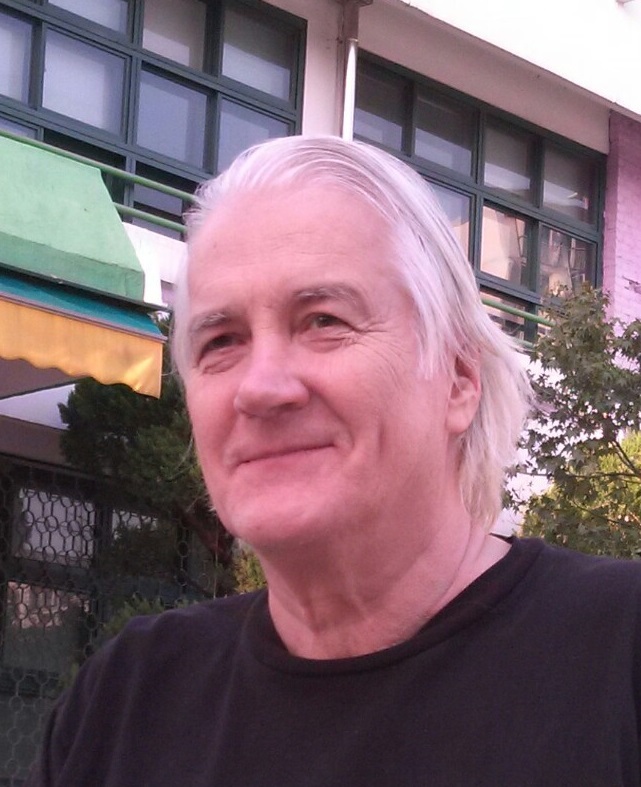
Ray Sproule has a Ph.D. in Mathematics from the University of North Carolina, Chapel Hill. He has been interested in writing fiction since the age of seventeen. His inspirations range from Kurt Vonnegut and Martin Cruz Smith to Dostoevsky, Nabokov, and Gogol. His first book, The Paranoian, was published in October 2022.
He was born in Montreal and raised two sons as a single parent. He currently lives on Vancouver Island, B.C., and enjoys traveling, chess, hiking, and reading.
 BookView Review
Leave a comment