Welcome to BookView Interview, a conversation series where BookView talks to authors.
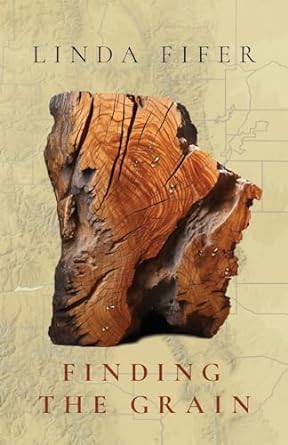
Recently, we talked to Linda Fifer about her writing and her recently published novel, Finding the Grain, a powerful story of second chances, forgiveness, and reinvention. (Read the review here).
Linda Fifer grew up in Ohio with writers and musicians in her family. She graduated from Kent State University with BS and MA degrees in Speech/Language Pathology, then moved west. She has written a musical, songs, poems, being published locally in “Spokane Writes”. Now retired, she completed her debut novel The Road Between Two Skies, an uplifting story of a woman who discovers her strength when faced with demanding challenges. Living in the West with her husband and two dogs, Linda is inspired in the nature surrounding her.
Finding the Grain is populated by a cast of characters that are dynamic and varied. What was the process of creating these characters? Was each one’s development influenced by the others?
Finding the Grain introduces characters who have served in the military. I wanted to capture several of those traits: Izzy’s struggles with the horrors and consequences of war; Tom’s guilt, the secrets he carries, and the sense of devotion to promises he made to Izzy’s husband Dave; Ben’s distancing from his Navy service but layered with the recent death of his wife; Neil’s reliance on the Legion for companionship and purpose. All of them are in various stages of transition of acceptance of their roles in battle, but also transition to civilian life, another challenge for soldiers.
Izzy’s late husband Dave is the thread that holds Izzy and Tom together, but only Tom realizes how weak that was. Several secrets are revealed throughout the book about Dave that alters Izzy’s perceptions of her husband, which eventually allows her to reassess her own life, needs and aspirations. This contrast in reactions, I hope, helps readers to see the various approaches to civilian life and the ghosts that haunt soldiers once away from the battle.
My husband provided many insights from his 22+ year military service which were great resources for this book. What he shared made the characters believable so the reader could be sympathetic to their struggles, while also understanding that civilian life is a challenge many soldiers are not prepared for.
Healing is obviously central to Izzy’s story in Finding the Grain. What was the impetus for you to write a narrative about healing, and how did you craft an authentic, growth-isn’t-linear trajectory for the character?
I liked the metaphor of the woodgrain showing how life is something that continues no matter what barriers are presented. We all experience struggles from which we need to heal: loss of a loved one, loss of a job, loss of self-respect, loss of support. In a tree, the loss comes from a force of nature: a lightning strike, a disease, a broken branch. Yet the tree heals and continues its growth around the damaged area.
Izzy’s reaction to Dave’s death is devastating, just going through the motions. She absorbs herself into repairing the house they were to share, to the point of exhaustion. She also exhibits difficulty asking for help, being defensive when Ben offers. Her independence that was required in the Army for her to literally survive now seems to be a barrier for her healing. But each character has a moment of insight: Ben, Tom and especially Izzy, when secrets about Dave are discovered. That insight is the only way to face the pain and to learn her strength to “move on”. But, as in the growth rings of a tree, the lines are not always symmetrical, predictable or neat. We all have situations that will never be resolved in our lives. By choosing to move on, a person needs to adjust, change goals or perspectives. It’s never a smooth path.
Have you found any part of the process of writing Finding the Grain to be cathartic or even healing for yourself?
Absolutely! I was dealing with several transitions when I chose to write Finding the Grain: I wrote it during the isolation of the pandemic; I had retired from a 44-year career as a Speech Pathologist (in some ways, a loss of my identity); the sudden death of my sister who wrote non-fiction (in a way, a role-model); the increasing evidence of PTSD in my husband’s life. There are several cathartic scenes for me. Izzy’s trip to Colorado contains a side-visit to a Dinosaur Park. She sees it as a distraction from the road and a nod to Dave’s love of dinosaurs. However, seeing the dinosaur bones trigger a response from Izzy that she hadn’t expected. It was much the same for me when I visited my sister’s condo after her death. Another powerful cathartic scene for me was when Tom confesses Dave’s taking his place on a patrol, resulting in Dave’s death. That one small choice made for a consequence that Tom blamed himself for. I felt Tom’s catharsis when he finally confessed this to Izzy, but his guilt remains. As a result, though, Izzy views Tom differently as a connection to the secrets that Dave never wanted her to know.
What has been the most surprising thing about writing or publishing this novel?
During the pandemic, I rewrote Finding the Grain at least three times. Then, there were two more rewrites during the editing process. At one point, I accidentally erased the last third of my manuscript. But that made the rewrite better. I used notes I had, but eliminated much of the extras I didn’t need. Atmosphere Press provided me with excellent editing suggestions (thank you, Megan!) and let me salvage the manuscript with some different story arcs. While a challenge, editing taught me skills I didn’t know I could learn
I’ve found editing is much like creating an arrangement of a song. The story or the essence of the song doesn’t change, but the interpretation does. I love the intricacy of editing, which surprised me. Writing is the creation of the story, the establishment and resolution of the characters and plot. Editing is a different form of creation that reworks the story with problem-solving and the ability to look at the creation with some detachment. It’s a different part of my brain, when I’m at that point. I never realized I would enjoy it so much. Atmosphere Press taught me that.
What did you learn from publishing your first novel, The Road Between Two Skies, that you carried into the writing of Finding the Grain?
The Road Between Two Skies was written and rewritten over the course of nine years. I saw myself grow each time I rewrote it—another story of lost chapters and rewrites that taught me what was important in the story. I felt I knew the characters really well and “cooked” the story arcs in my mind for months before writing anything down. After publishing The Road Between Two Skies, readers kept asking for a sequel. I felt I had written all I needed, but I realized the importance of strong characters resonating with readers.
Finding the Grain took me three years to write, and, truthfully, I didn’t much like the manuscript I submitted to Atmosphere Press. But Atmosphere, for both books, provided an unsurpassed experience from day one for me. I felt the characters of Ben and Izzy were flat, so I focused on their conversation rather than narrative to reveal their characters. That taught me so much, but it definitely had a different tone than The Road Between Two Skies as a result. Now, I’m more cognizant of what dialogue is important or necessary.
What’s next for you as a writer?
Next? Aside from still promoting The Road Between Two Skies and Finding the Grain, I am working on a third book. The story follows a woman who has been stalked, how she recovers her sense of worth and security as she heals. I also have at least three other books in various stages of rough drafts—Oh, and a fourth book that came to me the other day! I grow with each manuscript and learn so much about skills I still need and skills I acquire. Writing has given me a new confidence I didn’t expect and I look forward to continuing as much as possible with Atmosphere Press. It took me sixteen years to get The Road Between Two Skies published and I don’t intend to waste any more time!
Thank you for this opportunity today! I’ve enjoyed your questions and I hope people are drawn to my books. I welcome anyone to contact me at Lsfiferauthor.com.
***
 BookView Review
Leave a comment