Welcome to BookView Interview, a conversation series where BookView talks to authors.
Recently, we talked to author and former professor of neuroscience Mary Behan about her writing and her recently published novel, Finding Isobel, a delicately crafted tale of love and loss that takes readers on a young woman’s journey of self-discovery and redemption (Read the review here).
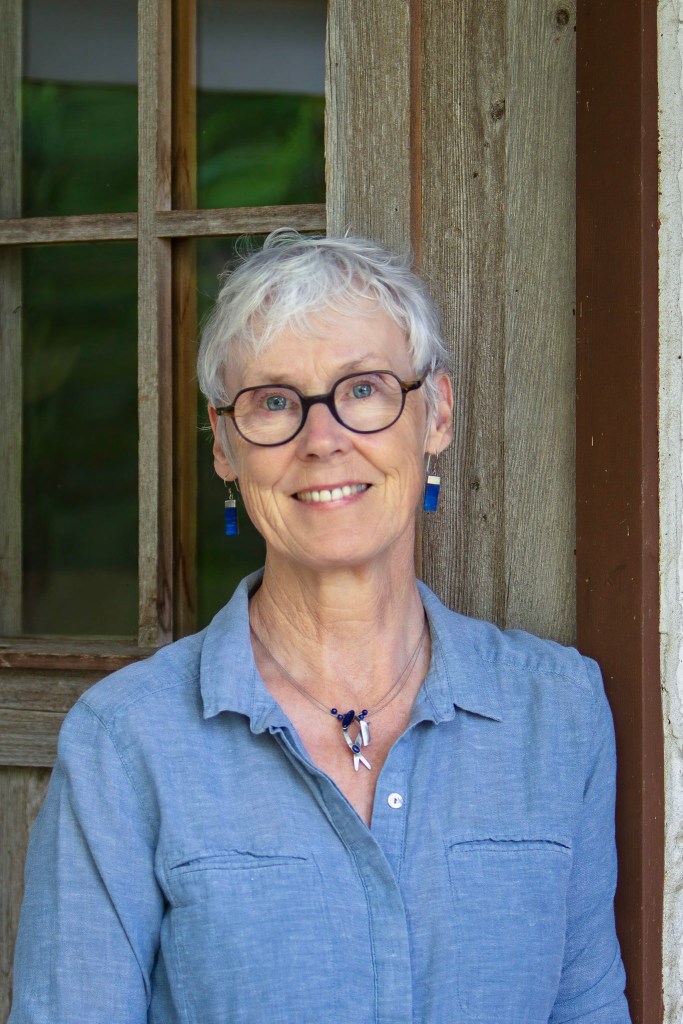
Mary Behan is a former professor of neuroscience. Now retired, she devotes her time to writing fiction, memoir, and short stories. Her first book, “Abbey Girls,” is a memoir she wrote with her sister Valerie Behan, about their childhood in Ireland. Her first novel, “A Measured Thread,” set in Wisconsin and Ireland, was named a Top 100 Indie Book in 2020, a finalist in the Page Turner Awards, and an eLit medal winner. “Kernels,” a collection of short stories, was published in 2021. Her stories have been published in the Irish literary journal Crossways, and received Honorable Mention in the Writer’s Digest Writing Competition. Mary lives with her husband in the Driftless Area of southwest Wisconsin.
Her website is mvbehan.com
Facebook (Mary Behan – Writer)
Instagram (@marybehanwrites)
What was an early experience where you learned that language had power?
When I emigrated to the USA from Ireland in 1976, I wrote a weekly letter home to my parents. That continued for the next 30+ years. Many years later I discovered that my parents kept every letter. In re-reading those letters, I realized how much I kept from them, especially the challenges of being an immigrant. I didn’t want them to worry about me.
How many unpublished and half-finished books do you have?
None.
What’s the most difficult thing about writing a novel?
Finishing the story to my satisfaction.
Does writing energize or exhaust you?
Both.
How often you read?
Constantly.
What was the best money you ever spent as a writer?
A good editor.
What are your favorite books?
Most recently Abraham Verghese’s “The Covenant of Water”. For the past several years I have written brief reviews of books I particularly liked and posted them on my website, https://www.mvbehan.com/what-i-am-reading1.html
Who and what ultimately inspired you to become a writer?
I’ve been writing letters to family and friends all my life. Plus, I love to tell stories.
How did you decide which form or genre was right for you?
My first book was a memoir I wrote with my sister called “Abbey Girls”. This was about our childhood in Ireland and the six years we spent at an Irish Catholic girls’ boarding school. After that I started writing contemporary fiction and have now published two novels in that genre, “A Measured Thread” and “Finding Isobel”. I tried my hand at short stories and published a collection called “Kernels”. I enjoyed the change of pace enormously and will likely continue to write short stories in the future. My next novel is going to be historical fiction, told in a series of short stories!
How long on average does it take you to write a book?
Three years.
After the writing’s finished, how do you judge the quality of your work?
Input from beta readers and also my editor.
What inspired the premise of your book?
When I finished writing my fist novel, “A Measured Thread”, Maggie O’Connor, the octogenarian Irish immigrant at the center of the story was finally at peace with her life. I ended the novel on a bit of a cliff hanger. Just before her carefully planned suicide, Maggie learned that her daughter Lara, whom she had given up for adoption fifty years earlier, had been found. Readers wanted a sequel, and although I hadn’t planned to write one, I did feel a sense of responsibility to one of my characters in particular — Isobel Babić. Isobel had come to work for Maggie during that final fateful year, and ultimately tracked down Lara. Isobel had so much promise. She was in a happy relationship and about to start vet school, but she was still haunted by an unanswered question: why had she been given up for adoption? Answering that question became the theme of “Finding Isobel”.
Tell us some more about your book.
“Finding Isobel” is a story of self-discovery, forgiveness, and the enduring power of family. For as long as she can remember, Isobel Babić has yearned to uncover the mystery surrounding her own birth and why her adoptive parents have steadfastly refused to share this information with her. Empowered by a bequest from her de facto grandmother, she embarks on a quest that spans continents and generations. Her search takes her from the tranquil landscapes of Wisconsin to the rugged beauty of New Zealand and ultimately to Bosnia, where she was born. Along the way, she encounters a diverse cast of characters, each with their own secrets and stories to share. Isobel discovers that the past holds far more than mere answers, setting her up for a future she could never have imagined. Isobel’s journey from the depths of despair to a place of hope and love proves that even in the most unexpected places, we can find the family we’ve always longed for.
How many rewrites did you do for this book?
Twelve! I wrote the first 10,000 words in a month, but then put the project aside. A year or so later I joined with two other writer friends to do NaNoWriMo (National Novel Writing Month). We committed to a 50,000-word novel, and by the end of the month I had finished the first complete draft of Finding Isobel with ~ 65,000 words. I gave that draft to my NaNoWriMo friends to do a beta read, revised it, and then sent it to three other beta readers. Meanwhile I joined a small critique group through Wisconsin writers Association and got excellent feedback on the first ten chapters. After the next revision I felt confident enough to give the manuscript to my editor, Christine Keleny. With her input, I went through another several drafts.
Tell us a little about how this story first came to be. Did it start with an image, a voice, a concept, a dilemma or something else?
I had the very first scene clear in my mind as soon as I began writing “Finding Isobel”. I also knew I wanted Isobel to fully embrace her future by the end of the novel. That said, even though I thought I knew where she would end up (Wisconsin), along the way I could easily have changed my mind. New Zealand is very seductive.
Which character was most challenging to create? Why?
Isobel’s adoptive mother, Christina. She is such an unsympathetic character, showing little affection for her daughter. But as the story progresses, I wanted the reader to understand the reasons for her behavior, and see the dilemma she faced from her point of view. Ultimately, I wanted a rapprochement between mother and daughter.
Are any of your characters based on real people you know?
Not really. I usually have a physical image of the character in my mind — it’s easier to write about them if I do that. But the characters themselves are a melting pot of people I have known
with many other traits added.
Which scene or chapter in the book is your favorite? Why?
I love the scene where Isobel first meets Stan, the Maori guide. Stan literally waltzed onto the page. I don’t know anyone like her, but my fingers were tripping over each other as I brought her to life. She’s amazing. I loved creating scenes with her and listening to her voice in my head.
Which scene was most difficult to write? Why?
The hospital scene in Verona. Imagine being alone and sick in a foreign country where nobody speaks English, and where you get some really earth-shattering news. Putting yourself into that mental space so that you can write authentically is a challenge.
What do you hope readers will take away from this story?
Family is what we decide it is.
What makes this book important right now?
Isobel is shaken out of her North American comfort zone, and forced to confront what it must be like to live in a war zone.
Where do your ideas for this story come from?
I live in Wisconsin in a place not unlike Maggie O’Connor’s log cabin. I’ve traveled extensively in New Zealand and the former Yugoslavia, as well as spending some time in Verona.
How did you decide on this title?
I knew I wanted Isobel’s name somewhere in the title. “Finding Isobel” seemed appropriate as she does indeed find her true self along this journey.
How crucial is it to have a working title before you begin a project? (answer this if you decide on your title very early in the writing process)
I need a title for validation. If I have a title, then I will write a book!
What’s next for you?
A novel consisting of twelve short stories, linked together by a grand house (think “Downton Abbey” but set in the Midwest), told over a period of twelve decades. I’m also collaborating with my sister on another memoir, “Travels with Mick”, about our wonderful and eccentric father.
***
 BookView Review
Leave a comment