Welcome to BookView Interview, a conversation series where BookView talks to authors.
Recently, we talked to award-winning poet and two-time Pushcart Prize nominee B. L. Bruce about her writing and soon-to-be released book, Blue California Sky a compilation of poetic prose that explores many topics ranging from the impermanence of life to the beauty of the outdoors, along with pain, sorrow, psychological and physical suffering, suicide, romance, and ardor. (Read the review here).
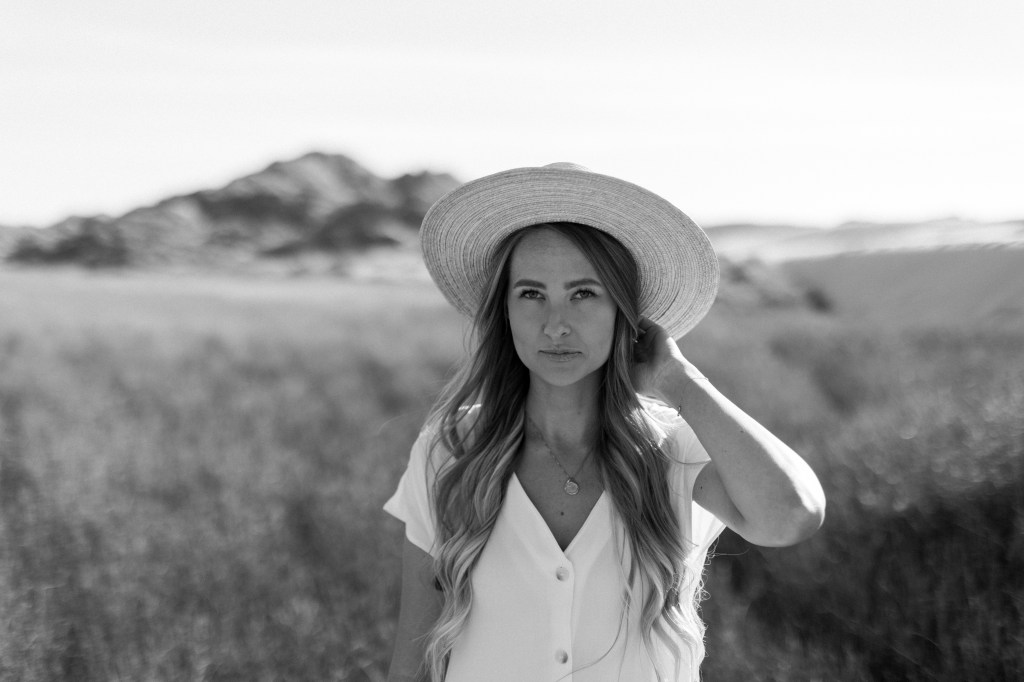
B. L. Bruce is an award-winning poet and two-time Pushcart Prize nominee living and writing along the California coast. Her work has appeared in dozens of anthologies, magazines, and literary publications, with poetry most recently appearing in The Lakeshore Review, Red Wolf Journal, Bivouac Magazine, The Sunlight Press, Riverstone Literary Journal, and Gone Lawn, among many others. Bruce is the founding editor-in-chief of the nature-centric literary magazine Humana Obscura and author of The Weight of Snow, 28 Days of Solitude, The Starling’s Song, and Measures. Blue California Sky is her fifth book.
Instagram: https://www.instagram.com/b_l_bruce
Twitter: https://twitter.com/the_poesis
How many unpublished and half-finished books do you have?
As of right now, I have two half-finished books: a new collection of poetry and a novel I’ve been writing for the past decade-plus. I’m hoping to finish the poetry collection within a year or so, and the novel will eventually (hopefully) get written. I still love the plot and the characters, but prose writing is somewhat foreign to me and has its own set of challenges and demands.
If you could tell your younger writing self anything, what would it be?
Keep pushing. Keep reading. Keep chasing what inspires you. Also, write now and edit later.
How often do you read?
Nowhere near as much as I’d like to. The demands of daily life—working full time and then some, publishing a magazine, and trying to have a social life—can make it difficult to carve out time to read. My “to-be-read” pile is ever growing. So many books, so little time. I have to be in the right mindset to read, mostly because I like to focus on what I’m reading without distractions so I can really absorb the book. I have phases when I’ll read four or five books a month, then won’t pick up a book for months. I do truly believe in the value of reading, especially to a writer, and often find that reading makes me a better writer and lends a lot of inspiration.
What was the best money you ever spent as a writer?
The best money I’ve ever spent as a writer was a month-long stay alone in a very remote cabin in the Northern California woods. At the time, this was a big investment that in the end paid off. I learned a lot about myself and how I write, and also got a lot of significant work done with only one job to do for that month: write. I wrote two books during that time, 28 Days of Solitude and The Starling’s Song, and have some memories that will live with me forever—both good and bad.
What is the most difficult part of your artistic process?
Editing, for me, is difficult, especially if it’s my own work. It’s almost as though I’m too close to it, and have a hard time looking at it and reading it objectively, from an outside reader’s perspective. To combat this, I typically take a step away for a bit only to come back with fresh eyes. Even after a book of mine is published, I will find things I should have edited. I’m trying to be better.
Is writer’s block real?
Absolutely. Over the years, I’ve learned that what works best for me is not to fight it. Don’t force the words if they won’t come. Wait. In the meantime, read or learn something new, pursue new experiences or spend some time outside. The words will come when they’re ready.
Tell us more about your book.
Blue California Sky is a collection of prose poetry, a new form I’ve been exploring. I don’t consider myself a writer of longer-form prose, but this is a body of work that really just came out of me during the pandemic years. As you can imagine during this time in history, emotions were high, everyone was struggling in their own way, and this collection was a bit therapeutic for me and a coping mechanism of sorts. I channeled a lot of the emotion of this period into this collection while being more disciplined, more intentional, and moving beyond my comfort zone of free-verse poetry.
How did you decide on this title?
The title comes from one of the poems included in this collection, “Once each year,” nominated for a Pushcart Prize in 2022. In this piece, the juxtaposition of such an awful scene and what is typically perceived as idyllic speaks to the emotion and the imagery of the piece, and I believe sets the tone for the collection as a bit darker and rawer than those I’ve previously written.
What’s next for you?
I’m currently working on a collection of American haiku. I’m revisiting the form in more depth after my last book Measures, which included some short form poetry, and further honing the craft of composing English-language haiku. I studied literature, more specifically post-modern literature, in college and read a lot of Jack Kerouac and Richard Wright’s haiku and remember falling in love with it. It’s more disciplined and structured than the free-verse I tend to write, but it’s a personal challenge to say a lot in very few words and space. While I stray from the more traditional 5-7-5 structure of haiku, there are still a number of “rules” imposed on American haiku. I say “rules” here in quotes because while the definition of an English-language haiku varies, there is still a fixed set of guidelines to follow that make an American haiku what it is. I’m excited to complete this collection.
***
 BookView Review
Leave a comment