Welcome to BookView Interview, a conversation series where BookView talks to authors.
Recently, we talked to Amy Safford about her writing and recently released book, Goode Vibrations of the Wresting Place, a powerful narrative in which a woman becomes obsessed with unearthing the dark past of Malaga Island, (Read the review here).
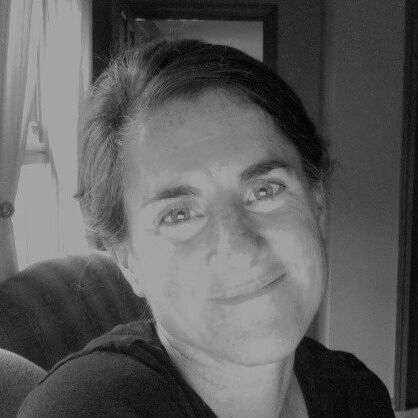
Amy Safford: A Writer’s Journey
From the time she was given a roll of leftover paper from the local mill in her hometown, Amy has dreamt of writing stories about her northern New England roots. Her father’s family came from maritime New Brunswick, Canada, and her mother’s family from the rocky midcoast and western hills of Maine.
After graduating from Lawrence High School where classmates deemed her “the next Barbara Walters,” Amy attended Boston University’s College of Communication where she majored in Journalism and Public Relations. Her favorite class outside her major was American Literature where she first read Toni Morrison, Grace Paley, Willa Cather, and William Faulkner. She also rowed with the Women’s Freshman, JV, and Varsity Crew Teams.
After college and a summer training with the national rowing team, she moved back to Portland, Maine, where she met and married her husband, Jon. While raising their two children, she wrote her first novel about a college rower. To refine her manuscript and learn more about the art of fiction, she attended the University of Southern Maine Stonecoast MFA program.
Over her professional career, she worked in communications and marketing for nonprofits with missions supporting literacy, developmental disabilities, and mental health. Writing hundreds of articles in her long career, she never gave up on her dream of penning a novel. In July, she published her debut fiction, Goode Vibrations of the Wresting Place, Book One of the Goode Vibrations series, under her own imprint, Saco River Books.
As fate would have it, after publication, Amy discovered a surprising family connection to one of the historical characters in her novel, a physician responsible for the removal of a family from Malaga Island. Writing this story felt like a destined journey, deeply rooted in her own heritage..
http://www.facebook.com/AmySaffordAuthor/
https://www.instagram.com/amysafford/
What was an early experience where you learned that language had power?
In high school English, I was introduced to New England poets like Emily Dickinson and Robert Frost. My whole view on life changed after that; I fell in love with poetry. I remember we had an assignment to write a poem in the style of Edgar Allen Poe, so I wrote something quite dark, and the teacher read it to the class. I was rather embarrassed hearing my poem shared aloud, but also thrilled and captivated by the power of language.
How often do you base your characters on real people?
While almost all my characters are based on people I know or have met, they are never founded on one person solely. My process is to create characters as a combination of people who have made an impression on me, good or bad. Another writer once told me that people you know will always think they are characters in your novel. I make a concerted effort to never develop any character based on one specific person—that seems too prescriptive and predictable. It’s much more fun to write characters who are original, like putting a collage together.
How many unpublished and half-finished books do you have?
I have three unpublished novels, and another one I wrote in collaboration with three other writers. My goal is to get back to these eventually and figure out if there is anything worth circling back to for revision. On the other hand, I know that pieces of these stories are in my debut novel, not in the literal sense, but more figuratively.
What does literary success look like to you?
From an altruistic sensibility, success is connecting with other people to shed light on our shared human consciousness. But from a business perspective, success is the ability to make a living as a full-time writer.
What kind of research do you do, and how long do you spend researching before beginning a book?
I spent many hours on the internet and in libraries researching the historical storyline in my novel based on the Malaga Island settlement evicted by the state of Maine in 1911-12. In the past, some newspaper accounts and books have perpetuated the myths of incest, immoral living, and adject poverty of the settlement. As a lifelong Mainer, with ancestors who have been here for generations, it was important for me to write an accurate account of the settlement.
Hundreds of personal accounts, newspaper articles and photographs depict a working-class island community with well built homes and a schoolhouse. They may have been poor like many island communities at the turn of the 20th Century, but they were proud and managed to raise families despite the long and difficult Maine winters. Luckily, I could access state and library archives in my research, which I continued to explore throughout the process of writing the novel.
What’s the most difficult thing about writing a novel?
I’m a person who likes to plan, so the most difficult part for me is diving in to write before I know the outcome. This is also the most exciting aspect of writing a novel: letting the story unfold as I write. Letting the characters tell me where they are going, and trusting in that process, however difficult from the outset, is the most rewarding experience.
Do you try more to be original or to deliver to readers what they want?
I was once told that you should write what you want to read. My favorite genre is magical realism, which explains my exploration into the supernatural and what I look for in a novel—a story about things in the universe that are mysterious, complex, mystical, and original.
If you could tell your younger writing self anything, what would it be?
Don’t be afraid to be yourself. I spent years writing the way I thought I was supposed to write, instead of letting myself simply create a story without any rules. Being comfortable and confident in my own writer’s skin has been the hardest challenge to overcome.
How did publishing your first book change your process of writing?
Publishing did not change my process of writing, but it certainly gave me a huge appreciation for developmental and copy editors. It’s one thing to write a compelling narrative, but quite a different talent to help a writer fine-tune her story. I found that process, and my editors, simply amazing.
What was the best money you ever spent as a writer?
Getting my MFA at the University of Maine Stonecoast Program was the best gift I gave to myself, feeding my passion and refining my skills as a novelist. I had the opportunity to work with very talented mentors and authors, and to meet fellow writers who are lifelong friends.
Have you read anything that made you think differently about fiction?
My MFA thesis was based on Plato’s Republic and the allegory of the cave. I like to think of fiction like the sun that people in the cave cannot see. Because they are prisoners, they only see the shadows on the wall created by the fire, a misrepresentation of the true world. When they are unchained, they can see the fire that created the shadows, and then journey outside to the full sun. Like this allegory, great fiction helps people see beyond the shadows to become enlightened.
***
 BookView Review
Leave a comment