Welcome to BookView Interview, a conversation series where BookView talks to authors.
Recently, we talked to Gilbert Arthur about his writing and recently released novel, Muunokhoi’s Awakening, a tender, thought-provoking story about what it means to be awake in a sleeping world, and the loneliness, wonder, and weight that come with it (read the review here).
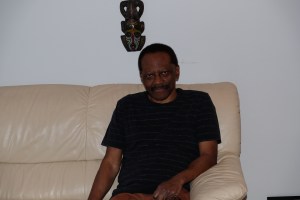
Gilbert Arthur spent his formative years in Ghana, graduating with a BSc (Hons) degree in biochemistry from the University of Ghana. He obtained a scholarship to study in the UK and graduated with a PhD in biochemistry from the University of Leeds. He subsequently moved to the University of Manitoba, Canada, to pursue an academic career, ultimately rising to the rank of Professor in the Faculty of Medicine. Upon retirement in 2020, he finally had the time to explore his creative side and tried his hand at writing fiction. The award-winning Muunokhoi’s Awakening is his first novel. He lives in Winnipeg with his wife.
GoodReads: https://www.goodreads.com/author/show/54084091.Gilbert_Arthur
Website: https://www.muunokhoisawakening.com/
How many unpublished and half-finished books do you have?
The only unfinished book I have happens to be the novel I am currently working on. I am about half-way through the first draft. I do have some ideas about additional books I’d like to write in future but have not written down anything yet.
What kind of research do you do and how long do you spend researching before beginning a book.
I have only written one book thus far, so the answer relates specifically to this book. Once I decided on a marmot as the main character, I researched the life history and habits of marmot species thoroughly. This led to the decision to focus on the tarbagan marmot, the species found in Mongolia. I then researched the kinds of creatures found in Mongolia. After selecting the animals I wanted to feature in the book, I researched their life histories and habits. This initial research took about six weeks after which I started writing the story.
How many hours a day do you write?
Contrary to a lot of advice I have read online, I do not write daily or have a schedule for writing. I write when I am in the mood to do so. I find during these periods, ideas flow without much effort, and I write for most of the day and late into the night. Outside these periods, the stories I write feel forced. When I feel the story is not flowing to my liking, I stop and put the manuscript away. I think of it from time to time but do not get back to writing until I sort the section out in my mind. I have had breaks from days to several weeks in between writing. I am lucky in the sense that I am not dependent on writing for my livelihood and so I can write at my own pace. Writing stories is something I love and want to do.
Do you try to be original or to deliver to readers what they want?
My overriding goal is to write original and unique stories. With Muunokhoi’s Awakening being my first book, I had no existing readers to satisfy anyway so there was no question of catering to any specific reader or readers. My hope of course is that readers will like my stories. In fact, I do not plan to limit myself to any particular genre but just write the stories that come to my mind regardless of the genre.
Do you Google yourself?
No, because it would likely reveal woefully incomplete information associated with my academic career such as scientific publications, patents etc. Google Scholar or PubMed are search engines I would use if I felt the need to do a search about myself.
What are your favourite books?
I have many favourite books but will list four to give an idea of the range of books I like.
The Strange Life of Ivan Osokin by PD Ouspenski
The Jewel in Her Crown by Paul Scott
The Little Nugget by P.G. Wodehouse
Ragtime by E.L. Doctorow
Tell me a little about how the story came to be. Did it start with an image, a vice, a concept, a dilemma or something else?
The truth is the story I ended up with was not what I had in mind when I sat down to write the book. I always harboured a desire to write a novel, and the right time to fulfill this dream was after I retired. As I had no experience writing a work of fiction, I thought of starting with a children’s book which to my mind would be simple and short and not as challenging as a full-fledged adult novel. The initial plot I began with was a story about a hibernating animal, a generic herbivore, who is magically transported to different lands while dreaming during hibernation. At each place it gets to experience the people, culture, and an adventure or two. This was designed to have some educational value for kids i.e. teach them about different cultures etc. However, I quickly realised when I began writing, that the premise was not credible. How could the creature dream of places it had never been to? Also, the interactions in different places will have to be with humans in towns or cities to experience the culture. The idea of this animal living amongst humans by itself would be a stretch. So, I gave up and stopped writing that story, but I still liked the idea of writing an anthropomorphic tale. I went back to it after about a week pondering what to do next when the idea popped in my head what if instead of dreaming, the creature was actually awake alone in its burrow? What would it do? How could it survive? This spark opened up so many possibilities and the story flowed from there. I picked a marmot because there aren’t many stories with marmots and specifically, the tarbagan (Mongolian) marmot, because research indicated they hibernate longer than other species which allowed one sufficient time to develop the story without rushing it. Also, the sparse population of the place made it credible to have minimal involvement of humans in the story.
Which character was the most challenging character to create and why?
I think that would be Batu the wolf. I had made the decision that Muunokhoi would meet a wolf. This created a dilemma because the wolf’s senses are more acute than a marmot and would detect the latter long before he was aware of it. In addition, the wolf is much faster so the marmot could not outrun it. The marmot also had no burrows to hide in and could also not climb a tree to escape even if it saw the wolf approaching. So how could the two meet without Muunokhoi being gobbled up immediately? It would be unrealistic to expect the wolf to spare him out of the kindness of its heart. I paused writing at this point and sought to resolve the dilemma in my mind. It took a while to come up with what I thought was a credible resolution. It had to be a wolf that for personal reasons, would not kill any animal in the forest and not just Muunokhoi. Since it would need to eat, the only alternative to wild meat would have to be meat from livestock from a farm. After research revealed several documented cases of domestication of wolves, if captured soon after birth, Batu‘s character was born.
How many rewrites did you do for this book?
I did not rewrite the book as such, but I did copy it out three times because I adopted that approach as a process that would facilitate editing and making modifications along the way. I initially wrote in pencil (to make corrections easier) and single-spaced until the first draft was completed. I subsequently copied it, again with pencil, making modifications and edits to produce a second draft; this draft was double-spaced. After the second draft was completed, I read through it, modifying and editing it in the process. Once I was satisfied with it, I typed it out on my computer, again modifying and editing as I went along.
Has this novel changed drastically as you created it?
I would have to say no. The reason being other than the basic outline of Muunokhoi setting off on a journey and encountering various creatures, I had not worked out details when I started writing but created them as I went along. The story of the first draft was not significantly different from the final version other than one rearranging. In the initial write up, I had started the novel by introducing Muunokhoi and his family prior to their hibernation and his waking up. The developmental editor suggested I should start the book with Muunokhoi waking up from hibernation which I did.
How did you decide on this title?
I started thinking of a title for the book after the first draft was completed. The title as far as I was concerned had to have the main character’s name. I therefore started pairing words or phrases with Muunokhoi. For example, Muunokhoi’s Travels; The adventures of Muunokhoi; Muunokhoi’s adventure etc. but rejected them because I thought it would be good if the title also reflected the essence of the story. The story after all is about Muunokhoi literally waking up from hibernation and also having his consciousness awakened (broadening his perspectives) during the course of his journey. This almost immediately led to the title ‘Muunokhoi’s Awakening” as it reflects these two events.
What is next for you?
I am working on my second book which is completely different from this first one. It is about the lives of students, at a university in Ghana in the early 1970’s, a period of political instability and economic hardship in the country. Ghana incidentally is my country of birth. My inspiration for this is Paul Scott’s quartet of books ‘The Raj Quartet’ which I read decades ago and which, I must confess, planted the seeds of my desire to write fiction one day. My ambition is however more modest as I plan to write only one book pertaining to this period.
***
 BookView Review
Leave a comment