Welcome to BookView Interview, a conversation series where BookView talks to authors.
Recently, we talked to Pushcart Prize nominee author, Mark Lew, about his writing and recently released book, Etched in Stone, a clever, heartfelt, and deeply human story (read the review here)
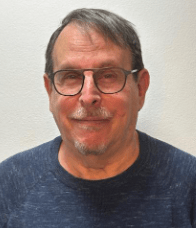
After 20 years as a construction superintendent building new structures in Miami, Mark Lew now uses his skills to build new worlds in the speculative fiction arena. His love of language (and cooking skills) has enabled him to develop delicious metaphor and imagery that leaves readers happy to eat at his table. Author and editor, his published speculative fiction short story, Nowhere To Hide, was nominated for a Pushcart Prize in 2022 by Elizabeth McDuffie, editor of Meat for Tea: The Valley Review.
Does all your writing adhere to a specific genre or do you jump across multiple genres?
Speculative fiction, and more specifically, magical realism is where my head and heart lead me. But it’s not magical realism in the sense of fairies and sprites, it’s a more grounded and grittier version of the genre where alternative realities are explored.
What authors do you like to read? What book or books have had a strong influence on you or your writing?
Alix E. Harrow is my muse. Oftentimes, when I’m in a rut, I’ll open up Ms. Harrow’s THE TEN THOUSAND DOORS OF JANUARY or STARLING HOUSE and read a few pages. Her inventiveness and language open pathways in my head that steamroll all writer’s block. My other favorite author, although his work is way more off the wall, is Tom Robbins. I am jealous of his unique imaginative style and JITTERBUG PERFUME still holds a very special place in my personal pantheon of great books. Then again, I couldn’t do what I do without having experienced the lyricism of Nathaniel Hawthorne and Janet Fitch, to name two of the many.
What do you feel is the hardest part about writing?
To not get preachy and remain neutral. I’ve read so many novels that, in the end, hit the reader over the head with the message the author is trying to convey, I’m often left feeling let down. It’s tough straddling the fence between showing the message of the novel and telling the reader what it is in bold-faced font. My favorite show, not tell ending is Aleksander Solzhenitsyn’s A DAY IN THE LIFE OF IVAN DENISOVICH. It still rattles in my head 25 years after having read it.
Does writing energize or exhaust you?
I don’t think it’s an either/or question. There are times when writing feels like drudgery and I have to push through, but then there are those moments when my skin thins to transparency and my spirit finds free passage into the fast-moving stream of compelling ideas, waiting only for my turn of phrase to make it entertaining. And nothing… NOTHING beats that feeling.
What’s more important: character or plot?
Each of those elements presents its own challenges. Character interiority is all about subtext, those elements that make a particular character act as he/she does, but it can’t slap the reader in the face and scream, “This is why I act the way I do!” On the other hand, plot is a longer road to traverse, presenting and then tying different elements together along the road that culminates with the climax. But in truth, what’s most important to me is to write in a style that’s entertaining to the reader with the use of language and metaphor. I don’t know if there are hard and fast rules to what, specifically, is entertaining, but I try.
What inspired the premise of your book?
I was talking to a friend and he emphatically stated that all our morality is bible based. I shook my head and he looked at me as though I was crazy for disagreeing with him. I said morality isn’t based on anything; it’s an individual choice that each of us uses to guide us through our lives. I didn’t know it at that moment, but he had inspired the spark for a novel. So, I took a short story from Genesis, Cain and Abel, and began thinking about alternative narratives concerning the moral of that particular moment in biblical history. Most people I spoke with gave the same pat answer of what that story meant, but my interpretation was different. Same story, same characters, different morality. And so, my first novel, ETCHED IN STONE was born.
What sort of a relationship exists between you and the characters you created in this book?
It’s a funny thing, but each of the characters I’ve created represent some aspect of my own personality, colored, I’m sure, by my personal bias. The writing of this novel has been more than just pressing keystrokes on a computer; it was a deep dive into the disparate—and sometimes conflicting—elements that comprise Mark Lew. As such, it’s a deeply personal novel, one that forced me to walk a tightrope where I, as author, stayed out of it. The earlier versions of this tale had a fair (or unfair) amount of author intrusion into the narrative that I ultimately edited out, keeping in mind the goal of writing the best novel I could.
***
 BookView Review
Leave a comment