Welcome to BookView Interview, a conversation series where BookView talks to authors.
Recently, we talked to Rebecca Hodge about her writing and soon-to-be released book, Island Endgame, a taut, atmospheric thriller that blends survival suspense with a moving portrait of grief and redemption (read the review here).
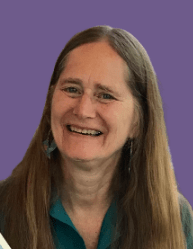
Rebecca Hodge is an award-winning author of heartfelt suspense. A retired veterinarian and clinical research scientist, she has three grown sons, two amazing granddaughters, one crazy dog, and one very patient husband. She lives in North Carolina, where you’ll find her sipping tea on the screened-in porch with a dog at her feet and a computer on her lap. Please visit her online at https://www.rebeccahodgefiction.com/ and follow her on Facebook Instagram BookBub and Goodreads.
What kind of research do you do, and how long do you spend researching before beginning a book?
Research is always necessary when writing fiction, and I tend to dig for answers as needed while I’m working on a first draft. What flowers are in bloom at this time of year in this location? Would this constellation be visible now? For ISLAND ENDGAME, research included reading about the history of Utopian settlements in the Pacific Northwest in the early twentieth century and the history of Russian fur trading in the area, as well as diving into details on local flora and fauna. Hopefully I didn’t make any major errors!
Do you find writing therapeutic?
Absolutely. I’m not sure writing has ever solved a specific personal problem, but I love the creative aspects of writing and find that it acts as a counterbalance to other stresses. If I’m not writing, I get twitchy. 😊
How often do you read?
I’m a voracious reader, usually reading seventy or eighty books a year in a wide range of genres. I’m a sucker for classic mysteries (Dorothy Sayers, Margerie Allingham, PD James), thrillers, and suspense, but I also read a fair number of literary works each year. My sons flag good science fiction for me, and that’s also a treat. Most of my reading happens in the evening before heading to bed.
Do you try more to be original or to deliver to readers what they want?
I try and write a story that I’d enjoy reading, then hope there are readers out there who share my enthusiasm. Writing a novel takes a phenomenal amount of time—drafting, revising, more revising, yes, even more revising, proofreading—so I have to enjoy reading what I’ve written. I can’t imagine writing a full-length novel ‘on assignment’ without loving the story myself.
How do you select the names of your characters?
I torture myself over character name selection, and I’m not sure I’m very good at it. I’ve got a book of 20,000 baby names and also look up popular names for the year the character is born. I often have characters named X, Y, and Z in early drafts, and even once I settle on a name, I may change it later if it doesn’t seem to fit. I always have dogs in my stories, and to make their names easier to choose, I name them for a river that’s located near the story’s setting. In ISLAND ENDGAME, Skagit is named for a river that empties into the Puget Sound.
What is your favorite childhood book?
The book series that impacted me the most was the Rick Brant Science Adventure Series, a series written in the ‘50s and ‘60s about a team of globe-hopping scientists. I never noticed at the time that all the scientists were men (arrrgh), just thought the combination of science and adventure was wonderful. The books helped set me on the path to becoming a veterinarian and clinical research scientist.
What is the most difficult part of your artistic process?
I struggle the most with first drafts. Tackling the empty page, figuring out the characters and the journey they’re on. I’m much happier once I have a messy first draft to work with, and I spend considerable effort in revision.
How long on average does it take you to write a book?
Roughly eighteen months. Faster than that, and I end up cutting corners, which doesn’t work for me or the reader.
How do you begin a book?
For each of my three published books, the starting point was setting. A raging forest fire (WILDLAND), a disastrous whitewater kayaking accident (OVER THE FALLS), an island summer camp (ISLAND ENDGAME). Once I had the setting firmly in mind, the characters and plot gradually layered into place. I’m not sure this is the most efficient path to beginning a book, but it’s worked so far.
What’s more important: characters or plot?
Equally important! It’s a mistake to shortchange either one. The better question is ‘which comes first as you’re writing,’ and for me, plot comes first. I have friends who create fully formed characters and then hunt for a plot, but I’m the other way around. It’s only as I see how the characters react to the events I dream up that I can figure out who they are, what their backgrounds are, and what they’re after. That process can take quite a few drafts.
What’s next for you?
There are more books on the way! The next one is set in a State Park on the coast of North Carolina. I can’t wait to share more about it next year.
***
 BookView Review
Leave a comment