Welcome to BookView Interview, a conversation series where BookView talks to authors.
Recently, we talked to André Durivage about his writing and recently released book, Ernest: The Fletcher Clan Series Book One, a gritty tale of ambition, corruption, and betrayal set in 1970s Gatineau (read the review here).
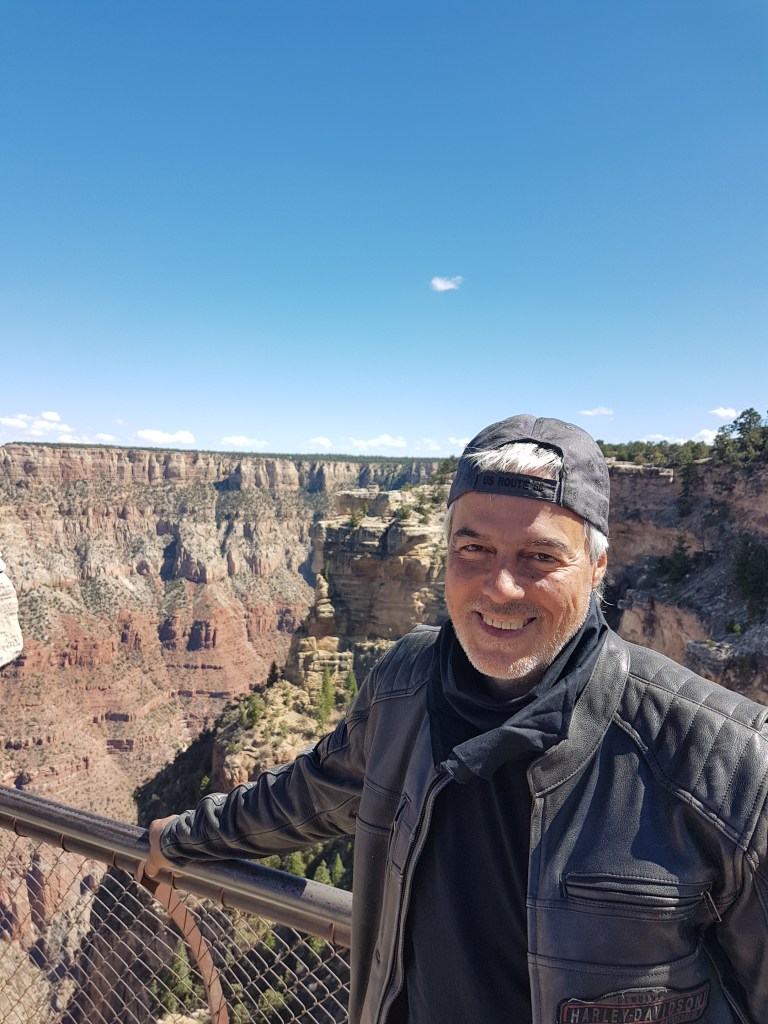
With a background in psychology, André Durivage has embraced a dual career as both an entrepreneur and a university professor. A licensed pilot, he has flown across every corner of the Americas. Constantly on the move, he enjoys traveling, riding his motorcycle, hiking in the mountains, scuba diving, and of course, writing.
An avid reader, he appreciates the works of J.R.R. Tolkien, Freida McFadden, Neal Stephenson, James Patterson, Dean Koontz, and Mary Higgins Clark.
He lives in the Outaouais region with his wife Julie and their four children. Passionate about tennis, he also enjoys forest hikes and making maple syrup.
Amazon: https://www.amazon.com/Ernest-Book-1-Fletcher-Clan-ebook/dp/B0F7F2QPQC?ref_=ast_author_mpb
Goodreads: https://www.goodreads.com/book/show/232746493-ernest
Website: https://andredurivage.com/
What made you decide to become a writer?
For me, writing has always felt like a calling. Some people have a natural gift for painting, sculpting, or playing music. My strength was always in words. I discovered this very early on. At the age of twelve, I wrote my first “novel”—a fifty-page story that, to be honest, wasn’t very good. But what it lacked in quality, it made up for in meaning, because it confirmed something important: I wanted to be a writer.
Then life caught up with me. My career, my responsibilities, and my family became my priorities, and writing was pushed aside. I never stopped loving it, but I had little time to sit down and really commit. Still, over the years, I worked on my first real novel bit by bit—an hour here, two hours there, sometimes leaving it aside for months. It ended up taking me thirty years to complete it. Can you believe that?
But once my children grew up and became independent, I finally decided it was time to embrace writing fully. I dusted off everything I had drafted over the decades, and I began writing in earnest. Since then, I haven’t stopped. Writing, for me, is both a passion and a necessity—a way to bring stories to life, to explore human nature, and to leave something behind that feels true.
What in particular attracted you to the Suspense/Thriller genre?
I’ve always been an eclectic reader, and I enjoy many genres—science fiction, fantasy, historical novels, and of course suspense-thrillers. Honestly, I could have written in any of them, because each has its own power to transport you. But when it came time to choose, suspense-thriller felt the most natural.
Maybe it’s because I’ve always loved the thrill of adventure and the challenge of facing impossible odds. That sense of danger, of not knowing what’s around the corner, excites me both in life and on paper. I’ve traveled extensively, started a business from scratch, and even earned my pilot’s license at the age of fifty. Each of those experiences brought its share of risk, adrenaline, and unforgettable moments.
So, when I write, I want my characters to live that same intensity. I want them to be tested, to face impossible choices, and to fight their way through. For me, suspense-thrillers are the perfect vehicle for capturing that energy. They allow me to share with readers what it feels like to live on the edge—whether in the boardroom, on the street, or in the sky. My hope is always the same: that readers feel their pulse quicken, that they lean forward in their chair, and that for a moment, they share in that rush of life that has always inspired me.
What’s the most difficult thing about writing a novel?
For me, the hardest part about writing a novel is simply starting. Strangely enough, I rarely feel an irresistible urge to sit down and write. And when inspiration does strike, it’s often at the worst possible time—when I’m driving, or in the middle of an important meeting, unable to jot down even a single line. Still, the deeper desire to tell stories never leaves me, so I’ve learned that I have to push myself, sit down, and just begin.
I’ve read countless interviews with great authors, and they all seem to agree: writing is about discipline. You carve out a period of time and you commit to it. In my case, once I get past that initial hurdle, I dive in completely. Hours can slip by without me noticing, because I’m fully absorbed in the world of my characters.
As for writer’s block, I’ve never experienced it in the way people describe. My trick is to write whatever comes to mind, even if it has nothing to do with the story. It’s like warming up a car engine on a freezing winter morning: at first, the motor sputters, but once the oil warms, everything flows smoothly. That’s how it is with writing too—the first lines may be clumsy or unrelated, but once I find the rhythm, the story takes over, and I just follow where it leads. Those clumsy, unrelated sentences that helped me get started are simply discarded later.
What kind of research do you do, and how long do you spend researching before beginning a book?
I have to admit, I don’t do any research before starting a book. My process begins with a general plan for the story—I usually know what will happen in each chapter. But things often change as I write. New ideas appear, sometimes so strong that they completely shift the direction of the story. If I had done extensive research beforehand, much of it might end up being wasted.
Instead, I do my research along the way, as the story unfolds with the characters. They guide me into areas I hadn’t anticipated. A good example is with Ernest. At first, Quan, the Vietnamese character, was meant to be a minor figure in the story. But as I wrote, I found myself slipping into his perspective, asking: What is it like to be a refugee? How does someone survive that kind of journey? Suddenly, I felt compelled to tell his story in greater depth.
At that point, I paused the writing and dove into comprehensive research on the Vietnamese boat people—their origins, the horrific travel conditions, and the history behind their exodus. I was fascinated and deeply moved. Once the research was done, I returned to the manuscript, weaving everything I had learned into the narrative. That’s how my process works: the story leads, and the research follows, enriching it with authenticity and depth.
Do you try more to be original or to deliver to readers what they want?
That’s an excellent question, and my answer is a little different from either option. I don’t try specifically to be original, and I don’t deliberately aim to deliver exactly what readers expect. My approach is simpler: I write the kind of book I would want to read. If I find the story engaging and the writing strong, then I trust that others might feel the same way.
I’ve always been drawn to bestsellers—not because of the label, but because they tend to immerse you in gripping stories. For me, reading is a moment to escape, to relax, to step into a world that isn’t mine, and to root for characters who are facing challenges and tough choices. That time away from my own concerns is precious. Some people look for books that make them reflect deeply or question their worldview. And that’s wonderful, but it’s not what I seek when I pick up a novel.
Maybe that’s because in my professional life as a university professor, I already spend so much time reading dense scientific articles that demand focus and analysis. So, when I read fiction, I want the opposite: pure immersion, a bit like watching a fantastic TV series—except with the added gift of diving directly into the minds of the characters.
That’s exactly the kind of reading experience I try to create in my writing. And my hope is that there are plenty of readers out there who, like me, will simply enjoy the ride.
What’s more important: characters or plot? What sort of a relationship exists between you and the characters you created in this book?
For me, both characters and plot are equally important—you can’t really separate them. A strong plot with bland, unconvincing characters simply doesn’t work, because it’s impossible to root for a hero you don’t care about. On the other hand, even the most complex, fascinating characters will fall flat if nothing actually happens to them. A good novel needs both, in constant interplay.
When I write, I usually begin with the storyline in mind. I know roughly what is supposed to happen, and I imagine the characters who will live through it. But once the writing starts, something interesting happens as I slip into their shoes. I imagine their thoughts, their fears, their desires, and I react as if I were the one facing those situations. It might sound a little schizophrenic, but that’s exactly the process.
And of course, the way each character responds depend on their personality and their emotional state at that moment. That’s the magic of it: two people facing the same event can react in completely different ways, and that’s what gives depth and realism to a story.
For me, characters feel almost like real people. They’re like close friends you haven’t seen in years—you know their habits, their voices, their way of thinking, even if they aren’t physically present. That’s the kind of relationship I have with the people in my novels, and it’s what I try to bring alive for readers too.
What inspired the premise of your book? Which scene or chapter in the book is your favorite? Why?
The premise of Ernest came almost by accident. Even though it’s the first published book in the Fletcher Clan Series, it was actually the second one I wrote. In The Fletcher Clan—which is coming out this December—the main villain is Ernest McCloskey. From the very first pages, you can’t help but hate him. But once I had finished that manuscript, I kept asking myself a question that wouldn’t let go: how does someone become that kind of man? That reflection brought me back to the haunting lyrics of Behind Blue Eyes by The Who: “No one knows what it’s like to be the bad man, to be the sad man, behind blue eyes.” Nobody is born evil. Most of the time, there’s a tragic story or a scar that shapes them. That was the heart of what I wanted to explore with Ernest.
As for my favorite scene, it has to be the arson, the moment when the cracks finally appear in Ernest’s carefully built armor. Up until that point, he remains in control. But then, in one pivotal chapter, his vulnerability rises to the surface. For a brief moment, readers glimpse the sad, broken boy buried beneath the corrupt businessman. That contrast—between the monster he becomes and the young man he once was—is where the story resonates most deeply for me. Interestingly, many readers told me that at first, they rooted for him, only to end up despising him. I take that as one of the best compliments an author could receive.
If asked, what would your friends and family say about you?
If you asked my friends and family to describe me, I think they’d say quite a few things. On the positive side, they would tell you that I am a loyal man. Loyalty has always been central to who I am. I’ve kept the same group of friends for more than fifty years, and my family is, without question, the most important part of my life. They might also shake their heads in disbelief and ask how I manage to juggle so many things at the same time, including two demanding jobs—university professor and business owner—while still finding the time to write novels. It’s a question they’ve asked me many times. My answer is simple: I don’t watch television, and I get out of bed very early in the morning. Those extra hours are where I create.
They would probably add that I’m not much of a talker. In fact, my nickname is Dark, because people say I rarely speak more than a hundred words in a day. That even inspired the character of the same name in my novel The Prez. And honestly, they’re not wrong. I’ve always believed that actions speak louder than words. Still, I make a conscious effort to talk more, especially since silence is not always appreciated in today’s world. The age of the “strong, silent type” has passed. Yet, words flow more naturally for me on paper than out loud. Perhaps that is why I write—it gives me the freedom to say everything I don’t always express verbally.
Do you read your book reviews? Do they please you or annoy you? Do you think you can learn a lot from reading criticism about your work?
Yes, I do read my reviews. For me, it’s the same as reading the feedback of my students at the end of a semester or listening carefully when a client points out what could have been done differently. It’s not always comfortable, but it’s part of growing. So far, I’ve been fortunate with my books. I received twenty straight five-star ratings from independent professional literary reviewers, and the only four-star review I got was from someone who said the book was excellent but simply not his kind of story. That seemed perfectly fair to me—after all, not everyone likes sushi, and not everyone enjoys the genre I write in.
When it comes to writing, I would say the most relevant experience I’ve had with criticism is the feedback I received from my editors. By the time I submitted my manuscript, I was already on my tenth draft and believed it was polished and near perfect. So, when the negative (read constructive) comments came back, I was slightly upset, to say the least. Nobody enjoys being criticized. But I’ve learned to let a few days pass before reading them again. With a bit of perspective, I realized they were right on most points, and what began as an eleventh draft eventually grew into four or five additional revisions that brought me much closer to the book I truly wanted to publish. In the end, their comments have led me to make substantial changes that turned a good manuscript into a much better one.
If you ask me, I believe that being open to criticism is essential. It pushes you to go further, to challenge yourself, and ultimately to create a novel that is stronger and more authentic.
What’s next for you?
What’s next for me? In many ways, more of the same—and I couldn’t be happier about it. My life has always been full of surprises and challenges, and I’ve learned to embrace them rather than shy away. One thing I know for certain is that I want to keep writing. If I could go back forty years, I’d sit down with my younger self, and tell him to start writing right away. I never realized back then just how fulfilling this art could be. There is something truly extraordinary about creating stories, shaping characters, and seeing readers connect with them—it’s one of the most rewarding experiences of my life.
Of course, I won’t stop doing the other things that make life exciting. I’ll keep traveling, because discovering new places fuels my imagination. I’ll continue to play tennis, because it keeps me grounded and energized. I’ll keep diving with sharks, because nothing compares to that mix of fear and wonder, and I’ll keep jumping at opportunities that challenge me—because that’s simply who I am.
But writing has now become part of my everyday rhythm, as natural as breathing. It’s no longer something I “fit in” between other commitments—it’s woven into the fabric of my life. And it will remain that way, for as long as life allows me. To me, the best part of “what’s next” isn’t about changing course, but about deepening the path I’m already on.
***
 BookView Review
Leave a comment