Welcome to BookView Interview, a conversation series where BookView talks to authors.
Recently, we interviewed Phil Bayly, an author and veteran of television and radio news in New York, Colorado, Wyoming and Pennsylvania, about his writing and his soon-to-be released book, CARPE Ski ’em: A Murder on Skis Mystery, a taut, atmospheric thriller where human frailty proves as treacherous as any avalanche (Read the review here.)
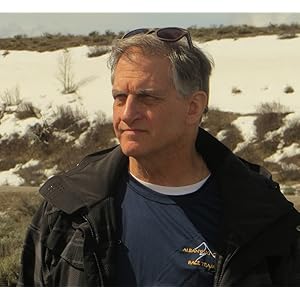
Phil Bayly is an American author. A Small Mountain Murder, released in November of 2024, is his sixth novel in the Murder on Skis Mystery series. Bayly has been named a finalist for three American Fiction Awards and was awarded a silver medal at the CIPA Colorado Book Awards.
A veteran of television and radio news in New York, Colorado, Wyoming and Pennsylvania, Bayly was born and raised in Evanston, Illinois. He now resides in Saratoga County, New York.
How often to you base your characters on real people?
As often as possible. I find it easier that way. I think that I’m more of a visual person than kinesthetic, for example. It helps me, if I create a character based on a real person. And I’ve met a lot of people. They don’t have to be capable of murder to be included in my book. In fact, they might be a victim or a MacGuffin. But they’re easier to imagine if I can picture them saying something or doing something, or how their hair falls or how they grin. Then, I’m free to build on those traits and really disguise them. I’m not bound to turn those personality traits into a good person or a bad person. They can be anything or anyone, from the moment I include them in my novel. And when I’m done, they don’t even resemble the person they were originally based on.
What kind of research do you do, and how long do you spend researching before beginning a book?
Research is where most of my novel is written. I do a lot of research, at least two years worth. That includes travel and reading books or going to museums, etc. And I think of the location of my books as one of my characters. There is a reason we are all there and a way to explain how the people there behave.
I like the books that I write to unfold in novel places. And I insist on traveling to those places and turning my imagination loose. One remote location required a long flight, then we had to acquire a self-sustaining camper and drive another seven hours from the nearest airport to a place without hotels, food stores, a gas station or even very many people. But it had an amazing story. And it was fun to camp for a week! When all that research is done, I have hundreds of notes. They don’t have any order at the time, but there is a book in there, somewhere.
How often do you read?
I always have a book that I’m reading. Always. They are rarely related to the book I’m writing. I would find it too easy to confuse the book I’m reading with the book I’m writing. I just finished reading Part of the Solution. It is a whodunnit that takes place in the 1970s near a coffee shop owned and operated by hippies. Now, I would LOVE to write a mystery taking place during that era. That’s when I grew up. However, the leading protagonist in my Murder on Skis Mysteries, JC Snow, was born after the radical ’60s or even the ’70s. I think that I’m out of luck.
If you could tell your younger writing-self anything, what would it be?
I doubt that I’d listen (much like my true younger self), but I’d say, “You should put your heart and soul into writing a novel and then burn it. Forget it, it’s not good enough anyway. Then, write a second novel over long days and nights, and using all those hard-learned lessons. And do the same thing. Burn it.”
Few of us begin by writing very good books. It is an amazing achievement just to write a novel (with 65,000 words or more) and I give anyone credit for doing so. But there is so much to learn. Learn it from doing it. That’s the only way to learn it.
How do you select the names of your characters?
That can get tricky. And if you have a series of books, you risk becoming repetitive. I made a mistake that I will have to live with, when I named my very first character (JC Snow as the major protagonist in a series of novels involving skiing). Since then, I’ve tried to do better. In my defense, I didn’t know that I was going to be writing a series. My initial intention was to write a stand-alone novel set at a ski area. But, my books found an audience and I found myself enjoying the cast of characters.
Since that time, I’ve tried to be more careful about how I choose the names of my characters. And because my novels change locations with each book, I have to come up with new names. Going for realism, I often resort to lists of names from that particular location. Such as, if a character comes from Eastern Colorado, I might choose a German-Russian name. Many German-Russians settled there a century ago.
Near Lake Placid in Upstate New York, Mohawks and Abenaki first lived there. In later years, French and British soldiers and their supporters came. In books taking place near Lake Placid and in Vermont, I’ve used the names of actual soldiers who fought in the Revolution or French and Indian Wars.
And after I think I have chosen a name, I always google it. That way I can be certain that I haven’t chosen a much-used name already belonging to a famous wide receiver or soccer player or recording artist. I take great pains to avoid using a name similar to anyone famous, really.
So, I guess the trick to naming a character isn’t really about coming up with a catchy sobriquet, it’s about avoiding one.
***
 BookView Review
Leave a comment