Welcome to BookView Interview, a conversation series where BookView talks to authors.
Recently, we interviewed Joseph Stone about his writing and his latest novel, A Blood Witch: The Haunted Women Series, Book 2, an intoxicating and deeply unsettling dark fantasy (Read the review here).
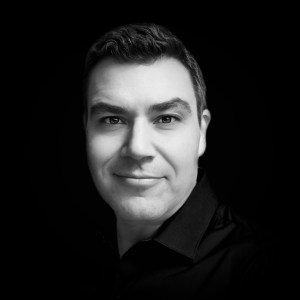
Joseph Stone is a historical, dark fantasy novelist who lives in San Diego, California. He holds a Bachelor of Science in Psychology from San Diego State University and a Master of Arts in Industrial and Organizational Psychology from The Chicago School of Professional Psychology.
What inspired the premise of your book?
The Haunted Women started during a casual dinner when my friend, Fran Tarantino, told me she believed her mother’s spirit still remains on Earth with her. She recounted about a dozen instances where her mother made her presence known, including playing simple pranks around the house. The idea immediately captivated me, and I began dreaming about what it would feel like to be protected by a spirit. My friend’s mother had passed away long before she reached adulthood, but I wondered what it would have been like if she had died when Fran was a child.
About a year later, Fran mentioned that she still feels the spirit, but she’s no longer sure if it’s her mother. Ten minutes after that revelation, I had imagined the entire story that would become this series of novels. Anyone who’s read the first novel, A Perfect Night, knows that, indeed, it’s not Fran’s mother who keeps her company.
How often do you base your characters on real people?
Almost always! Although my characters are all different aspects of me, their guise, mannerisms, and line delivery are usually based on real people. Like Fran, my characters are often named after someone I know, or at least a film actor I love.
I have a hard time remembering most of the names I make up, no matter how organized I am. Remembering the names of dozens of characters in a novel or series of novels is a tall order. I improve my chances by naming them after people I know. And if I don’t really know them, I use people I feel like I know. Why shouldn’t Fran’s aunties be Bette Davis, Rue McLanahan, and Betty White?
Which character was most challenging to create? Why?
In my novels, the most challenging character to create is always the main protagonist. When you spend hundreds of pages with the same person, their character can’t just be interesting enough for a few chapters. And it’s far from easy to accomplish that outcome on a large scale. I have to create a fully developed person who lives and breathes—a person I’ll want to stand beside through anything I throw at them. And when your characters are truly just versions of yourself, it requires a lot of interesting events to keep me from losing interest in even the best character.
What kind of research do you do, and how long do you spend researching before beginning a book?
I’m usually in the middle of casually researching periods when a story idea strikes me. Each of my Lykanos Chronicles was inspired by my fascination with their historical era, whether from another novel or a film I love. The amount of time I spend researching before I start writing mainly depends on the period in which the story is set. For a novel like Wolf Omega, which features an immortal character moving through centuries, the research can take months.
The Haunted Women series is mostly set in the U.S. during the early 1970s, and the closer a story is to a period I’ve lived through, the less research I need to do. However, several parts of this novel include letters and journals written over the previous centuries. So, I had to study how people wrote during those times. Not how Benjamin Franklin wrote to that scoundrel, King George III, but how everyday Americans casually wrote to friends, family, or kept private diaries.
After the writing’s finished, how do you judge the quality of your work?
My first real sense of a novel’s quality comes during my initial read-through after finishing the first draft. My writing process involves completing each chapter before starting the next. I don’t rush through the story and plot, like many writers, typing out the adventure as fast as possible. Instead, I focus on revising each chapter until it’s finished—until it’s as good as I can make it—before moving on to the next.
I proceed this way because I find editing exhausting. If I waited until I finished the first draft before starting to edit, I’d never finish anything. I wouldn’t have the patience to edit 120,000 words all at once. When I reach the end of the novel, I want it to be as complete as possible. As a result, I never truly know how well a novel works overall until I read it through for the first time—a year after I started writing. Usually, my initial story framing ends up being solid, but sometimes I have to redo entire sections because they turn out too fast or too slow.
What’s next for you?
I am halfway through the next and final novel in the Haunted Women series, which I am having an incredible time writing. I’ve fallen in love with these characters and will be truly sad to leave them behind. After I’ve finished Fran’s journey, I’m not sure where my mind will go next. But my werewolves have been howling to get my attention away from these selfish witches for years now.
***
 BookView Review
Leave a comment