BookView Review rated it:

Pub date October 5, 2025
ISBN 979-8268442533
Price $44.95 (USD) Hardcover, $24.99 Paperback, $0.99 Kindle edition
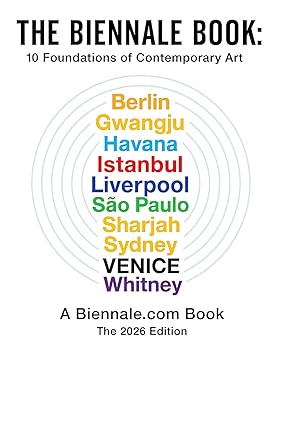
Daniels’s first volume in The Biennale Book series offers a sharp, disciplined analysis of the global exhibition model shaping contemporary art, revealing the often hidden mechanics behind these major cultural events. The narrative moves confidently across ten major biennales; Venice, São Paulo, Berlin, Gwangju, Havana, Istanbul, Liverpool, Sharjah, Sydney, and the Whitney, treating each as a distinct ecosystem in which artistic ambition, civic identity, and political tension intersect. Venice appears as a site of perpetual reinvention under the weight of history; São Paulo operates as a stage for the collision between modernist ambition and the realities of economic inequality; Istanbul mirrors its city’s own tensions, oscillating between secular modernity and rising authoritarianism; and The Whitney (the sole biennale not tied to a city) stands as the United States’ internal mirror, reflecting the nation’s shifting anxieties about race, politics, markets, and identity, and provoking controversies with unusual regularity.
His discussion of the contradictions embedded in biennale culture, most notably the uneasy coexistence of decolonial ideals and institutional constraints, is refreshingly direct. He further argues that biennales function through their physical demands, where navigation, pacing, and spatial choreography influence how audiences absorb and interpret art. For all its breadth, the book remains crisp and controlled, giving readers at every level, from artists to scholars to curious visitors, a vivid understanding of the biennale’s continued importance. The result is a considered, authoritative study that meaningfully advances contemporary art dialogue. Readers of serious nonfiction about art and society will find this one especially rewarding.
A fascinating, quietly provocative inquiry into how art thinks, argues, and endures.
***
 BookView Review
Leave a comment