Welcome to BookView Interview, a conversation series where BookView talks to authors.
Recently, we interviewed Robert K Bosscha about his writing and recently released book, Leaving La-La Land: Escape to Reality, an absorbing, humane account of neurological illness that brings rare visibility to an interior world most patients cannot articulate (Read the review here.).
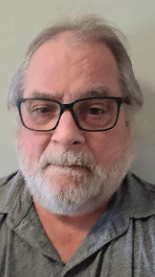
I started my working life becoming a Journeyman Carpenter, and to this day, I love carpentry. The 80s economy forced me to consider different options, and I earned my undergraduate degree in Education. Later, I earned an MBA and numerous certifications, including CMC and CHRP.
I am looking forward to my new adventure of sharing and discussing “encephalopathy” (a catch-all term for brain damage and disease), a term I had never heard until I became a sufferer. I hope to increase awareness of encephalopathy and the hope for recovery. I will raise awareness by sharing my story and researching and analyzing related topics. What I will find interesting is exploring who I am today and who I was. Encephalopathy has permanently restructured my mind and body. I know who I was, and I share that below. Now is the time to explore who I have become and its impact on my work.
In the past, I considered myself a highly skilled and results-oriented management/organizational effectiveness professional with solid and well-rounded skill sets in technical and non-technical business realms. My breadth of experience ranges from coaching executives to analyzing operational data to creating new strategic programs to facilitating executive workgroups. Building relationships, trust, and delivering results have been prerequisites for experiencing these opportunities.
I am experienced in management consulting, business improvement, leadership development, change management, employee engagement, performance management, training and development, team development/building, process improvement, organizational design and coaching. With experience in sectors such as oil and gas, finance, construction, transportation, manufacturing, and education.
What does literary success look like to you?
For me, success will mean that I have increased awareness of encephalopathy and hope for partial recovery. As I write this sentence, it sounds so simple, but it is not. For this to happen, the book needs to get out there, and readers need to buy and share the story. Spreading this book and story is key to success.
Do you find writing therapeutic?
I am in a unique position, writing was more than therapeutic, it was necessary for my recovery and mental health. Without writing this book, I would not understand my disease, its impact, and my limitations. Even deeper than that, the writing process was a way to engage my brain, to learn more, to engage neuroplasticity, rebuilding/rewiring my brain after damage. I would not have recovered as well as I have if I had not written my story.
Does a big ego help or hurt writers?
I do not have a big ego, and I think that helps. Why? It makes it easier to listen and accept what other people are saying, providing enormous opportunities for learning and further neuroplasticity.
Do you read your book reviews? Do they please you or annoy you? Do you think you can learn a lot from reading criticism about your work?
Yes, I read my reviews. I find it necessary to determine if I am being successful. I appreciate what readers are taking away from the book. To date, I have found that readers have greater insight than I initially thought. To that end, I think that my reviews are also part of my recovery and a major part of measuring success.
After the writing’s finished, how do you judge the quality of your work?
I am a first-time writer, and I’m not sure how to measure quality relative to success. But it did not take long to realize that the quality of my work was good, thanks to the reviews I have received. A number of the reviews refer to my writing as philosophical, frightening, poetic, honest, heartfelt, and realistic. For me, I see that as a level of quality in my writing.
Are you a feeler or a thinker?
I am definitely a thinker, which is why the first version read a little more like a textbook than a story. How does a thinker writer change their stipes? Have a very close and good writing group or companion. During the writing process, I received a lot of feedback and appreciated all of it. Other perspectives are vital to me, and when someone can honestly say to me, “I did not understand a word you said on page XY”, I take that as necessary, and the result is I became a better writer. For all those thinkers out there, have some feeling friends.
What inspired the premise of your book?
I did not start out to write a book. I started writing down these crazy dreams I remember while at the same time having no memory of the real events around me. Over ninety days after being admitted to the hospital, my memory was full of these dreams, which were occupying my brain. I thought that writing them down would do two things: first, ease the time these dreams were occupying my brain, and second, maybe retrieve some real memories.
I was successful in the first, but had no luck in the second. Therefore, I ordered all my hospital records, thinking that this may help retrieve memories. It was only after reading my hospital records that I thought maybe there is a story and a message here.
How many rewrites did you do for this book?
I did at least 8 rewrites over 2 years. My first version was full of medical explanations and terminology, something I needed to learn, but upon review, it was too technical and boring for the reader. Second and third rewrites turned the story from very technical to more human. The third and fourth rewrites removed some of the dream information because it was long and detailed, yet it still failed to hold the reader’s attention. After that, there was a lot of cleanup, editing, proofing, and a round of beta readers.
.What do you hope readers will take away from this story?
As I have gone down this journey, two things have become evident: first, there was little understanding or knowledge about encephalopathy, brain damage or disease, and second, there were very few stories of hope from the patient’s perspective.
So I think that it would be nice for the readers to learn a little about encephalopathy. On top of that, I would like readers to gain an understanding of what is happening inside the brain of a person suffering from encephalopathy. And finally, I would like readers to recognize that there is hope for partial recovery from such devastating brain damage. I hope that other sufferers find this book and realize that where they are today is not the end of the story. For some reason, I did not accept the prognosis of permanent brain damage and permanent assisted care and living; I wanted to be somewhat “normal” again. Others can have the same experience.
How did you decide on this title?
During my hospital experience, I had sisters who kept notes about what was happening, how I was feeling, what I was saying, etc. In one note, my sister wrote, “Rob is in La-La Land”. As soon as I read that, I knew that it had to be part of the title, because that is exactly what it felt like. Initially, I had a title “Languishing in La-La Land”, but as the story developed, it was really about getting out of La-La Land, so I changed it to “Leaving La-La Land”. The subtitle “Escape to Reality” captures a theme that runs through the book. During my hospital stay, I often try to find ways to get out; escape runs deep throughout the story.
How crucial is it to have a working title before you begin a project?
I think that the working title is important. For me, it provided the focus I needed to keep the story consistent and flowing. Although the title changed a little as the story developed, the focus remained.
***
 BookView Review
Leave a comment