Welcome to BookView Interview, a conversation series where BookView talks to authors.
Recently, we interviewed K.R. Gadeken about her writing and recently released book, Space Station, a compact yet ambitious allegorical work that uses speculative science fiction to examine anxiety, identity, and the difficult art of moving forward. (Read the review here.).
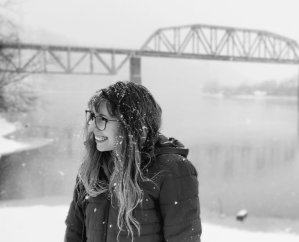
K.R. Gadeken was born and raised in Northern Colorado, where she found a love for the mountain wilderness and exploration at an early age. She traveled for a bit before returning to Colorado to earn a Bachelor’s in Astronomy. She later moved to Tennessee with her partner and earned a Master’s in Geography. She longs to travel the world again soon. As an author, she uses her career as an excuse to read far too many books. She is the author of The Nabukko Trilogy, and you can visit her online at http://www.krgadeken.com and on Instagram (@krgadeken) and TikTok (@krgadekenauthor).
How many hours a day do you write?
It really depends. I would love to write every day, but that usually doesn’t happen. Work, a healthy social life, and hobbies keep me busy, but I try to write at least a few times each week, usually during evenings or on weekends.
Does writing energize or exhaust you?
For the most part, it energizes me! Writing can scratch that itch just like reading can, though in a different way. Still, I am right there with the characters, and it’s exciting to figure out how each scene unfolds and how events impact the characters. Writing definitely takes more time and energy than reading, and if I’m already exhausted from the day then I don’t usually get too much of a boost from writing. But If I’m writing a fun scene, I certainly get amped up.
How often you read?
I try to read at least a little every day. When life gets in the way, it might only be a few times a week, but I think reading consistently is just as vital as writing consistently, though I’d say I read to keep myself sane more than anything else.
How did you decide which form or genre was right for you?
I didn’t really know what genre I was going to write in as an author until I started brainstorming for my first book, Nabukko. It quickly became a science fiction story, though I am not too surprised in retrospect. I have always enjoyed science fiction, fantasy, and mystery stories. It doesn’t hurt that my undergraduate degree is in Astronomy.
Would you rather read a book or watch television?
Most days, read a book. Over the last few years, I’ve noticed that I only really watch TV if it’s with other people. I don’t enjoy watching things on my own as much. Plus, books are usually better.
What inspired the premise of your book?
I was involved with a community college library while writing this book. Initially, Space Station was supposed to be a short story to included in an anthology put together by the college. However, it blossomed into its own thing, and I let it go in the direction it need to.
Tell us a little about how this story first came to be. Did it start with an image, a voice, a concept, a dilemma or something else?
This novella was written for the students at a community college I was involved with at the time. At its heart, the story is a series of reflections on communal human experiences that eventually culminates in a discussion on creating our own paths in life, especially for people at the cusp of a big change or life event. Choices, identity, and dealing with uncertainty are big themes, and these ideas often intermingle with the philosophy of absurdism and how it impacts people on an individual level. Add in a dash of the beauty and chaos of the cosmos, and you have Space Station. The unconventional story format and narration style reflect the human experience associated with these themes.
How did you decide on this title?
I enjoy speculative fiction. For this story, I imagined a sort of space station one could go to experience their life in a different way. I didn’t want to stick to the well-known themes of virtual reality, alternative dimensions, time travel, etc. I chose to be vague on the science behind the space station because the focus of the story is the human experience. Speculation isn’t limited just to the physical world, and I wanted to write a story that grapples with speculation inside the mind.
What’s next for you?
I am currently finishing up the third and final novel in The Nabukko Trilogy, which is a young adult science fiction series. After that, I have plans for a couple of other independent speculative fiction novels, one of which takes places in the same universe as The Nabukko Trilogy, though it won’t be young adult, and reading the trilogy won’t required to enjoy the book. I will post updates on my website and on social media.
***
 BookView Review
Leave a comment