Welcome to BookView Interview, a conversation series where BookView talks to authors.
Recently, we talked to Shari Marshall about her writing and her recently released, Vizard: An Ember Files Side Story, a thoroughly engaging standalone prequel that delves into the events that took place forty years before Kori Ember and the discovery of the Ember stone. (Read the review here).
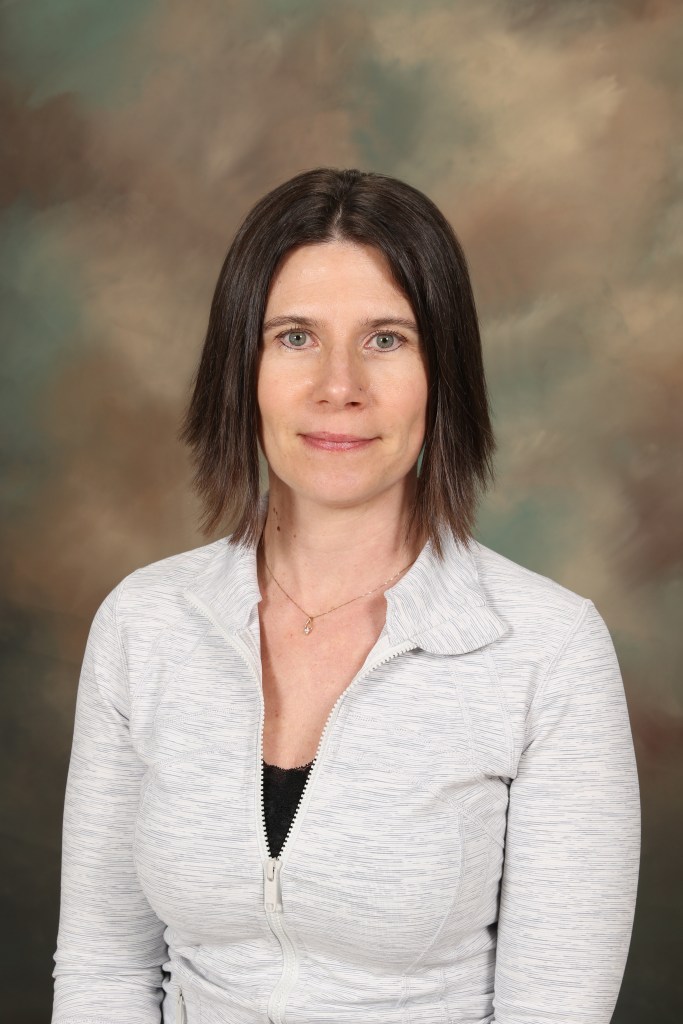
Before she started writing fantasy novels, Shari Marshall completed an Honours Degree in English Literature from York University. After that, just to shake things up, she went to the police training academy for the Royal Canadian Mounted Police. During her time moonlighting as a police officer, Shari focused her career on family violence and earned the title of Subject Matter Resource. Interspersed throughout, Shari also earned a diploma in Creative Writing from Winghill Writing School and a Writing Memoirs Certificate from Grande Prairie Regional College. She has almost completed her Editing Certificate through Simon Fraser University.
Shari grew up in a less-than-conventional household as an only child in rural Ontario. She had a great deal of time on her hands and an active imagination. It wasn’t uncommon to find her perched on a tree branch, reading, storytelling, or lost in a narrative rolling around inside her head. Her passion for writing grew out of her love of reading. She describes the stories she started committing to paper in grade school with the three Ms: magical, mystical, and mysterious. Since then, Shari has been published in Chicken Soup for the Soul, Parents Canada, Mamalode, and The RCMP Quarterly. She’s an active blogger at Brewing Coffee, Twisting Words & Breaking Pencils. The expected publication date for the last book in her urban fantasy series, The Ember Files, is the summer of 2024.
When she’s not writing, Shari enjoys travelling, camping with her family, reading, doing puzzles, and drinking coffee. She lives in Alberta with her husband, their two sons, and two boxers. For information on Shari’s next book, please visit her website at http://sharimarshall.ca. You can also connect with Shari at https://www.instagram.com/sharimarshallauthor/
How often do you base your characters on real people?
I love watching people. It’s an excellent way to observe behaviours, mannerisms, and interactions—character research—but I don’t base my characters on real people. My inspiration for character personality traits comes from people I’ve known or observed. For example, I’ve had a few friends over the years with no filter between their thoughts and the words coming out of their mouths. This is a trait I applied to Finely Salinger in The Ember Files series, but that is where the likeness ends.
What does literary success look like to you?
Literary success for me is writing and sharing my stories. It’s about people reading and enjoying those stories. I love creating characters, a world for them to live in, and being part of their adventures as they unfold. In addition, I feel like I’ve achieved a bit of success each time I finish a book, and each time I edit that book into a polished form, I feel happy with. Literary success is experiences like this where I interact with people who love novels and the secrets that shift in the shadows behind those books.
What are your reading habits and how has that influenced your writing?
I read every chance I get; I steal reading time in waiting rooms, waiting to pick my children up from school . . . In 2023, I read fifty-two books because of those stolen moments. I carry a book with me everywhere I go. In fact, I won’t buy a purse if I can’t fit a mass-market book into it. Some of my favourite authors are Diana Gabaldon, Janet Evanovich, Terry Brooks, Margaret Atwood, and J. R. R. Tolkien—there are too many for me to list them all. However, the fantasy genre has had a strong influence on my writing. I love magic, world-building, and supernatural creatures.
What was the best money you ever spent as a writer?
Professional editing is the best money I have spent as a writer. Finding an editor who is knowledgeable in the genre I write in and sees my novel as a project we’re refining as a team has been amazing. I have grown as an author through my experiences working with my editor. The experience was such a positive one that I’m earning my editing certificate so I can share that positive editing experience with other authors.
How do you select the names of your characters?
Naming characters is my favourite part of character creation. I love names. Initially, I spent a significant amount of time looking up names when I was drafting my character profiles, but I have adopted a technique from Terry Brooks. In his book Sometimes the Magic Works: Lessons from a Writing Life, Terry shares he carries a notebook to track potential names—a name log. This is a brilliant tip and has saved me time. I collect names from movies, Google searches, people I meet, road signs, and any other place where a name jumps out. It works for first and last names.
How did you decide which form or genre was right for you?
When I first tried to write The Ember Stone: Book One of The Ember Files, there were no fantasy elements involved. My genre was general fiction, not fantasy, and it wasn’t working for my writing. I would start and stale until I finally set it aside altogether. Even with my rough storyline and character profiles, which I liked, I couldn’t get past the feeling something was missing. Once I added in the element of magic, the story changed a bit, but it flowed. The struggle was gone and I no longer felt like I was trying to force the characters into action. That was how I knew that fantasy was the genre for me to write it.
What is the biggest challenge you’ve faced as a writer?
There’s a struggle to connect my books with readers—numerous book titles are released daily—how do I connect with readers? Visibility is a challenge I’ve faced as a writer—finding my target audience, getting my book in front of them, and getting them to read it. This is a challenge many authors struggle with. I’m working to build my author brand and my social media presence, but it’s hard.
I had the opportunity to speak with Aimee Ravichandran, the owner of Abundantly Social, and Mickey Mikkelson, the owner of Creative Edge Publicity—owners of Topshelf Magazine—about marketing and publicity and Aimee used the term “slow burn.” The term stuck with me because it embraces the idea that hard work, patience, persistence, consistency etcetera will eventually pay off. One thing I’ve learned since I wrote and published The Ember Stone is that there’s no rush. Many famous authors we know and love started their writing careers with a slow burn; Stephen King comes to mind because I recently read his memoir, On Writing: A Memoir of the Craft. He talks about the rejections he experienced over the years as he built his name as an author, but his passion for writing kept him going, and eventually, he found success. So, I’m looking at my career as an author as a slow burn and I keep writing, publishing, and talking about my books.
Tell us a little about how this story first came to be. Did it start with an image, a voice, a concept, a dilemma or something else? Where do your ideas for this story come from?
The story of Vizard formed in my mind when I was writing Chimera and Curses. In Chimera and Curses, Rye Adelgrief reveals a big secret about herself that doesn’t get a backstory. But I wanted to know more than just the basics about her secret and I knew readers would, too. Rye was persistent and wouldn’t let her story sleep in my mind—she had to have it told. So, after I finished Chimera and Curses, I wrote the prequel, Vizard—Rye’s story, which happened forty years before The Ember Stone.
How crucial is it to have a working title before you begin a project? How did you decide on this title?
Each author and their writing process is unique. Titles are a challenge for me, so having a title to work with gives me a sense of accomplishment. For me, it provides the novel and the writing process with a breath of life. I typically have a working title as early as the outline or the first couple of chapters. Vizard was not the working title for the prequel. I outlined and wrote the novel under the working title Torn. The story idea and the working title came from the main character, Juniper Berry, and her struggle with being split or pulled apart—questioning who she is. When I finished the manuscript, I revisited Torn as the working title because I like to research titles a bit before I finalize them. Torn is a popular title; in terms of my manuscript, it wasn’t a solid fit anymore. Juniper Berry is a master at disguise or a master vizard. I decided that Vizard as a tile is short, catchy, unique, and fits the novel.
What’s next for you?
I have a couple of projects on the go. At present, I’m working on two non-fiction pieces of writing. One is a humorous look at parenting moments from my parenting world and the second is a how-to-write manual inspired by my book coaching services. In addition, I’ve started world-building for my next fantasy series.
***

 BookView Review
Leave a reply to Coffee without a share link—COFFEE 2024-4 – Brewing Coffee, Twisting Words & Breaking Pencils Cancel reply