Welcome to BookView Interview, a conversation series where BookView talks to authors.
Recently, we talked to Stephen Ball about his writing and his recently published collection of short stories, Madhouse, that delves deeper into the darker corners of the human psyche, leaving readers to contemplate their own demons and ghosts. (Read the review here).
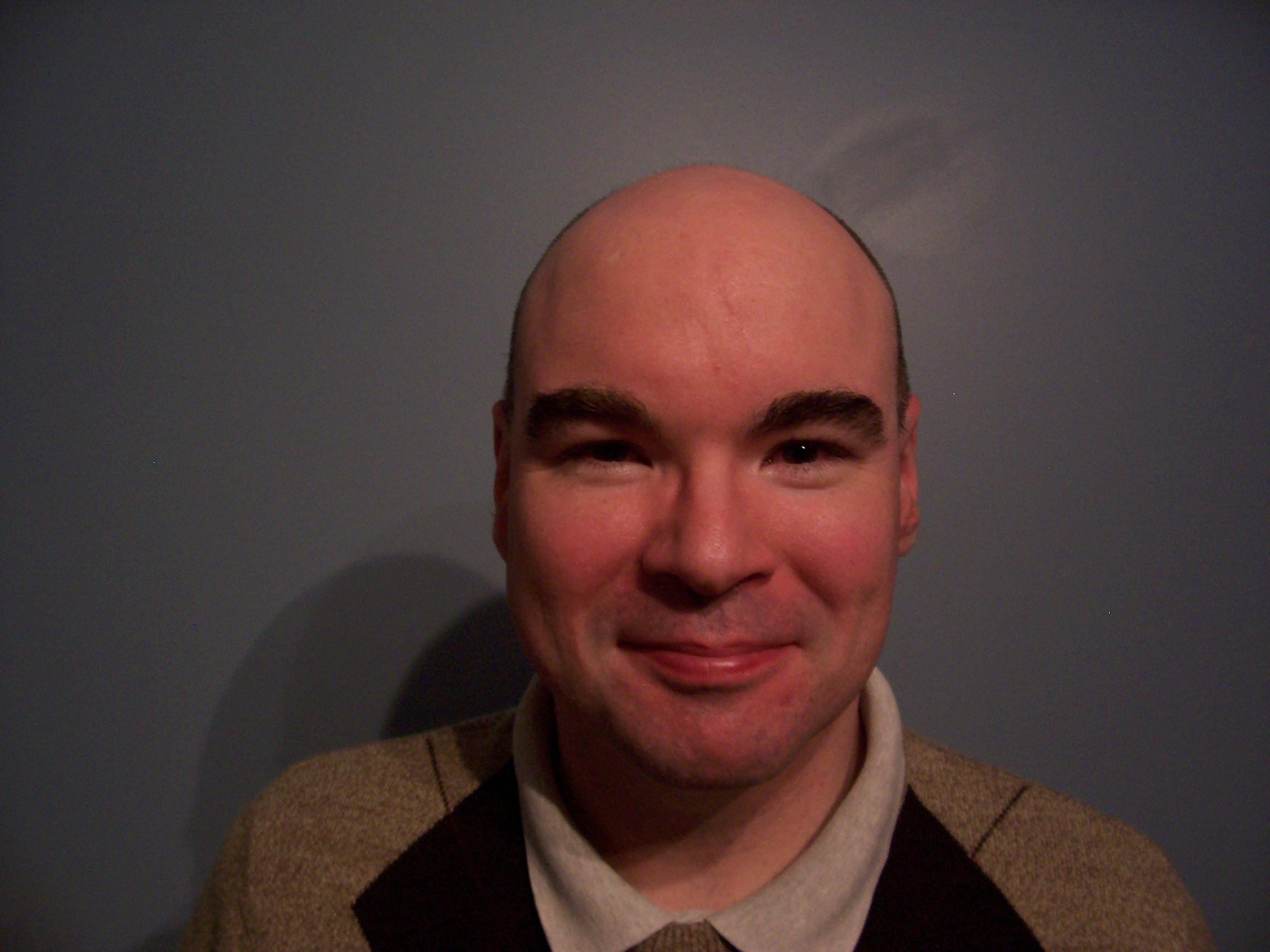
Born in 1977 in the Toronto suburb of Scarborough, Ontario, Canada, Stephen Ball has been writing since he can remember. His first novel started at age eight and was a blatant imitation of the movie “Star Wars.” Thankfully, he soon moved on to original material and began his first novel, a crime thriller titled initially “Reel2Real.”
In 2000, he graduated from York University with a BA in English and Fine Arts with Honours.
In 2008, he published his first novel, a thriller titled “Headline”. The book was recognized with Editor’s Choice and Publisher’s Choice awards from his publisher, iUniverse.
He moved on to contributing material for a limited-run pulp magazine titled “Into the Void,” writing recurring stories about magician and detective characters he created. The experience allowed him to write in different genres, as the magician stories were comedic in tone, while the detective tales leaned toward the dark and supernatural.
In 2018, Stephen finally completed Reel2Real, now titled “Random Acts of Violence and published it through Amazon’s publishing service, Kindle Direct Publishing.
In 2020, Stephen published his first comedic novel, a take on office life titled “Office Drone.”
At the end of 2022, Stephen published his long-awaited anthology of strange and horrific tales titled “Madhouse.”
He also contributes periodic freelance articles for the movie websites “The Action Elite” and “The Movie Elite.” He appears periodically on The Action Elite’s and J-Man’s YouTube channel live streams
Stephen lives in Brampton, Ontario, Canada, with his family.
Website: StephenBallAuthor.com
How often do you base your characters on real people?
A: Often. I think it helps when you’re developing characters to base them off someone you know or encountered at some point in your life. I think it helps the reader respond to the character; the more believable the character is, the more likely they’ll buy into the story, no matter how outlandish it is. That being said, sometimes you have to let your imagination run wild and create a character you’ve never met (and sometimes would never want to meet).
How many unpublished and half-finished books do you have?
A: None! I do, however, have a ton of writing ideas in a file that I look at when deciding what I will write next. I went through it not long ago and purged some of the ideas – I find that having too many ideas gets depressing as you’re reminded of how much you’re not doing.
What’s the most difficult thing about writing a novel?
A: After the initial burst of energy, it’s getting through the middle part of the novel. Writing is a marathon, not a sprint, and I get how some writers could write themselves into a corner or lose interest in the idea when they’re on page 156 and struggling to come up with something new in a story they think should be 200 pages long. The middle is like a mountain to me, but once you’re over it, it’s all downhill.
Do you think someone could be a writer if they don’t feel emotions strongly?
A: No. I once heard Stephen King say that as long as a writer is angry about something, they’ll have a story to write. If I didn’t feel passionate about a theme or a story point, I wouldn’t write. It’s as simple as that.
Who and what ultimately inspired you to become a writer?
A: I had a friend growing up who bugged me constantly about being a writer. I was toying with an idea that ultimately became my second novel, Random Acts of Violence, and he thought I was better than I thought I was. I wrote all the time but never thought of myself as a writer, so I just said screw it and started and found it very cathartic. Also, reading Stephen King’s novel Needful Things in high school was a revelation to me and made me want to give it a go.
Which character was most challenging to create? Why?
A: Probably Hilary Yorke, the main character in Gemini. I wrote that story blind, reading the real horoscopes every day and deciding, based on them, where the story would take me. It made it challenging to keep Hilary consistent throughout. Also, she goes to some dark, dark places that I wouldn’t say I like to go. I could say the same for Kaleb in Last Night.
Are any of your characters based on real people you know?
A: Yes, Ray in Near Death is based on my closest friend. At one point, he and I wanted to make Near Death into a movie, and we shot some footage where he played the Ray character, based closely on himself at that time. He’s a very entertaining guy and a huge lover of horror movies, so I thought it would be neat to turn that script into a short story for Madhouse and have his character narrate it.
What makes this book important right now?
A: There are a lot of current themes that run through Madhouse. Looking at stories like Nuts to You and Running From God, they both tackle the themes of extremism that we’re grappling with as a society today. Target One occurs in a post-COVID world, which we still struggle with. You mix that with universal themes that never get old, like loneliness, alienation, and fear, and you have a collection of stories that are not just relevant today but, I think, important any day.
How did you decide on this title?
A: I originally wanted this to be a horror story collection, but with the eclectic tones of the stories, I needed something that represented the kaleidoscope of tales in the book. I began to think only someone mad would collect stories this different, and then the title Madhouse and the wrap-around bits about the reader listening to stories in an insane asylum just came to me.
What’s next for you?
A: I am in the early stages of editing another short story collection tentatively titled Wizards and Demons. Years ago, my friends and I were publishing a short story magazine called ‘Into the Void,’ I created two different characters for that magazine. One is a wizard whose stories are more light-hearted and examine the banality of real life, while the other stories are about a detective solving supernatural cases while dealing with his own inescapable and terrible fate. I’m publishing the stories I originally wrote for those two characters in this collection and adding ones I didn’t get to publish before Into the Void went out of print. I’m hoping to get it out sometime in mid-2024.
***


Leave a comment