Welcome to BookView Interview, a conversation series where BookView talks to authors.
Recently, we interviewed Candace Lynn Talmadge about her writing and her recently released book, Scandal (Stoneslayer: Book 1) , an immersive blend of political drama and fantasy. (Read the review here.)
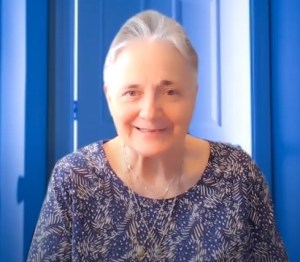
An author, storyhealer, and paranormalist, Candace Lynn Talmadge weaves words into wider realities. She is a former business journalist who knew since age 12 that she wanted to write a paranormal novel. She spent decades researching arcane topics, igniting her passion for alternative spirituality. This led her to become a Sunan storyhealer. Her profound spiritual transformation resulted in the Stoneslayer paranormal fiction series, a fictionalized autobiography based on four of her past lives.
Website and Social Media Links
https://candacelynntalmadge.com/
Facebook
https://www.facebook.com/StoneScribe
LinkedIn
https://www.linkedin.com/in/stonescribe/
Instagram
https://www.instagram.com/talmadgecandacelynn/
Substack
https://substack.com/@candacelynntalmadge
X/Twitter
https://twitter.com/StoneScribe
You Tube Channel
https://www.youtube.com/@candacelynntalmadge808/videos
Q: Where do your ideas for this story come from?
A: To my utter shock, from my past lives! And the past lives of family and friends. As a Sunan storyhealer, I have taken clients through past lives to heal at the emotional level, and gone myself for the same reason.
I identified so deeply and profoundly with my first-generation protagonist, Helen Andros, that it soon became abundantly clear to me and my wife that I was writing from past-life experiences.
My wife recognized herself as one of the major characters in the series. Ironically, more than a decade earlier, when I met Jana, my first thought about her was, She’s a lot like Judith (Altair, the character).
We identified others we knew as characters based on the people they were in that lifetime. Some have been in my life for decades, while others arrive as I meet and get to know people. It’s fascinating but has been a bumpy ride at times.
Q: What make this book important right now?
A: Azgard, the lost island nation where Stoneslayer takes place, was sharply divided. By race. Rank. Religion. Income. Its politics were feudal while its technology was more advanced than ours today. Azgard was ruled by and for the benefits of a tiny group of uber wealthy men whose family names and ranks made them very powerful.
The United States — indeed, the entire world — looks more and more like Azgard the longer I live. In U.S. politics today, plutocrats have outsized influence on every institution imaginable. The government legislates and regulates in their favor, not for the public good. The courts rule in their favor, not for the public good. And everyone wants to chew each other up and spit them out.
Very similar circumstances did not end well for Azgard, and I can’t help but wonder where it will lead us today.
Q: Are any of your characters based on real people you know?
A: Yes. All of them! I knew them when I was Helen Andros and when I reincarnated later in the series. Souls tend to move through their spiritual journeys and physical lives in groups, and quite a few of the souls I knew in Azgard I also know today.
Q: What’s more important? Character or plot?
A: Character. Character drives plot. Many a Hollywood film starts with a “high concept” plot, but founders because the characters are no more than cliches and stereotypes. An author has to know and feel and see and hear that her characters are flesh-and-blood people, or readers won’t believe in them, either.
Q: What sort of relationship exists between you and the characters in this series?
A: That depends on the character of the character, so to speak!
I spent decades thinking about these characters, who would pop unbidden into my daydreams. I learned their names, uncovered their relationships to each other, and began to perceive who they were as people.
Some of them I utterly detest, like Griffin Mordecai or Lucan Silenas. Some of them I admire, like Helen or Jackson Orlando, the man she loves. But I love all of them in the same sense that our Creator loves all of souls unconditionally, flaws and all. They matter to me, so I hope they will impact readers in some way, too.
Q: Has this novel changed drastically as you created it?
A: Yes. What I thought was one book grew quickly into a series. I published it under a different name but had no success with it, so I withdrew it from the market and started an overhaul.
An editor I respect told me I had to change the series name, and out of that sprang the demon that was always there in the story. I was simply in denial about it and its role in the destruction of Azgard. Then I had a series of profound “paranormal” experiences that compelled me to face what had always been a part of the tale. Aided and abetted by a demon, a small group of people in power embraced destruction or at least went along with it and then everyone perished as a result.
Readers will decide for themselves whether they think the demon is mere allegory for the nastier of human traits. I myself believe the demon was real and that I, in past lives, and those I loved in past lives tried to oppose it. I have no desire to repeat the experience!
Q: How did you decide on this title?
A: Once I acknowledged the starring role of the demon and began rewriting and expanding the original version of the series, the name simply came to me. All part of the creative process, which works exactly opposite of how the left-brain functions.
Q: What was the best money you ever spent as a writer?
A: On the Bingeworthy TV Bootcamp course from Screenwriting U. Hal Crosmun teaches how to develop and sustain a dramatic story over multiple TV seasons. It’s not about the mechanics of screen writing. It’s about great storytelling and how to do it, whether it’s for a screenplay or a novel.
I believe every novelist should write a logline for her book. This is the story hook that screenwriters use to interest producers, and novelists can use to interest agents, publishers, and readers. Just do an online search and you’ll get plenty of how-tos for crafting a logline.
If you can’t write a logline for your book, then you won’t know how to sell it, and then what’s the point of writing it? I didn’t go through all I have gone through just to have my story unread. Crafting a compelling logline forces you to hone in on what part of your story will most entice and intrigue readers.
***


Leave a comment