Welcome to BookView Interview, a conversation series where BookView talks to authors.
Recently, we interviewed Suzanne Domel Baxter about her writing and recently released book, When I Grow Up, I Can Be a Dietitian, an upbeat and thoughtfully conceived picture book that spotlights dietetics, a profession rarely centered in children’s literature (Read the review here.).
The business (or company) name for Suzi’s books is SDB Books LLC.
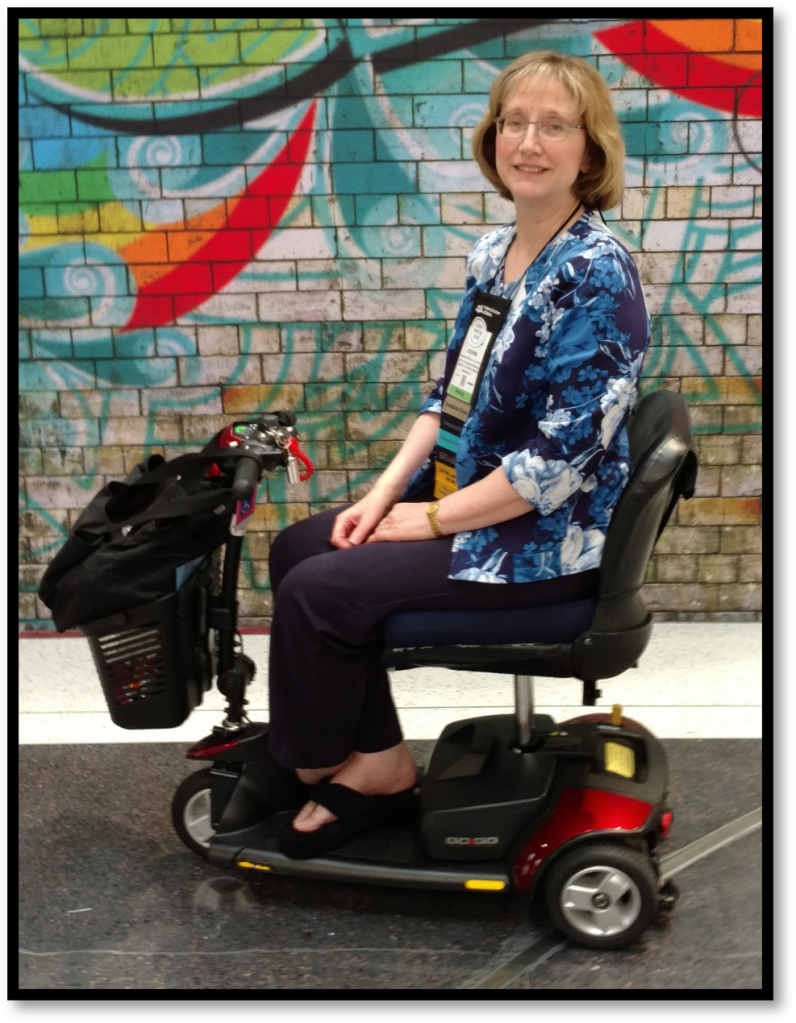
Suzi is a registered dietitian, author, and disability advocate who was born and raised in Texas. She now lives in South Carolina with her husband and their two Siberian cats. She is the middle child, with an older sister and a younger brother.
Suzi holds a BS degree and completed the Coordinated Program in Dietetics at Texas Christian University. She went on to earn her MS and PhD in nutrition from Texas Woman’s University and completed a post-doctoral fellowship in nutrition research at the Medical College of Georgia.
Her career as a dietitian has been rich and varied. Suzi began her professional journey working with children with disabilities in a residential school. She later worked in a hospital clinic for adults, in school foodservice, and for the Women, Infants, and Children Program. Most notably, she spent most of her career as a university faculty member conducting nutrition research.
In 2010, Suzi acquired a mobility disability affecting her feet and hands, leading her to stop driving and begin using a power scooter. She stepped down from her faculty position in 2016. This life change deepened her connection to the disability community and fueled her passion for advocacy. Suzi co-founded the Disabilities in Nutrition and Dietetics Member Interest Group within the Academy of Nutrition and Dietetics, where she served as the Inaugural Chair and later as Past Chair.
Suzi’s contributions to the field of dietetics have been widely recognized. She was named the “Recognized Young Dietitian of the Year” by the Dallas Dietetic Association in 1987 and “Outstanding Dietitian of the Year” by the South Carolina Dietetic Association in 2012. Her scholarly work earned her the “First Author Publication Award” from the Research Dietetic Practice Group in 2016 and the Elaine R. Monsen Award for Outstanding Research Literature from the Academy’s Foundation in 2017. In 2025, she was named one of Today’s Dietitian magazine’s “Top Ten” dietitians.
As a book author, Suzi has self-published two impactful books. Her children’s book, When I Grow Up, I Can Be a Dietitian, introduces young readers to the diverse roles of dietitians. Her second book, Credentialed Dietetics Practitioners with Disabilities Get the Job Done, is written for teens and adults and highlights the lived experiences of dietetics professionals with disabilities. Both books are available in paperback, hardback, Kindle digital, and audiobook formats. Suzi donates 100% of the royalties from both books to support efforts that advance diversity, equity, inclusion, and accessibility in the dietetics workforce.
How did you decide on this title?
I decided to write When I Grow Up, I Can Be a Dietitian! after discovering that there were no children’s books about becoming a dietitian despite the many “When I Grow Up” books about careers like teachers, doctors, nurses, firefighters, police officers, scientists, artists, and athletes, to name just a few. The bookshelf was missing dietetics, and I wanted to change that. Our country needs more dietitians: there are only about 113,000 dietitians serving 340 million people, and the dietetics workforce does not yet reflect the diversity of our population. Most children and many adults don’t know what dietitians do, and this book helps introduce the dietetics profession early.
Tell us some more about your book.
The book features ten children who are diverse in race/ethnicity, gender, and ability. Each child imagines growing up to become a registered dietitian and work in a different setting such as hospitals, research, sports nutrition, community nutrition, or the military. Readers learn what dietitians do in different settings. Each child’s favorite fresh vegetable paired with a unique dip or topping is highlighted.
What inspired the premise of your book?
I am a registered dietitian with a disability who is passionate about growing — and diversifying — the dietetics workforce. Dietitians work in many settings, but most people don’t know what dietitians do or even that this career exists. I wanted to introduce children to dietetics early and show them how food can support health in many ways.
How do you come up with names for your characters?
The children’s names were intentionally chosen to reflect their race and ethnicity to help more readers imagine themselves represented in the story.
Which scene, character or plotline changed the most from first draft to published book?
Originally, the story was set at an elementary school career fair featuring ten dietitians from diverse backgrounds who worked in ten different settings. After talking with the book’s illustrator – who is also a dietitian – we decided to flip the perspective to feature the children imagining their future careers instead. That change made the book more engaging and age appropriate.
What do you hope readers will take away from this story?
I hope readers of every race/ethnicity, gender, and ability grasp that they belong in dietetics and that dietitians can work in almost any setting. Also, I hope that adults gain a better understanding of what dietitians do.
How does your faith life/ethical outlook inform your writing?
My Christian faith emphasizes sharing the blessings that I have received and serving others. So, I am donating all royalties from this book to three efforts focused on growing a more diverse and inclusive dietetics workforce.
What life experiences have shaped your writing most?
I grew up loving books and remember my parents reading the Bible aloud after supper for family devotions and reading books aloud books at bedtime. I began my career as a registered dietitian in 1981 and worked in many settings, including a residential school for children with cerebral palsy, an outpatient clinic for adults, school food service, community nutrition, and research. Acquiring a disability in 2010 profoundly shaped my perspective and strengthened my passion for diversity and inclusion.
What makes this book important right now?
Although everyone eats, few people understand how food functions as medicine — or who the professionals are who help people use food and nutrition to improve their health. A recent survey found that 86% of the public have never consulted a dietitian, and only 7% can accurately describe what dietitians do. This book helps close that knowledge gap, beginning with children.
What’s next for you?
I’m considering a children’s book about becoming a dietetics technician — also known as diet tech. Diet techs have a key role in nutrition care, and their training pathway is different from dietitians. Having a children’s book about each — dietitians and diet techs — can help young readers and their families better understand the wide range of opportunities in careers in dietetics.
***
 BookView Review
Leave a comment