
From the blurb
Adam Tanner never expected running for a local school board seat to become a fight for his life.
For years, parents and grandparents across the country have watched with growing frustration as public education descends into conflict, secrecy, and political power struggles. Adam Tanner decides he has had enough. Determined to bring accountability and transparency to his community’s schools, he launches a campaign for the San Diego City School Board, promising to challenge the entrenched system and put students and families first.
But powerful interests are determined to stop him.
Before he can even reach the voters, Tanner is kidnapped at Washington’s Dulles Airport and transported far from civilization, abandoned in the unforgiving wilderness of the Allegheny Mountains. Badly injured and struggling to survive raging storms, wildfire, and dangerous wildlife, Tanner’s only hope lies in staying alive long enough to return home before election day.
Meanwhile, retired U.S. black operations specialist Ivan Samsonoff begins searching for the missing candidate. What he discovers shocks him. Tanner’s kidnapping is not a random act of violence but part of a carefully orchestrated plot involving foreign operatives, covert intelligence networks, and powerful figures determined to control the outcome of a seemingly small local election. As the conspiracy unfolds, Samsonoff realizes the stakes are far greater than a school board race.
With time running out and assassins closing in, Tanner must survive the wilderness and expose the forces trying to silence him. If he fails, the truth about what is happening inside America’s public school system may never be heard.
The Watchmen is a gripping political thriller that blends action, espionage, and contemporary debate about the future of American education. It is a cautionary tale for parents, grandparents, educators, and citizens who believe that the fight for the nation’s schools is far from over.
Gusting winds blew, driving snow into Ivan’s eyes as the bright moon tried to slide out from behind menacing clouds. He paused for a moment before beginning his way along the secret trail up the mountainside to the top-secret outpost.
Keep your head, Durak (idiot)! You can’t fail Linus. That’s why HQ gave you this mission. Only you know the quickest route.
Ivan Borisovich Samsonoff had been a U.S. intelligence agent for over seven years. His long hair and beard were designed to disguise his American identity. Although he stood over six feet in a weightlifter’s body and weighed over 200 pounds, when clean-shaven, he looked much younger than his 26 years. The last time he went drinking in California, he’d had a hard time getting served.
The “black ops” intelligence officer stepped gingerly onto the narrow, icy ledge and began the dangerous climb up the sheer cliffs. He moved sideways along the eighteen-inch path, one step at a time, his back pressing against the jagged face. The trail, hacked out centuries ago, had been intended for only one young shepherd or goat at a time.
Ivan thought about his only brother as he inched along. Linus had arrived in Afghanistan at least two years earlier. His talent was Middle Eastern languages, including Russian, French, Spanish, Mandarin, and Dari, which they’d both learned in childhood from their parents. Because he had looked out for Linus when they were kids, Ivan became the boy’s hero. Pop loved that. “Look affen eeck other,” he would roar in his broken Russian-accented English. “You oldest, Ivan. You set zample. That’s family!”
Ivan went away to intelligence school to please Pop. For six years, the Navy sent him all over the world. But in Afghanistan, the brothers were once again reunited and became even closer as well as friends, rediscovering a shared love for Dostoevsky, the New York Yankees, and Puccini.
Several months ago, Ivan had been promoted from the Middle Eastern desk to HQ and hadn’t seen Linus since. He really missed the skinny little guy.
Ivan now stopped in his tracks to listen. The updraft howled with a pelting snow blizzard darting over the rugged face of the sandstone walls. He thought he heard a man scream and turned sideways on the trail, straining to check his bearings. To his right was a 1500-foot drop onto the rocky walls below. On his left were sheer, ice-covered stone walls, teetering on the brink of collapse as a result of extreme temperatures, high winds, and decades of thick ice.
Ivan saw nothing. He took a few more steps and heard another strange noise.
Something or someone was definitely coming down the narrow, slippery path. His body tensed for combat.
The menacing footsteps stopped.
Ivan carefully side-stepped up the ledge closer to the sound.
There, through the swirling snow, stood a man.
Merde, this is it. He’s here to take me out. Doesn’t matter why. We’re going down together. Sorry, little bro. Sorry, Pop. Doesn’t make any sense.. No one was supposed to know I was coming. This guy obviously knows I’m here.
“How are you, brother?” Ivan asked the stranger, his Dari pronunciation perfect and his voice calm.
“F-f-f-fine, thank you, sir,” stuttered the muscular man, maintaining his cover.
Both froze in place. A few seconds passed. Each pondered his next move. The stranger waved Ivan towards him. Ivan pretended not to understand. They stood still. The man kept making walking gestures with his gloved index and middle fingers in the palm of one hand. Finally, Ivan realized he was indicating the protocol of the path: whoever descended had to step around whoever ascended.
Slowly, the two men inched towards each other, hands and backs pressing against the mountain stone. Ivan studied the man: no visible weapons, light-colored eyes, a terrified face. Something wasn’t right.
The stranger executed his spider-like maneuver around Ivan as the swirling blizzard buffeted them both.
Now they were eye-ball to eye-ball, faces mere inches apart.
This could be it.
Wind and swirling flakes pounded their parkas and ski masks. Darkness concealed the bearded male’s features but not his blond hair.
Suddenly, the incredible stench of booze nauseated Ivan. He barely stifled a laugh.
Merde, this idiot’s no killer. He stinks from a hangover. Hell, he’s afraid I’ll remember him. He’s probably someone’s secret lover.
“God, go with you,” whispered Ivan.
The skulking figure nodded obsequiously and in haste. “Good day, your Honor,” the man murmured, fading from sight around the icy ledge.
***
At that very moment, over the city of Kerch, inside Soviet Russia, a brief radio transmission was made and then acknowledged.
“Kerch Bagerova, this is flight 60025. Do you read me?”
“Flight 60025, this is Kerch Control; we read you five by five. Identify.”
“Kerch Bagerova, this is flight 60025, Special Military Transport requesting entrance into your zone and overflight to Kiev for technical reasons.”
“Flight 60025, we have your communication. Stand by.”
Several minutes passed.
“Thank you, Flight 60025, for standing by. Your overflight is approved. Transmission is ended.”
***
Linus Alexi Samsonoff glanced at the US Navy Intelligence Sulaiman Ops Center clock and lit an American unfiltered cigarette. “Another hour and I’m outta this hell hole,” he thought. “Good grief, this is only my third try. Twenty-four fun-filled months of ‘Naval Power for Peace.’ What a crock. Seven-day weeks, no R &R, no breaks, no women, only idiots to talk with, C rations with Kool-Aid, and the constant smell of burning donkey dung.
“What an assignment. If it weren’t for Aram and his occasional war games for Mossad (I always wondered how they got the name Mossad for Israeli Intelligence), I’d be crazy by now. He’s only been gone for an hour, and I’m already bored. Probably never see him again. That’s the trouble in this stupid assignment. You can never have or keep any friends.”
“Wake up, Linus.”
His attention snapped toward the Command Desk, where a squat, burr-haired first lieutenant of Thai ancestry rushed toward him. “I’ll need all your Mossad logs before you get debriefed and muster out. Okay?”
“Sure, sure, Rex,” Linus said absently, smashing out his cigarette.
He and Lieutenant Martin Lu didn’t get along. First, Lu was a Naval Academy 1st Lieutenant and didn’t know much about communications intelligence. Second, Martin fancied himself a Don Juan because he once worked as a male escort. That’s why his nickname became Rex.
Linus wasn’t going to miss Rex or anything else about this dump. He glanced around the room. A forty-by-fifty-foot concrete bunker was too small a space for monitoring satellite radio transmissions from Russia and Pakistan 24/7. The voice and Morse intercept stations were on opposite sides of the room, with a Plexiglas vertical plot board in the middle. That hadn’t changed in two years, and young Samsonoff had to wear two overcoats in the Ops Center to avoid catching pneumonia. Nobody had yet figured out a way to keep the listening equipment cool in this God-forsaken place without setting the thermostats below forty degrees. The Command watch still posted the Defense Condition on the blackboard. Right now, it read: DEFCON 4 (one level above peacetime).
Suddenly, Granny began waving at Linus and Rex. Granny was the lead Morse intercept operator on shift. He always hunkered down in his chair, pounding on his keyboard, talking nonstop to himself as he eavesdropped on all Morse code operators for the sector. His invented stories were always told in the high-pitched whine of a little old lady.
Right now, Granny was yelling in his own voice. “Lieutenant, I’ve got something really bogus here. It doesn’t make any sense!”
Linus and Rex hurried to the Morse section and studied the garbled glyphs flowing from Granny’s printer.
His real name was George Robinson, and he was the best Morse operator on base and a good friend. Although only twenty, Granny could spot the subtlest variance in an operator’s signature. He knew when they were horny, hungover, or scared. He knew them all and was seldom alarmed by anything. But right now, Granny was shaken.
Linus lit another cigarette. “Can’t this wait one more freaking hour?” he thought. “Or at least until I get the hell out of this never-ending dog and pony show.”
“Linus,” shrieked Granny, “I’m picking up non-Morse transmissions, and Gershwin’s tracking a Morse blip on voice coming straight toward us from Kerch. Either we’re reading this wrong, or it’s textbook what happens just before an attack.”
“Someone needs to be recording the non-Morse?” barked Linus. “I want to hear what you’re hearing.”
“Grab these ears,” cried Granny, handing Linus a set of earphones. “I don’t recognize any of this mess. Help me out, Linus. There’s too much crap happening. I mean, from nowhere, there’s a radio stand down . . .or, or . . . Holy crap, I don’t know . . .” Granny’s large brown eyes darted side-to-side, his dark features twisted into a fretful grimace.
Linus plugged in. He knew Russian Morse ground communications were sent in five-character groupings, but this wasn’t that. “Why were the Russians broadcasting unscrambled text on a Morse network?” he asked out loud. “They only do that if the message is so important they don’t care who hears.”
“Linus!” Gershwin’s voice now high and desperate. He was the radio technician on shift and, as usual, hadn’t changed clothes or bathed in days. “Have you got anything for me?” blurted the rookie radio man. “Nothing is where it should be.”
Linus muzzled Gershwin with an angry wave of his hand and pointed with cigarette-stained fingers where Granny should break text and punctuate.
In seconds, Granny’s printer showed that the foreign minister of the Soviet Union was sending congratulations to the 1920 Great Atatürk Revolution of independence. It didn’t make any sense since it had happened so long ago.
Linus studied the printout.
“LINUS!” Gershwin’s voice hysterical. “What should I do?”
“For Pete’s sake, Gershwin,” yelled Linus, “shut the hell up. I hear you, but you’re out of control and no help whatsoever!”
At that moment, Major Ivan Samsonoff activated the entry door to the Ops Center’s top-secret US listening posts. He quickly removed his parka, surveyed the room, and immediately knew he’d come in during a severe intel operations crisis.
Linus saw him first. “Cooler!” he shouted, voice shrill with relief. He yanked off the headset, ran to Ivan, and gave him a big bear hug. “Dushke (part of my soul), bro,” he whispered. “Holy crap, are you a sight for sore eyes.”
Ivan returned the hug. Linus was trembling. “Dushke to you, too, squirt,” Ivan murmured so only Linus could hear. He then held Linus by the shoulders and studied his face. “You look like hell,” he said in a loud voice, glancing around the room. “What’s happening? Someone see a ghost?”
“The Russians are headed our way,” said Linus, lighting another cigarette.
Ivan nodded to the others on shift and followed Linus to where Granny was frantically at work. “Before we jump to conclusions,” the older Samsonoff said calmly, “let me hear what you think you’ve got.”
Linus briefed his brother.
Ivan yanked the plug free from Granny’s station. Adjusting the headset over his ears, he marched to the plotting board and studied it for a moment. A string of pearl-like fixes dotted the plastic map from Kerch straight toward their post.
There it is, but it doesn’t add up.
Linus sat in a clerk’s chair and drew on his cigarette, deep in thought. “The Russians don’t do things like this.”
“You mean come straight at us?” said Ivan.
Linus nodded.
“Why not?” Ivan suggested. “Since they caught our listening device over the White Sea, anything’s possible.”
“Well then, they can’t do it on my last shift,” Linus bellowed, exhaling a gigantic puff of smoke.
Ivan pointed at the plotting board. “What’s this mean?”
“You won’t like it” Linus used his cigarette as a pointer. “The foreign minister of Russia,” he said, pointing at Kerch, “is greeting fraternal patriots in Afghanistan here,” pointing to Kabul.
Ivan thought for a moment. “We can’t untangle this in time to meet any two-minute reporting deadline to HQ. So, let’s just go for broke. What’s to lose? Either we save the world from nuclear war, or we’re the first to die trying to stop it without breaking cover. Don’t see any other choice with that plane so close.”
“I’m game—we’re screwed either way,” said Linus.
“Okay, bro,” said Ivan. “Get on that frequency generator and check it against normal Russian broadcasts. Get Gershwin’s crew to check for what should be there. See. If Pravda/Moscow is sending matrices for their far eastern editions on regular flights. Call SINOP. See if Navy has this Kerch plane on radar. Don’t tell them we’ve got Morse plots showing it right down our throats.”
Ivan signaled to Lieutenant Lu. “Rex, call the White House and get the president on the line. Tell him it looks like a Russian electronic jammer plane is headed into Afghanistan and that normal ground communications are all in the wrong places, indicating a possible Russian attack. Explain that this one plane may be hiding unknown air groups coming at us as if fixed on our radio signals. Period. Then get the body bags and wake up our MPs. Let’s show the world we know what the hell we’re doing.”
Linus and Rex sprang into action. In seconds, Linus had every man on the shift searching through all the communications static—the electronic chaff sounds they usually ignored —for any transmission from any military or commercial source.
Flight Commander Lu sent a “FLASH—Eyes Only, the President” telex before calling the White House.
The room got deadly quiet when the MPs came in and leveled M-1 carbines all around. They knew their job. No one in this room was to be captured if the facility was overrun.
The menacing calm was underscored by the tension in Lieutenant Lu’s deep voice, “Gentlemen, we are at DEFCON 2. Repeat, we are at DEFCON 2. That means war ready. Everybody, look smart.”
Ivan pulled off his headset and quizzed Linus, “Any Russian mobilization?”
“No forward-moving transports at Semipalatinsk, Maglev, or Novorossiysk,” Linus replied. “Nothing is where it should be. No long-range bomber unit, tactical squadron, or long-range missile radio network is transmitting.”
“Linus, I don’t get it. You’re hearing nothing, or is there nothing to hear?”
The younger Samsonoff inhaled his cigarette and exhaled before answering. “I don’t know the answer to your question, Cooler. Nothing fits. It doesn’t sound like war, and it doesn’t sound like normal.”
There was no response to his remark.
The plotting clerk daubed another China marking on the plot board straight toward their hide-out in the mountains.
“Well, folks,” said Ivan, “this is where the President earns the big bucks. Either we’re in WW III, or we did what the sign says.” He jerked his chin toward the sign hanging over the voice equipment—”Naval Power for Peace.”
He stared at the words and cocked his head. “Linus, quick,” he said. “How would you test NATO defenses in the Middle East—and don’t give me that NSA-Catechism BS?”
“Exactly what you think you see. But I’d send more than one punny plane—if it is just one plane.”
Ivan sat down at a voice station and searched the frequencies for the known or primary sources of Russian internal military communications, hoping to pick out something dependable.
His mind raced. “I’ve got Morse plots and voice on Morse channels coming at me. It’s all backward. HOLY CRAP– IT’S ALL BACKWARD! When you get Morse on voice and vice versa, when the Russians are sending a foreign minister to a country that hates their guts when commercial flights aren’t discernible on normal trade routes…”
Ivan smiled.
“That’s it,” he bellowed, pounding his fist on the workstation desk. “Somebody, quick. What day is it? NO, NO! Not the stupid Zebra clock—the date, the day of the week?”
“It’s Sunday. So what?” came the timid voice of the plotter, still marking his plots closer and closer to the northern coast of Afghanistan.
“So, what does Moscow Center do every time they change?” Ivan said.
“But there hasn’t been a change since, hell…who knows?” Linus blurted. “Since Khrushchev announced that Stalin was a worthless slob.” He took another drag and stomped it out.
“So, sue me if the fringin’ process doesn’t fall on election day,” yelled Ivan. “But if everything’s backward and no military network is where it should be . . .”
“Then . . . the entire . .. national. . . Russian grid . .. system has changed,” chorused Ivan and Linus, pointing at each other. “There is no threat!”
Rushing to opposite sides of the room and jerry-rigging a reversal of all plots, they worked as if possessed—shaking headsets, spinning dials, taking notes on scrap paper, and barking orders.
The room suddenly filled with sleepy-eyed soldiers who were assuming previously assigned positions in response to DEFCON 2.
Linus jumped out of his chair and dashed to Robinson. “Granny, grab this. Your Morse will make sense now.”
Simultaneously, Ivan sing-songed in a long, slow, and exaggerated voice, “Gershwin, get on 121.5. Kerch Bagerova is strong and active.” Then he rushed to the plotting board, grabbed the acrylic cover, ripped it off, flipped it over, and dropped it back into place.
“Linus,” Ivan said, “I think it’s safe to assume that Granny’s foreign minister could now be entering Afghanistan on some commercial flight, not the idiotic bogie on the plot board. This flight is an unscheduled Kerch-to-Moscow military transport using a phony call sign,” he said, pointing to the board. “It’s not coming here—it’s headed north to Moscow.”
Ivan paused and looked around. “Rex, tell the president the entire Russian military has changed its navigational grid system 180 degrees. The last time this happened, Khrushchev had the head of the KGB shot, and it was Sunday. Invasion of Afghanistan is not, repeat, not a likely option at this time.”
“I’ve got the area controller at Kerch,” Gershwin announced. “He sounds perfectly normal.”
Granny beamed. “Oh, sweetheart,” he said in his old woman’s voice, “it’s so wonderful to hear from you again, my dear!”
The room erupted with spontaneous whistles and applause. Ops personnel began cheering and exchanging thumbs-up signs.
Oblivious to the commotion, Linus stared at Ivan, lit another cigarette, and shook his head. “A freaking grid change? Can you believe that crap?”
Ivan unplugged his headset and strode to Lu’s station. “Lieutenant, bring us back to DEFCON 4 and begin your debriefing immediately.”
The soldiers began to leave.
“Yes, sir.” Lu was grim. “Gentlemen,” he intoned, “prepare for debriefing. You are not to discuss this incident. Major Samsonoff and I will brief the next shift. Any questions?”
The only noise was the air conditioners and Granny’s keyboard.
The plot board was empty.
Ivan moved close to Lu. “You won’t be needing Linus for a bit, will you, Lieutenant?” he whispered.
Lu shook his head. “No.”
“I’m going to review the shift logs with him,” said Ivan, turning toward Linus who was still shaking hands with the rest of the men. “Linus, bring those logbooks—going back two years—come with me to the conference room.”
Cigarette hanging from his lips and arms full, Linus followed Ivan out of the Ops Center and down the hall toward the Ops Center Classified Conference Room.
Ivan turned to his brother. “Will you please kill that damn cancer stick?”
Linus dropped the cigarette and stomped it out.
“Nice job in there, squirt,” said Ivan. “Probably a commendation in it for you.”
“Baloney. You saved my butt. Those freaking crybabies in there were getting to me. By the way, good morning. ‘Bout time you visited your real friends. You look pretty good—for an old geezer.” Linus paused to feel Ivan’s undercoat. “Nice threads, bro. Who’s your tailor, Quasimodo?”
Ivan began to snicker through his nose and, unable to contain himself, broke into raucous laughter that echoed along the now quiet halls.
“That’s right, folks—Cooler’s back.” Linus looked to see if anyone was listening. “Say, Ivan,” he continued, “Did you come up the secret mountain trail?”
Ivan nodded, still grinning. “It’s good to see you, too, ya skinny bag of bones.”
“Then you must have passed Aram.”
“Aram?”
“Yeah. You know—Aram. Mossad?”
“Oh yeah . . . Aram.” Ivan’s face went blank. “Mossad?”
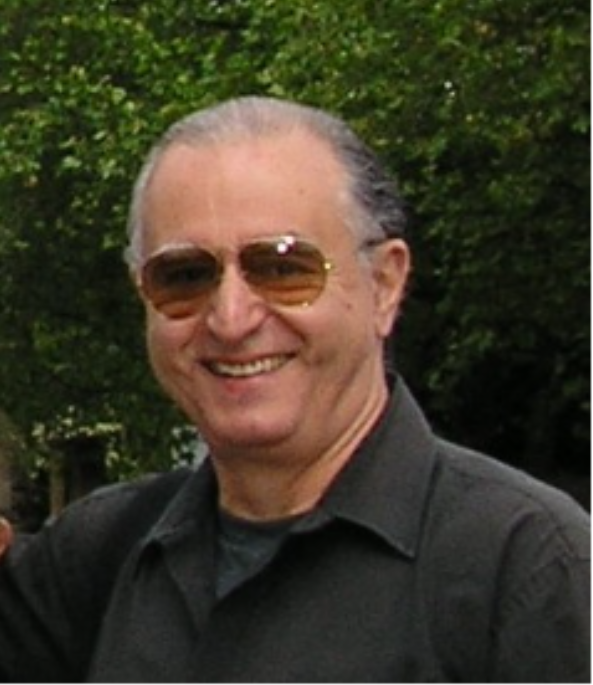
VMike MacCarthy is an experienced public advocate who has often testified about the blatant negligence inflicted on our youth in the name of public education. Recent university studies show that too many K-12 public school students are doomed to a life of hopelessness and self-destruction. And our country, as a whole, seems stunned into despair, hoping “someone” will fix our public schools, but no one does. My compelling hope is that The Watchmen will spark discussion and eventually lead to solutions regarding the ongoing nightmare in our K-12 classrooms for families and their children. For more information, email Mike at mmwrites@san.rr.com or visit his website www.mikemaccarthy.com.


Leave a comment