Welcome to BookView Interview, a conversation series where BookView talks to authors.
Recently, we interviewed Marylee MacDonald about her writing and recently released book, Bodies of Water, a collection of quiet power, one that finds meaning in life’s small reckonings and hard-won moments of understanding (Read the review here.).
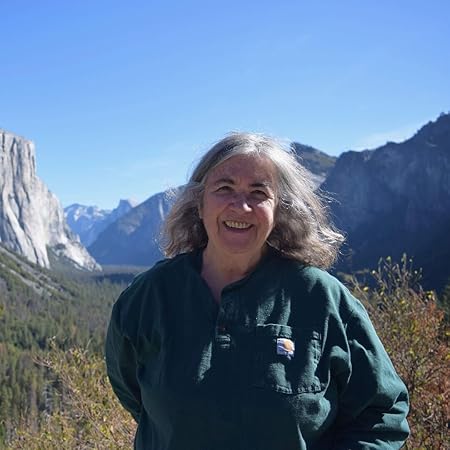
Marylee MacDonald grew up in Redwood City, California and married her high school sweetheart. After his untimely death, she went back to school for a Master’s in English/Creative Writing and worked as a carpenter. When she’s not writing, she’s hiking in the red rocks of Sedona, walking on a California beach, or plucking snails from her tomatoes.
In the years her kids were growing up, she made a living by remodeling houses. While swinging a hammer, she gathered story material. Her stories are not about construction, but about the varieties of human experience she encountered during her years as a single mom.
Her short stories have won the Jeanne M. Leiby Chapbook Award, the Barry Hannah Prize, the Ron Rash Award, the Matt Clark Prize, and the American Literary Review Fiction Award. Her short story collection, BONDS OF LOVE AND BLOOD, was a Foreword Reviews’ INDIEFAB Finalist. BODY LANGUAGE, contains stories about the resilience of the human spirit.
Her memoir, SURRENDER, about adoption, identity, and a mother’s love, won a Bronze Medal from the Wishing Shelf Book Awards. Her novel about a caregiver, MONTPELIER TOMORROW, was a Gold Medal winner in the Readers’ Favorites annual book awards.
Her most popular book, THE BIG BOOK OF INDEPENDENT PUBLISHERS AND SMALL PRESSES, was designed to help writers get their books published, even if they can’t find an agent.
She currently splits her time between Tempe, Arizona and Los Gatos, California. Her husband is Dr. Bruce Rittmann, Director of the Swette Center for Environmental Biotechnology and winner of the Stockholm Water Prize.
Social media
Marylee MacDonald https://maryleemacdonald.com
Instagram https://www.instagram.com/macdonaldmarylee/
Twitter/X https://x.com/Marylee_lit
Bluesky https://bsky.app/profile/maryleemacd.bsky.social
What was an early experience where you learned that language had power?
I learned that language had power during a freshman English class at Vassar. Over the course of the semester, we were studying various language “models.” These models ranged from the objective/reportorial/didactic to the creative. To help us learn by osmosis what each of these forms entailed—and where our natural talents might lie—the professor gave us different kinds of assignments.
In one case, we were supposed to read William Faulkner’s Intruder in the Dust and write a bare bones account of the murder at the heart of that novel. She asked us to “report” the story as if we were reporters for the New York Times. That meant boiling down a fictional account that was lyrical and evocative into one that had a “lede” (the intriguing first sentence of a newspaper story) and a pyramidal shape, meaning the most important ideas to come next, followed by details that could be chopped off at the whim of the copy editor. I could barely complete that assignment and eked out a B. Probably the grade reflected my lack of motivation. I hated turning a novel that was alive on the page into a “story” that was stripped of life, like a tree denuded of leaves.
In another assignment, we were to read Camara Laye’s debut novel, The African Child. The novel recounts his father’s occupation as a goldsmith and the boy’s transformation to adulthood. The son of a goldsmith in Francophone Guinea, Laye excelled in school and eventually headed off to Paris to complete his education. The author was, as far as I know, the first French-speaking African author to reflect on the heartache of being cut off from his roots. The professor asked that we write about an experience in our own childhood or adolescence. She told us to make that experience as real for the reader as Laye had done.
I wrote about a weeklong stay at a coffee finca in San Cristóbal de las Casas in Chiapas, a highland town close to the Guatemalan border and about my interactions with the indigenous people. The moment I sank back into my thirteen-year-old self, the words flowed. The world of rural Mexico came to life through scene, dialogue, internal monologue, and summary passages. I was rewarded with an A+ and glowing comments on the page. It was then that I discovered how words could transport readers to another time and place.
In the years since, I have written for many magazines and been an editor at some. Although journalism has been a way to make a living, writing nonfiction never brings the joy I feel when I write fiction or creative nonfiction.
What are common traps for aspiring writers?
Overconfidence about one’s ability to write is the biggest trap. Just because a person knows how to write an annual report or scientific paper doesn’t mean that person is going to succeed as a fiction writer.
To write fiction, an author must learn some fundamentals. Does an author have a good grip on writing “in scene” versus writing summary passages? Both are necessary, but when writing in scene, the clock slows down, and the author must reveal the small undercurrents that create tension between people. An author must also understand how to write dialogue. Otherwise, conversation dies on the page. Aspiring authors would do well to understand that plot grows out of character. A “plot” is simply a character trying—and failing—to get what he or she wants. A “plot” is the character’s journey from the moment “things change” to a new normal. In short, fiction has its own tricks for inducing readers to turn the page. The rules that apply to expository writing—the typical five-paragraph essay, let’s say—will not help you in the wild and wooly free-for-all that is fiction.
How often do you base your characters on real people?
All the time. But let me explain. These are real people whose stories I overhear in a coffee shop or on public transit. Or, they are snippets that are related to me as gossip. I keep a writers’ notebook and jot down ten or so items per day. These fragmentary ideas might one day lead to a story or novel. Here’s an example from a Post-it above my desk. “Morose grown son living in basement. Parents at a loss about how to get him out.” (This fragment came from me listening in on a conversation at my neighborhood Peet’s coffee shop.)
How do I know what’s worth writing down? A tug on my heartstrings. A feeling in my gut.
How many unpublished and half-finished books do you have?
Oh, gosh. Guilt, guilt, guilt!!! All my “peeps” are there waiting to have their moment in the sun. I have three novels that are part of a Kinship trilogy. The books are ninety percent done. Getting them over the finish line is my goal for the remainder of this year. Then, I have three historical novels—also a series—about a young Parisian artist who goes to Baja California in 1769. That’s the same year Father Junipero Serra and Gaspar de Portola were making their way up through California to find Monterey Bay. One of those novels, The Vermillion Sea, is done, but I want to finish the other two novels before I publish it.
What kind of research do you do, and how long do you spend researching before beginning a book?
It’s easy to get bogged down in the research and not put the words on the page. I generally write and research simultaneously, apart from one mammoth research project that required me to go to the archives of France, Spain, and Portugal. Historical novels require more research than ordinary novels, in my experience. It’s important to get the details right. Mistakes will throw the reader out of the novel. If I encounter a piece of information I’d like to have, but don’t, then I insert the letters “TK,” meaning “to come.” There are no words in the English language that use TK. That makes it easy to search a manuscript and find the places where I thought a bit more information would be useful.
Do you find writing therapeutic?
Writing is not therapy. If a person needs therapy, then go see a professional or call a friend. Writing that is close to one’s own experience dies on the page. That’s because we writers have a movie playing in our heads, and we think we’re conveying what we’re seeing, hearing, and thinking. In most cases, we aren’t.
Certainly, writing about traumatic situations is more painful than it is therapeutic. My memoir, Surrender, was like that. Painful because I was putting my finger on the biggest pain point of my life—my own adoption and the subsequent relinquishment of my first-born child for adoption. You know it’s painful when your fingers click away on the keyboard and tears stream down your face.
When writing about trauma, you can’t keep the pain at arm’s distance. To overcome the problem of a manuscript going dead, a writer needs to deeply connect with her or his feelings—to relive the trauma. Unfortunately, trauma is like an unkillable parasite that lurks in the bloodstream. Bringing that trauma to the surface doesn’t expunge the pain.
Do you think someone could be a writer if they don’t feel emotions strongly?
Sure. There are plenty of writers who don’t necessarily need to feel strong emotion. I think of George Lucas creating the Star Wars’ movies, for instance. Movies are a different creative medium, but still, I doubt he felt a great deal of angst as he was mapping out his “hero’s journey.” That said, there are many writers of formulaic genre fiction—thrillers, romance, sci fi—whose feelings are clearly engaged during the creative process. Authors who can tap into their own emotions are able to imbue their characters with believable anxiety, fear, self-doubt, and empathy.
Do you read your book reviews? Do you think you can learn from reading criticism about your work?
I read reviews from readers, and it’s easy because I don’t have thousands of them. I appreciate readers who are on the same wavelength. I especially appreciate readers who value imperfect characters. I often write about people with flaws. Just by nature, I’m a writer who can’t always wrench a happy ending from tragedy.
If criticism is mean-spirited or snarky, I feel stung. Of course, I want to learn what’s working for readers and what’s not, but after a book is published, it’s out of my hands.
I console myself by saying this: Some readers may just want a different reading experience from one my books can provide. They may be looking for escape, entertainment, thrills, or a happy-ever-after ending. It’s always good to don a suit of armor before looking at reviews.
Social media
Marylee MacDonald https://maryleemacdonald.com
Instagram https://www.instagram.com/macdonaldmarylee/
Twitter/X https://x.com/Marylee_lit
Bluesky https://bsky.app/profile/maryleemacd.bsky.social
***


Leave a Reply