Welcome to BookView Interview, a conversation series where BookView talks to authors.
Recently, we interviewed Jim Blumetti about his writing and recently released book, The Alchemy of Acting: The Evolution of Craft in Film, a spirited, perceptive call for actors to keep learning long after the lessons end (Read the review here).
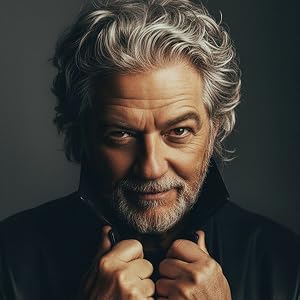
Jim Blumetti is an author, actor, director, producer, and coach whose career has spanned nearly four decades across stage, film, television, and the classroom. He works privately with established actors and considers it a privilege to guide professionals who often prefer that these collaborations remain confidential. His approach extends beyond classes and exercises, bringing together craft, the realities of working on set, and the business of acting as part of a broader, career-long practice. Many of the actors he has coached have gone on to deliver award-winning performances on stage, in film, and on television.
Alongside his work with actors, Jim has served as a writer, script doctor, and project consultant, bringing a deep understanding of production, performance, and storytelling to each project. He continues to take on character roles in film and television, though his greatest passion now lies in writing, both under his own name and under pseudonyms, about acting, creativity, and the mystical and esoteric. In that work, he explores how the deeper lessons of the actor’s craft can become a practice not only for creating, but for living.
His latest book, The Quantum Actor: Reality Transurfing for the Creative Life, features a foreword by BAFTA Scotland-winning actor and filmmaker Bryan Larkin. Drawing on Jim’s decades in the industry, the book explores how the discipline of performance can shape not only a role, but a life. It follows The Alchemy of Acting: The Evolution of Craft in Film, which distilled a lifetime of experience into an exploration of the ways film history and acting technique have shaped one another.
When he is not coaching actors or writing, Jim remains a lifelong student of cinema history, a lover of character-driven storytelling, and a firm believer in the transformative power of a deeply practiced craft.
You describe acting as a form of “alchemy.” What does that idea
mean to you, and how did it shape the philosophy behind this book?
The old alchemists were after gold, or eternal life, by way of the
philosopher’s stone. None of them found it, of course, but they
understood something about the process: you start with base material,
apply heat or some form of energy, and burn off everything that isn’t
essential. That’s what an actor does. You take the ordinary stuff of
being human, your fears, your appetites, the way your body shifts when
you’re lying, and refine it until it becomes something truer than
everyday life.
The book grew out of a simple observation. Acting has been evolving
alongside the camera for a hundred years, from the silent era to the
4K close-up, yet a great deal of training still prepares actors for a
stage that’s no longer there. The camera sees everything. It sees
effort, intention, preparation and process. So the alchemy, for me, is
distillation. Subtraction. Boiling away the performing leaves
authentic truth.
Self-tapes have transformed the audition process. What do actors
most often misunderstand about creating an effective performance when
there is no casting director physically in the room?
They think the tape is an audition. It isn’t. It’s the performance.
I spent time working in a casting office in Los Angeles, and I can
tell you what the other side of the table looks like. Ninety-nine
percent of the time, actors send in tapes that play it as safe as
possible. Like a teacher is going to grade them with an A to F. These
feel like rehearsals at best or boringly similar to every take seen.
They’re full of little apologies and guesses, deep in the subtext as
if the actor is hoping the casting director will fill in the gaps.
Nobody will. There’s no one in the room to charm, no energy to read,
no second take because you’ve finally warmed up. All that’s left is
the work.
Actors who book understand this. Their tape has to live on its own, in
silence, on a laptop, at midnight, in front of a casting director who
has already watched at least two hundred others. If it can hold that
person, it’ll hold anyone.
Near the end, you write, “You’ve built the house. Now live in it.”
How can an actor know when to stop consciously applying technique and
trust the preparation already done?
Technique is scaffolding. You need it while you build. Then you have
to take it down, or you’ll spend your whole career living on a
construction site.
You’ll know it’s time when the preparation starts answering questions
the scene isn’t asking. That’s the signal. You’ve done the work inside
out and backward, and now the work is getting in the way. Trusting it
doesn’t mean abandoning technique. It means absorbing it so completely
that it turns into instinct. That’s the paradox at the heart of the
book: total preparation as presented from a time capsule, then total
surrender. Stop renovating. Move in. Discover on the fly.
What first drew you to acting, and when did you realise that
teaching and coaching actors would become an important part of your
own creative life?
I came to acting by a roundabout route. I was working an
executive-level corporate job and looking for a way to sharpen my
communication skills. But I’d always felt a color out of place,
carrying feelings that didn’t seem to fit anywhere. I had no tribe.
And god knows I searched for one. Then acting showed up and gave them
somewhere to land.
Teaching came later, and honestly, out of frustration. Over the years
I watched talented actors, myself included, get damaged by training
that made them more self-aware, when what they needed was to be
self-absorbed. Immersion in the character by means and method in
whatever form best fit. I’d see actors walk into workshop sessions
with something alive and walk out second-guessing every breath. All to
please the instructor. Somewhere along the way I realized my real
contribution could be more than just performing. It was seeing what
was getting stuck in someone else’s work and finding the right words
and insights to set it loose.
After readers finish The Alchemy of Acting, what is the single
most important idea you hope they carry into their next audition,
performance, or stage of their career?
That your performance isn’t your preparation. It’s in your complete presence.
An audience should never see your homework. Not the script notes, not
the backstory, not the hours or days you spent working it all out.
What they want is a living moment, right there in front of them. When
your craft becomes instinct rather than visible process, that’s the
art. Everything in the book guides the actor towards a modern
performance on camera. Study rigorously. Learn everything. Then get
out of your own way and let an authentic moment happen. Find just one.
Others will flow from there. Curiosity over control. Presence over
polish. Internal versus performative.


Leave a comment