Welcome to BookView Interview, a conversation series where BookView talks to authors.
Recently, we interviewed Joseph Stone about his writing and his latest novel, A Black Magic: The Haunted Women #3, an intoxicating and deeply unsettling dark fantasy (Read the review here).
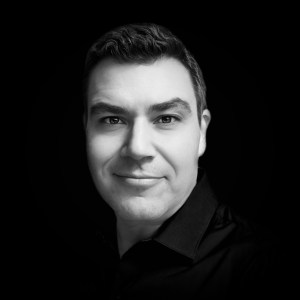
Joseph Stone is a historical, dark fantasy novelist who lives in San Diego, California. He holds a Bachelor of Science in Psychology from San Diego State University and a Master of Arts in Industrial and Organizational Psychology from The Chicago School of Professional Psychology.
The idea of memories being carried through blood is central to A Black Magic. What inspired the concept of “blood visions,” and how did that idea develop while you were writing the trilogy?
The trilogy is built on documents. From the first book, the women of Fran’s line have survived Daedrian by writing things down—Aurora’s diaries, Violet’s letters—because writing is the one place he can’t follow them. By the end of A Blood Witch, Fran and Mary Jane have amassed a library of paper and an unsolvable problem: none of it tells them how to destroy the ghost, and the writers are three centuries dead. The blood visions grew out of that dead end.
Fran is a seer; her gift is inherited, and inheritance travels in blood. So the question became: what if the blood could read what the eyes can’t? The first time she pricks her finger and touches one of those letters, she doesn’t see the writer’s memory the way you’d watch a film. She becomes the writer. Days pass for her in seconds, and she comes back not quite remembering she was ever Fran. I wanted the gift to cost something, and I wanted it to be intimate rather than magical in the wand-waving sense: she inherits the woman along with the memory.
It also gave me the finale I’d been building toward. Everything in the earlier books was secondhand—accounts, warnings, and hearsay about Daedrian. The blood visions let Fran step into the history and see him as the women who first knew him did. What she finds there is the engine of the last book.
Daedrian sees his control over generations of women as a form of love and protection. What interested you about exploring the line between love, protection, possession, and control?
From the inside, they feel the same. Every woman in the bloodline has heard Daedrian say he loves her, and he means it as far as he’s able. Aurora’s verdict, which Fran comes to share, is that he loves the way a small child does: he wants the happiness he expects to feel in the next moment, and anything that threatens it is an enemy. He genuinely believes he protects these women. He also punishes them. In his mind, those are the same act.
What interested me was writing from the perspective of someone already seduced by it. Fran isn’t a naïve victim; by the third book, she knows exactly what he is, and part of her still responds to him. The trilogy’s horror was never a ghost in a hallway. It’s that possession can be tender, that control arrives dressed as devotion, and that the person being controlled has to fight her own affection as hard as she fights him. Readers who have known a controlling relationship recognize it quickly. I’ve had letters about that.
Fran and Mary Jane fight Daedrian in very different ways — Fran through her supernatural inheritance and Mary Jane through logic, research, and relentless questioning. How did you develop their partnership?
Mary Jane is not a witch, and she can’t see the ghost. That was the most important decision I made about her. She has no supernatural gift at all, only a sharp, young mind. She’s the one who keeps asking the question Fran is afraid to ask: what is he, and what would end him?
Their partnership stems from a practical constraint that became the heart of the books. Daedrian hears everything spoken near him. He cannot read. So the cousins talk on paper: a spiral notebook passed back and forth across a kitchen table, in a library study room, and in a shared bedroom in Buffalo, with Daedrian possibly standing in the room. Fran brings the visions and the inheritance; Mary Jane brings the rigor. She’s the one who first proposes the finger-prick, the one who cross-examines Fran after every vision, and the one who won’t let a comfortable answer stand.
I like that neither of them could do it alone. Fran without Mary Jane would drown in what she sees, as the previous generations of haunted women did. Mary Jane without Fran would have a very good hypothesis and no way to test it.
The novel moves between 1970s New York and events reaching back centuries. What were the biggest challenges in connecting the historical story with Fran’s present-day struggle?
Keeping both timelines honest at once. The 1974 story has to feel like a freshman year at Barnard: classes, a typewriter, the library, and a family that expects the girls to be home when they’re not in class. The historical story has to be a real 18th-century Scottish castle or Boston apothecary, with their languages and smells, and it has to arrive through Fran, who experiences it as memory rather than reading it as history.
The technical challenge was the seam. A blood vision takes seconds in the bedroom and days in memory, and the reader has to move between those two clocks without getting lost. I solved most of it with the notebooks: after each vision, Fran writes what she lived, Mary Jane reads and interrogates it, and that exchange becomes the bridge from the past into the present-day plan. The other challenge was restraint. Every vision reveals something about Daedrian, and it was tempting to give the reader everything at once. The book works better when the past returns in pieces and the girls have to assemble it.
Family inheritance in the novel includes more than blood and magic — it also includes secrets, trauma, memory, and responsibility. What did you want the novel to say about what one generation passes on to the next?
That silence is also an inheritance. For three centuries, the women in this family passed down two things: the gift and a rule never to speak of Daedrian. Each of them wrote in secret, locked the pages away, and left them for a daughter to find, often too late. Aurora spent fifty years on her research and was one night short of handing it to Fran. The tragedy of the trilogy isn’t that these women were weak; it’s that most had to start over alone.
A Black Magic is about the generation that finally reads the entire archive. Fran inherits the trauma along with the knowledge—she lives through the worst nights of those women’s lives from the inside—and she has to decide what to do with a responsibility no one asked her to accept. I don’t think the book argues that what we pass on can be chosen. It argues that it can be read, and that reading it honestly is the first step in breaking it.
As A Black Magic closes The Haunted Women trilogy, what did you most want readers to feel or understand when they reached the final pages of Fran’s story?
I truly hope readers close the book feeling the cost was real. We each make sacrifices in life, both easy and difficult, and many of those common sacrifices appear in the series. But the central characters have paid an unusual price for three hundred years, so I want readers to feel the full weight of what those women paid to survive their curse. I also wanted the last pages to belong to the living: to Fran and Mary Jane at eighteen, at the start of their lives, having done something no one else in their family could. Whether that brings them peace is the question the book answers.
What first inspired you to become a writer, and when did you realize storytelling was something you wanted to pursue seriously?
My mother, to whom this novel is dedicated, wrote children’s books, so I expect the bug is in my DNA. But when I discovered how my body responded to writing as a young man—the peace, the lowered blood pressure, the dopamine-induced euphoria—I knew writing was the only thing I ever wanted to do with my life. Every page I’ve written since has only confirmed it.
What does your writing process look like? Do you plan your stories carefully in advance, or do they develop as you write?
I’m more of a framer than a pantser, but I leave room for both in my writing process. It all starts with a simple idea: a conflict, a location, a movie, a snippet of music, or something I hear in passing. I’ll write a few lines and let the idea simmer. When I’m convinced there’s something there, those lines will become a paragraph or two. If it still holds, I’ll outline a full story, scene by scene. When I’m satisfied I’ve found all the plot holes (which I never do), I’ll start writing in earnest. That part looks like me waking up at three in the morning, rolling over, and tapping away on my laptop until the sun comes up and I have to start my day.
The Haunted Women started the night my friend, Fran Tarantino, mentioned that she’s felt ghosts all her life and believes her dead mother’s spirit is still on Earth with her. That statement, delivered at a dinner table when we were both deep into the bottle, stayed with me for weeks afterward. Four years later, the final part of imaginary Fran’s story is going to print.
Which writers or books have had the greatest influence on your own writing and storytelling style?
I have a T-shirt that reads ‘Written by Anne Rice.’ Discovering her novels as a boy opened the door to the world my imagination has inhabited my whole adult life. I’ve read every author she ever recommended or cited as an inspiration: the Brontë sisters, Shakespeare, Dickens, Chandler, Poe, Milton, Doyle, King, and dozens more I can’t recall off the top of my head.
Presently, I’m writing my next werewolf chronicle, and the main character is so old that he learned English in the 16th Century by reading Shakespeare. To make that real, I’ve let the rhythm of iambic pentameter creep into his writing style. I want to show how that foundation still informs how he thinks hundreds of years later. (I can’t wait to record that audiobook!) And I’ve just finished reading an incredible book: The Song of Achilles by Madeline Miller. I never thought I might try my hand at tragic romance again, but that book made me a believer. *Wipes tears. Blows nose.*
What is the most challenging part of writing a novel, and what advice would you give to aspiring writers facing the same challenge?
For me, the most challenging part of writing a novel is finding the time to write. A bazillion interruptions stand between me and every word on the page (this one included), and I only manage to write because I love it so much. It is the product of pure selfishness; everyone else in my life would rather I spend my time with them than writing.
In the Haunted Women trilogy, the hardest part was staying true to a rule I set in the first book. Daedrian cannot read, and he hears everything; once that was on the page, every scene in the next two books had to obey it. In the end, I think that challenge made the novels all the richer, but many times I wished the girls faced an easier enemy. The advice that follows is to set your rules early, write them down, and treat them as promises to the reader rather than obstacles to you.
Otherwise, my writing advice is to ignore all advice. (I’m pretty sure I got that from Anne Rice, too.) Write whatever you want to write, however you want to write it. There are no rules to writing, so if you find yourself following one, feel free to break it.
***


Leave a Reply