From the blurb
A Wake-Up Call for the West
For decades, Western leaders assumed that deeper economic integration with China would produce stability, openness, and shared prosperity. Instead, those policies helped accelerate China’s wealth accumulation and strategic leverage.
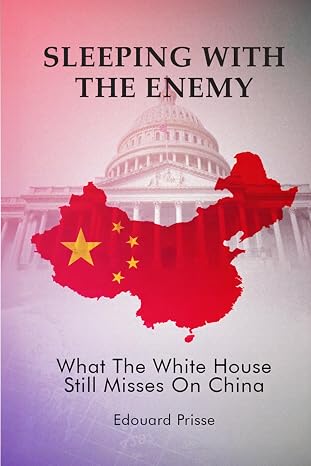
In Sleeping With the Enemy: What the White House Still Misses on China, independent political observer Edouard Prisse examines the political, economic, and media assumptions that shaped Western policy toward China—and the consequences of those assumptions today.
This book argues that prevailing free-trade orthodoxies and elite consensus have obscured the long-term risks of economic dependence. By revisiting the decisions, predictions, and narratives that shaped public understanding, Prisse challenges readers to reconsider what the West believed about globalization—and what those beliefs may have cost.
Buy now
Read the review
Chapter 1
This book is about the error we, the West, have made by starting free trade with China, an error that we are still not correcting and that continues to allow China to take over world power and to fundamentally weaken our own manufacturing industry.
Anyone unhappy with this growing power of China and the impossibility for our industry to compete with the low Chinese prices, needs to know the origin of the present global trade disequilibrium.
It started in the year 2000, when President Clinton argued that we needed free trade with China. He made the US take that initiative, and the whole world outside China followed the US’s lead.
Speaking at the Paul Nitze School of Advanced International Studies in New York, a part of the Baltimore John Hopkins University, on March 8 of that year, President Clinton gave his arguments. The sheer absurdity of what he said there leaves no doubt that a single leader—and an entire nation with him—can be totally mistaken on a critical issue, which in this case has put the entire West at risk. You will find the central portion of his speech here, with the six key errors the President made, numbered by me.
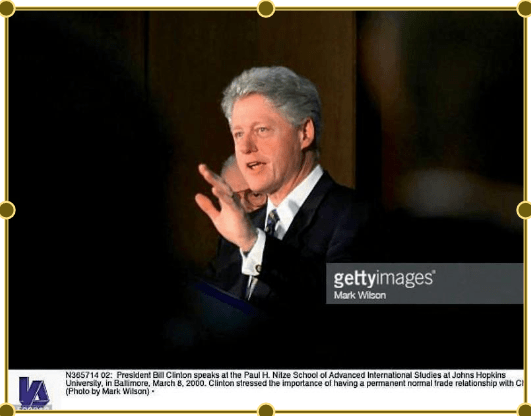
This picture was taken on March 8, 2000, while President Clinton spoke the words cited here.
President Clinton said, and I quote literally:
“The (coming) WTO agreement will move China in the right direction. It will advance the goals America has worked for in China for the past three decades. And of course, it will advance our own economic interests (1). Economically, this agreement is the equivalent of a one-way street (2). It requires China to open its markets—with a fifth of the world’s population, potentially the biggest markets in the world—to both our products and services in unprecedented new ways. All we do is to agree to maintain the present access which China enjoys.
Chinese tariffs, from telecommunications products to automobiles to agriculture, will fall by half or more in just five years. For the first time, our companies will be able to sell and distribute products in China made by workers here in America, without being forced to relocate manufacturing to China (3), sell through the Chinese Government, or transfer valuable technology (4). For the first time, we’ll be able to export products without exporting jobs (5). Meanwhile, we’ll get valuable new safeguards against any surges of imports from China (6 !!! ).”
Unquote
I am not quoting this incredible nonsense here to criticize President Clinton. Statesmen hardly ever have a macroeconomic education or understanding – with the famous exception of China’s Deng Xiaoping of course – and President Clinton was simply articulating what his economic and trade advisers had told him and what everyone seemed to have easily agreed upon at the time.
More incredible than this error by his advisors is that not a single professor of macro-economy at any of the many American universities even expressed a doubt about this so patently wrong prediction, even though one couldn’t ignore it, as this important speech was cited in all American newspapers the next day. Hardly any skepticism came from Europe either!
Worse of all, the WTO, the World Trade Organization, supposedly the world’s top organization about international trade, blindly followed President Clinton’s erroneous initiative.
China’s power is now growing greater than the US’s and that will eventually, step by step, spell the end of our manufacturing industry and following — inevitably — the slow end of the freedoms we still have in our democratic society. China will eventually be able to buy all they want, wherever in the world, while we will not be able to do so anymore. Their power will then surpass all, almost everywhere.
The two reasons why I do show the Clinton nonsense at the beginning of this book are different.
First, it is to make clear that, from time-to-time, unbelievable errors of thought and totally wrong insights on essential issues like this one, do really occur and that such errors and the situation they bring us in then have a habit of becoming collectively accepted as normal.
Second, it is to highlight that President Clinton’s 2000 blunder has a more devastating consequence than any of the many other mistakes that are routinely being made by politicians everywhere around the world. This particular error threatens the security of the Western world, hence this book.
Yes, President Clinton created a set of circumstances that have remained unchanged over the last 25 years and that are now destroying the American producing industry. In Europe too, by the way.
Chapter 4.
The quite possible repair.
As President Trump is the first US leader to understand this threat to us, but as, at the same time, he, the President, has been handling the necessary repair in a most chaotic way, a weakness that I attribute to his advisers, this book also submits a method of how to go about repairing the 25 year old, erroneous situation in a well thought out way, with a greater chance of success than before. I call this method
The Six-Months-Moratorium
Here is what that means.
= = = // = = =
- The Speech
In a major speech, the President apologizes publicly for the mistake by which, in 2001, the US took the initiative to sign the well-known free trade agreement with cheap-producing China; explains in a few sentences why that disrupts the world equilibrium; announces the US’s intention to bring trade with China back on a more normal footing and, on the same day, politely informs China about this decision as well.
Since this would alter the legal terms the U.S. agreed to in 2001 at the WTO, on that same day a formal notice should be sent to Geneva, informing the organization that the U.S. is terminating that agreement. The speech will explain that it aims to create a more balanced and fair global trade system, and to correct the appalling WTO failings of the past.
On the same date, but after careful previous preparation, the White House announces which sectors of our own industry will be banned from buying from China after a six-month transition period, starting from that very date as well. Should banned goods from China arrive at US air- and seaports after that six-month period, they will not be unloaded. This six months moratorium is the central proposition of this book as opposed to the immediate and unprepared tariffs POTUS has been putting up and down a few times, early 2026.
In the speech, POTUS will state that the present open free trade will be replaced by ‘Equal Trade‘, i.e., the United States will be happy to allow China to export a lot to the United States, but measured in money, only roughly in equal quantities of what the US will export to China, not more. The more trade the better, as long as it will be roughly equal. Next, in this speech, the industrial sectors that will not anymore be allowed to buy in China after six months will clearly be identified, and products that will still be allowed to be bought from China after the announced six months period will be indicated too. The sectors that may continue to buy from China will be chosen so as us not to become strategically dependent on them.
An extensive document giving these business details, will be issued that same day.
To take a simple example, imports of clothing, t-shirts, jeans, and the like would be allowed to continue. But many other industries, including, of course the military industry, will have to make 100 % of their purchases in the United States. What will have to be regulated in detail is that some of the other industries that are no longer allowed to import from China will also no longer be allowed to import from other cheap outside countries such as Vietnam, Indonesia, and India, at least not in larger volumes than they have been importing so far. That, too, will have to be clearly regulated. Complicated it will be, a lot of careful and detailed work will have to be done in preparation, but entirely possible his activity certainly is.
- A New Im- and Export Trade Bureau
To get all this right, the United States will already have set up a new Im- and Export Trade Bureau. This new government agency will be tasked with setting the rules, organizing control, noting what goes wrong, and – once the six months period will have started – will adjust the rules and permissions where necessary. The White House will appoint a capable official to head this trade bureau. This official will certainly have a difficult task that will cost him and his large staff a lot of work. High level professionalism will be needed here. Ideally, one of the good Business Schools in the US, e.g. Columbia, Harvard or Stanford, should be asked to be professionally involved for this new bureau.
- The necessary assurance to the US business Community
A vital element of this ruling must and will be that the entire American business community will have to be assured it can trust this regulation and therefore, in the course of the said six months, will be able to decide on investments in what will be needed to produce stuff here, after the end of the six months, when our borders will close for goods from China.
The predictable but equally short-lived lobbying effort that the US business community may come up with to block such a unusual presidential initiative should be strictly regulated so that the new Im- and Export Trade Bureau, ( the ‘IETB’ ? ), will be able to do its job relatively undisturbed. From day one, all companies in the sectors that have only six months left before they are banned from importing from China will know that they will have to move their sourcing to the US itself. Per industrial sector, these quantities will be regulated. A delaying factor will be that some firms will have to invest quickly in new production capacity outside China, mostly in the United States itself. After all, the goods that are no longer coming from China will have to be made here again. Therefore, for some industrial sectors, the said six-month period may turn out to be too short, for others too long. The ‘IETB’ will oversee and regulate that. Let it remain clear, importing in itself is not very harmful. It is the enrichment of China that is harmful and must stop. So it is the import from China that has to be curtailed. When the industry will thus be forced by clear government rules to relocate its sourcing, it will undoubtedly respond with very high efficiency. After all, survivalism is at the core of our American industries’ DNA.
President Joe Biden had already vaguely announced his intention in the above sense but he still remained unclear on the overall goal. At present, Washington’s thinking is still about protecting our own industry. That thinking still needs to be changed into the goal of stopping China’s enrichment. Protecting our industry will be an automatic result, but it should not be the overall goal as it is now, under the still reigning short-sightedness at the White House.
What the above boils down to is that government will finally fix what it has done wrong in the year 2000 under Bill Clinton.
*****
Where did the fault lie?
Please allow me some fun here and let you read up about the ‘Peter Principle’. Here is its URL.
https://en.wikipedia.org/wiki/Laurence_J._Peter .
This theory is both amusing and very realistic. Its concept was first formulated in 1969 by Canadian Laurence J. Peter, and states that employees are regularly promoted on the basis of their past performance, until they eventually reach a level at which they are completely incompetent and then stay in that position for many years. A witty take on an often-seen reality. For the question whether this concept is also applicable to some of the major players in this free trade we have with China, just take a look at Mr. Pascal Lamy, former Director General of the WTO, hereafter.
But as the original error of free trade with China is really ours, who then should have seen the mistake and should have sounded the alarm? Where was the competence that should have kept us out of this situation ? Who is responsible, where was the blindness?
Four parties played a role.
- First, the responsibility lies with our political leaders and their advisers. Things often go wrong at a high level.
- Second, there is the horde of journalists, writers of background articles and opinions, the think tanks in the US and in Europe and all the professors of macro-economy at Western universities. For too long, in these circles, a foolish euphoria prevailed. Where were the bright thinkers? Nowhere! And that is really shocking.
- Third, there is the group of Professors teaching macro-ecomomy at our great universities. They kept silent on this major error made in then field of their teaching: macro-economy.
- But fourth and not least, there are the international professionals whose job it is to advise governments on trade and on the consequences of what is being prepared under their watch. They are the men and women of the Geneva-based World Trade Organization, the world’s top trade body. How did these supposed professionals in world trade fulfill their role? On closer inspection, we find complete incompetence at the WTO too !

Ex-WTO DG Pascal Lamy, the top incompetent
Pascal Lamy was Director-General of the World Trade Organisation WTO in Geneva from 2005 to 2013. China had joined the WTO in 2001.
Pascal Lamy
During Mr Lamy’s tenure, it became inescapably clear that China had started to enrich itself incredibly fast, see chart in Chapter 1. Mr. Lamy had previously been the right-hand man to Jacques Delors, often recognized as the best-ever European Commission President, and after that, he had been the European Union Trade Commissioner from 1999 to 2004. He was, therefore, considered ideally suited for the subsequent WTO job. But this man, during his eight years at the world’s top trade advisory organization, never realized what a lopsided trade situation the WTO had accepted. He never understood the combined effect of 500 million cheap Chinese workers, a cruel dictatorship and, third, China’s sensational dropping Marxist economy and adopting our system of competition and ownership. Never. In speeches that can still be found on the internet, Mr. Lamy just kept touting the virtues of free trade. He often travelled to China, where he was praised, feted and dined, and he loved it.
If we should not be too hard on President Clinton, as he is not an economist himself, nor a trade specialist, we may certainly point the finger at this Frenchman, who was in function as the world’s top trade specialist over the crucial period when things started to go wrong. This man is the real culprit ! What damage has this contentedly smiling man done, who is still undeservedly revered in his native France! In an incredible silly way, he just let the present decline of our society happen.
= = = //= = =
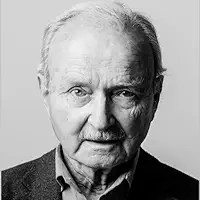
I am an independent European political observer. My background is MA Dutch law, Mba Insead Busness School, you know the one that was set up in France with the help of Harvard Business School in 1960; studied John Maynard Keynes, specialised legally in different forms of powerstructures in nations, have a basis in Maths and Phjysics, an experience as business consultant and in beween as legal adviser. I have been seriously married twice and have five wonderful children who warm the heart. I deeply love classical music, have house concerts at my home and try to play the piano.
 BookView Review
Leave a comment