Welcome to BookView Interview, a conversation series where BookView talks to authors.
Recently, we interviewed Terry Birdgenaw about his writing and recently released novel, Cyborg Contact (The Antunite Chronicles # 4), a charmingly unconventional cli-fi adventure that proves humanity sometimes needs an alien’s perspective to recognize what is worth saving (Read the review here.).
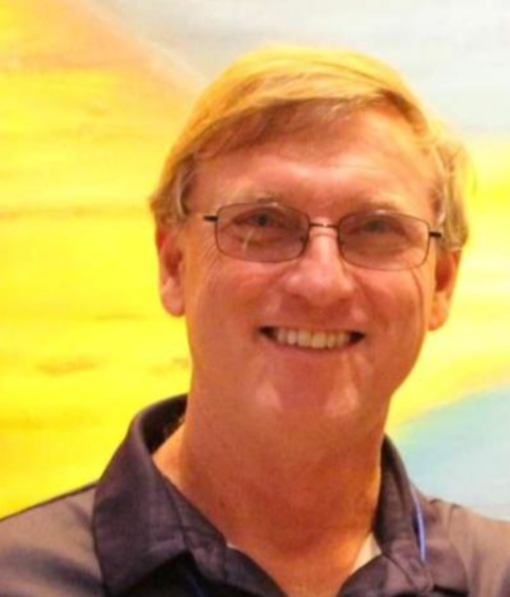
TERRY BIRDGENAW, an award-winning author of The Antunite Chronicles, is a Metis scientist of Oji-Cree and European heritage. Transitioning from a distinguished science career, Birdgenaw weaves authentic scientific research on nature and ecology into his narrative world-building. His fiction explores the intersection of social justice and climate issues, reflecting his indigenous roots through a lens of environmental stewardship and the sanctity of life. By blending the spirit of his ancestors with “hard” science, Birdgenaw creates a unique brand of science-based fiction that honors his heritage while addressing the urgent global challenges of today.
Visit Terry at:
1. The first three books of The Antunite Chronicles take place on the far-off planet Poo-ponic and its moon Bilaluna. What motivated you to continue the story on Earth?
The Antunite Chronicles series was intended to be only a trilogy, with Antuna’s Story, The Rise and Fall of Antocracy, and Antunites Unite. They were all published in 2022, and that was supposed to be the end of the story. Two things inspired me to write this much later installment. First, the political climate in the United States prompted me to write another political satire lampooning the current administration’s policies. Second, as a Metis author, I wanted to include a strong Indigenous main character in one of my novels. I had previously included quotes from Indigenous leaders and statements that reflected Indigenous lore, but since the stories took place on a planet and moon inhabited only by insects and insectoids, I could not include such a character. By bringing a cyborg insect from Bilaluna to Earth, my fourth book, Cyborg Contact, allowed me to achieve both these objectives.
2. Tell us about your Indigenous roots and how your Metis heritage affects your writing.
My Metis heritage was established when my fifth great-grandmother, Mistigoose, married a British fur trader employed by the Hudson’s Bay Company. My Indigenous roots were diluted as their Metis descendants married other British settlers, and eventually, my family became assimilated into European Canadian society, as they moved away from the Oji-Cree territory where Mistigoose lived. So, I see myself as Metis by heritage, yet I do not identify as Indigenous. Still, my family heritage instilled in me a strong ethical conviction that we need to be stewards of the environment, as my Indigenous forebearers were, and their descendants continue to be. So, my novel is not a traditional Indigenous story, but was inspired by the spirit of Indigenous traditional ecological knowledge.
3. So how does your story, which features a first contact with a cyborg insect from a galaxy billions of light-years away, bring in Indigenous traditional ecological knowledge?
My main character, Dee, is a cyborg ANT from Bilaluna, the moon of the planet Poo-ponic. Dee and other cyborg insects on Bilaluna were descendants of a small group of insectoids that fled Poo-ponic before its atmosphere collapsed in response to a climatic crisis. When he comes to Earth to warn humans of the catastrophic potential of ignoring climate change, he meets a young Blackfoot woman, who teaches him about Earth and Indigenous traditional ecological knowledge. Together, they must survive both political and environmental obstacles and calamities as they take a road trip across a fractured and climate-ravaged near-future North America.
4. In your novels, do you try more to be original or to deliver to readers what they want?
My stories are inspired by messages that I feel young readers need to hear today. They are dystopian in nature because these were the types of stories that spoke to me in my youth. I was inspired by the classic dystopian novels Animal Farm, Brave New World, and Nineteen Eighty-four, as well as the allegorical tale Watership Down. While my novels reflect my interest in these classics, I have tried to create modern twists and a degree of optimism that these stories lacked. My series includes tropes ranging from star-crossed friends, fish-out-of-water, road-trip adventure, and loss of innocence to femme-fatale revenge, environmental apocalypse, forbidden love triangle, shapeshifters in hiding, and cross-species romance. The present book is also original and provocative, as the main character is seen as a god by Earth insects but hunted as the ultimate illegal alien by ICE agents.
5. What kind of research do you do, and how long do you spend researching before beginning a book?
The plots for my books are inspired by current political events, which I absorb through my obsession with cable television news. Still, considerable research is required to flesh out the stories with accurate information on insect behavior and on geographical, ecological, and environmental facts. However, as a pantser (a writer who uses no outline and writes from the seat of his pants), I do little research before beginning a book. Almost all my research is done while writing, because I don’t know where my book is headed until I get there. For example, I researched the behaviour of many ant species to create individuals my main character interacts with, often ants with specific characteristics (like Saharan silver ants and bullet ants) that help the main character overcome a current obstacle. But I first needed to determine the obstacle before conducting the research to identify an ant species that might help with that problem. Also, I needed to research Blackfoot culture after deciding that my main character’s road trip would take him through Blackfoot territory.
6. What are common traps for aspiring writers?
Personally, it wasn’t until I discovered that I wrote best as a pantser that I realized how stifling it was to try to prepare an outline. Once I realized that I should just start writing with a very scant idea of where the book was headed, and let the story take me along, writer’s block was no longer an issue. That, combined with a strategy of using what I call green-light mode or don’t stop writing to edit before you finish a scene, allows me to write very quickly and creatively. I joke with my wife about how, for me, foreshadowing is something that usually comes subconsciously, and I may not even realize I’ve done it until it becomes obvious later while I’m editing. So aspiring writers should not obsess about plotting out the whole book or even the whole chapter before getting started. Give your characters the chance to tell you where they want their stories to go. This may not be the right advice for every writer, but if I didn’t follow it, I don’t think I’d have finished a single book, and now I’ve finished four.
7. Do you read your book reviews? Do they please you or annoy you? Do you think you can learn a lot from reading criticism about your work?
Yes, I read my book reviews religiously. I do so because I want to know whether the messages I have tried to convey are getting across to my readers. Largely, they are, and most reviewers have been extremely positive. Still, I have learned a lot from reading constructive criticism of my work. I have been particularly struck by the diligence and insights exhibited by editors and beta readers of the early drafts of my work. I find constructive criticism gives me direction and opens new avenues for my creativity. Many authors complain about having to make edits after receiving reader feedback on their early drafts. Personally, I am invigorated by most of the comments I receive and find that my stories take off creatively as I attempt to address their points. In this book, I thought I was finished until some final insightful comments from an Indigenous sensitivity reader inspired me to add wonderful elements that helped me complete the story. Is it too corny to say that critical insights from others complete me as a writer? Of course, that includes my author wife, Ann Birdgenaw, who is my muse and my most cherished critic.
***


Leave a comment