Welcome to BookView Interview, a conversation series where BookView talks to authors.
Recently, we interviewed HL Bernabe about her writing and recently released book, Cooking Up Magick: The Dell Chronicles Book One, a warmhearted, imaginative, and brimming with adventure (Read the review here).
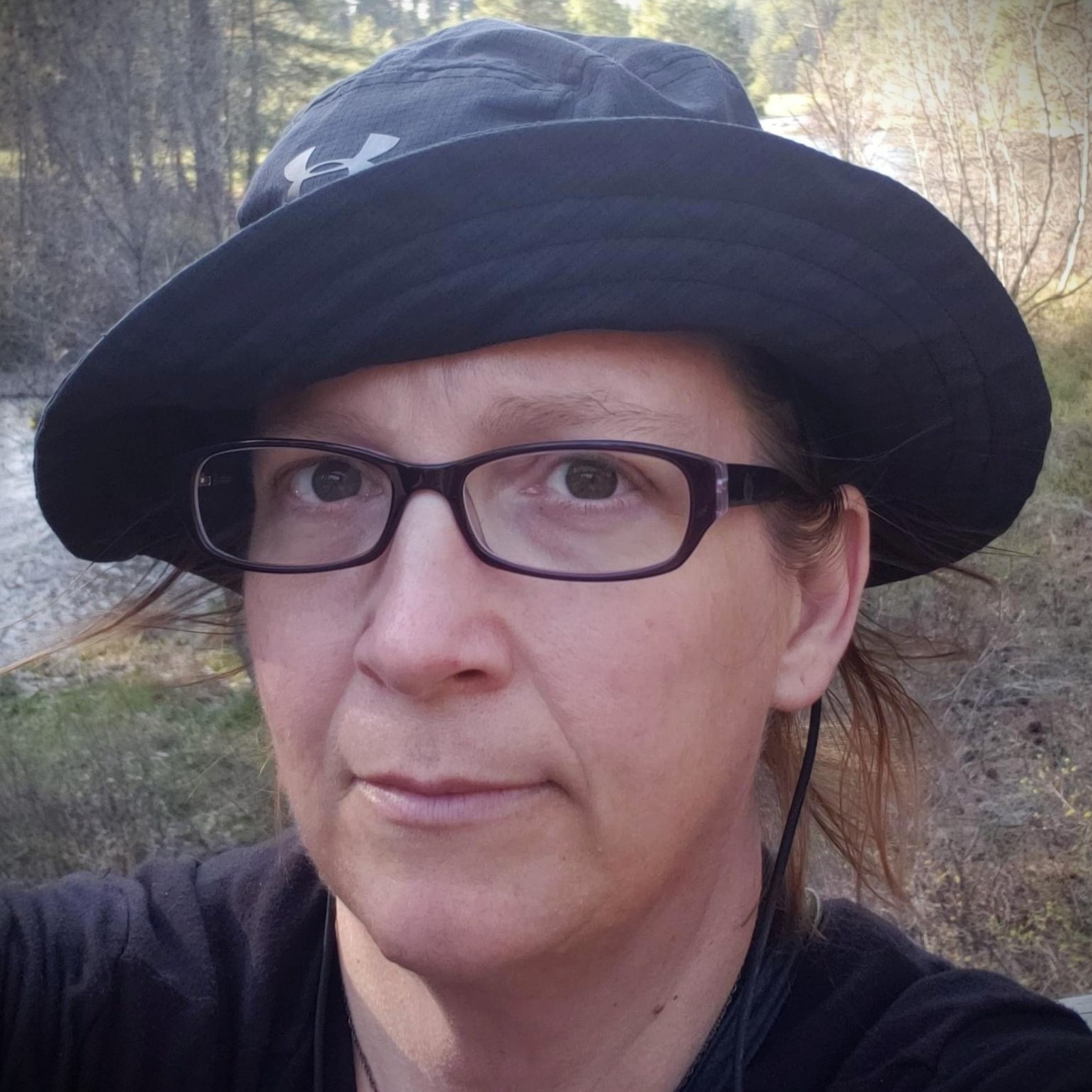
HL Bernabe loves storytelling. The first story she ever wrote was when she was seven years old. ‘Twas a tale of horror and woe; a nine foot tall stick of celery followed her home and tried to eat her.
That love of storytelling led her to a filmmaking degree with an emphasis on screenwriting. And she has been GM-ing tabletop RPGs for over 20 years.
When the pandemic forced everyone to quarantine, she took advantage of all the extra time she had and put it toward writing. Over the course of 16 months, HL wrote three books in the fantasy epic The Dell Chronicles. Currently, she lives and works in Central Oregon and is learning the book publishing biz while she finishes her series.
Q. Paisley begins her journey with a relatively simple dream: to experience other cultures through their food. What inspired you to make a chef the heroine of a fantasy adventure?
A. The Hobbit and D&D. I loved the idea of halflings always being into food. I mean, who wouldn’t want to be invited to a meal in a hobbit home? So, I wanted to play a halfling chef in a D&D campaign who suddenly develops magick and starts popping and fizzing with it and doesn’t know what to do. Then the pandemic happened, and I never got to play my character idea. Paisley really wanted to be in the world, so I had to write the series for her.
Q. Cooking is more than Paisley’s profession; it shapes how she understands people and even how she learns to use magick. How did you develop that connection between food and magic?
A. Who doesn’t have a favorite comfort food that a mom or grandma makes? When we get to eat those after a long absence, it feels like an expression of love. It’s home. It’s magick.
I thought it would be interesting to see what would happen if love really was magick and could be added to food. In addition, what would happen if cooking was part of my chef’s magick ability? How would that work? Because Paisley doesn’t know how to use her magick, she’s making everything as she goes. She doesn’t know how to meditate in the “traditional” sense, but recognizes that she gets the same sort of benefit from being in the kitchen. So she thinks in terms of cooking in order to organize her abilities.
Q. Paisley is warmhearted and compassionate, but she can also be stubborn, impulsive, and surprisingly fierce. What qualities were most important to you when creating her?
A. I wanted a character who was kind to everyone, no matter who they were or their race. She feels a moral obligation to be kind and helpful. But it’s not just an obligation to her. It is right and proper to be kind, but it is also less painful to be in a state of love. By not harboring hate, she has more space in her heart for friendship and new experiences.
However, I also didn’t want her to be a pushover. Paisley understands the difference between helping someone who needs and appreciates the help and helping someone who is only taking advantage. I also wanted her to be a doer. Someone not afraid of hard things—or rather, she may be afraid, but she does them anyway, because they need to be done.
Q. The story gradually expands from a culinary journey into a much larger conflict involving war, politics, and powerful magick. How did you approach balancing the book’s cozy, humorous elements with its darker moments?
A. It was hard! When I wrote the first draft five years ago, I had never heard of cozy fantasy. All I knew was that I wanted my characters to feel like they were family. While Paisley gets embroiled in this story that is so much bigger than her, she still works on her personal quest. She went to Garastrade to learn dwarven cuisine. She does. I think by focusing on the small and personal, even when the stakes are still so large, it still feels very cozy.
Q. Whipclaw is one of the novel’s most memorable personalities. Where did the idea for a talking, magically gifted cat with such a strong attitude come from?
A. D&D. I played a rogue Tabaxi housecat variant in a game that a friend was running. Whipclaw was a total bad**s and kept saving everyone’s bacon. I got the most ungodly lucky rolls that campaign. Because of that, I would say she got a big head, but honestly, she kept delivering, so it’s not like she didn’t have a reason to have a ‘tude. I loved that character so much that I turned her into a familiar for Paisley.
Q. Gunur challenges many of the assumptions other characters have about orcs. What interested you about exploring prejudice and cultural differences through his character?
A. My children have mixed racial and cultural heritage. They have been incredibly fortunate in that they haven’t experienced too much harassment. But that doesn’t mean it won’t happen more in the future, especially in this political climate. It also isn’t the reality for many mixed-race children in our country currently.
I wanted Paisley to show the behavior I would like to see. She doesn’t see an orc in front of her. She sees an individual. A person. She doesn’t let him being an orc affect her belief that everyone deserves kindness, love, and compassion. Gunur’s reaction to that reflects the depth of pain he has felt being discriminated against for so long.
Q. Paisley and Gunur’s relationship develops alongside the larger adventure. What did you want their romance to contribute to Paisley’s personal journey?
A. Paisley is a halfling in a much larger world. If she goes around using magick to get herself out of scrapes, the sorcerer villain will find her. She needs a much larger companion to keep danger away. Originally, I hadn’t even thought of them having a romance. Just that he would follow her out of a sense of duty because he owed her his life, and they would become close friends. When I was pitching my idea to my youngest kiddo, they said, “Mom! You should totally have them fall in love.” I protested because of their size and cultural differences, and then the lightbulb went off over my head. Differences can cause tension and story opportunities. So… yeah. Did I mention my kiddo is brilliant?
Q. The novel brings together halflings, dwarves, orcs, elves, humans, and other creatures, each with distinct histories and cultures. Which part of Erdea was the most enjoyable or challenging to build?
A. Not so much the individual cultures , since they all have elements that are familiar to one culture or another here in our world. The hardest part was the geography and trying to figure out travel time. I swear I was doing algebra.
As for challenging characters, villains can be tough to write. You don’t want them to be one-dimensional cardboard cutouts. The best villains that leave an impression are funny, charming, have a lot of baggage, and think they are the heroes or sometimes the victims in their own stories.
For Noraldrin, I thought it would be fun to explore what it would be like to find himself in a time five centuries in the future. He has to do these things for his master, and the culture is different, the landscape is different; the language is different. He finds it very annoying.
Q. Paisley repeatedly insists that she is not particularly brave, even as she throws herself into dangerous situations to protect others. What does courage mean to you, and how does Paisley embody your idea of it?
A. If you ask Medal of Honor recipients if they are brave, I think most would probably say they weren’t brave, but were doing what needed to be done in a critical situation. That is my definition of courage. That’s what Paisley does.
Q. The book has an expansive ensemble cast. Did any supporting character develop in an unexpected direction or become more important than you originally planned?
A. Yes! Rex, in particular. My beta readers got ticked off that he was left behind. I had to figure out a way to write him back in, and in the end, it made the book better. I won’t say more because I don’t want to give spoilers.
Q. Cooking Up Magick is the first book in The Dell Chronicles. How much of Paisley’s larger journey and the history of Erdea did you map out before writing this installment?
A. My degree is in film, emphasis screenwriting. Originally, I wrote this as a television series. It just didn’t get into the meat of it enough for me. I wanted more detail. I wanted to get into their heads. So I wrote three novels in 16 months. I used my scripts as an outline. I’ve done so many drafts since then, and came up with so much more lore as I was going, because questions kept popping up. Why is X like Y? Who is so-and-so, and why does it matter? These things enriched the book as I delved more deeply into the world and the characters.
Q. If you could sit down at Paisley’s table and have her prepare one dish from the world of Cooking Up Magick for you, what would you choose, and why?
A. Oh, that’s a toughie. I think I would want to try her walleck. I have no idea what’s in it, other than star anise from Alzneck. Most of the rest of her recipes she’s done so far have been inspired by Southeast Asian, Indian, and German cuisine. I love those, and could tell you what’s in them. But her walleck is decidedly halfling.
Q. What first inspired you to become a writer, and when did you realize storytelling was something you wanted to pursue seriously?
A. I’ve always enjoyed storytelling. I wrote my first story at seven years old. I wrote a few short stories over the years and was the game master for TTRPGs for a couple of decades. That helped me grow as a storyteller, because often I would start a new campaign with my husband with ZERO prep and had to pull a story out of the air impromptu style. It was so much fun.
After my husband passed away, it took me a while to want to play again. I just find a group, and then the pandemic happened, so no more group. I really wanted and needed to do something creative as an outlet for my grief. So I wrote the series. It was very cathartic.
But then, I had so much fun writing this, I have since written the prequel, an unrelated novel is waiting for me to edit it, and I’m working on another couple of novels as well. I’ve been bitten by the bug. I don’t think I’ll ever want to stop. It feels so satisfying to finish a book.
Q.How would you describe your writing process, from the first spark of an idea to a finished manuscript?
A. Something will trigger an idea for a world or situation. Then I think, who is this affecting? It always starts with the characters. I am very much a character-driven writer. Once I have characters I like and have come up with interesting backstories, I wonder how they are related to the interesting idea that I came up with.
I’m a plantser. I outline and plot my story, and beat out the scenes. Then, usually, my characters go charging off in different directions, and I’m left madly trying to keep up with them, as well as trying to figure out how to change my outline.
Q. What is the most challenging part of writing a novel for you, and how do you work through it?
A. Editing. I love writing stories. The revision process isn’t as fun. Trying to figure out what to cut and what to add, and what to strengthen or rearrange… That whole saying, “Kill your darlings.” Ugh. I had to kill a few. I hate that. But I enjoy reading over my edited passages and realizing that they actually read so much better now. Sometimes I’ll look at it in amazement and be thinking, “I can’t believe I wrote that.” That reward makes the struggle worthwhile.
Q. Which authors or books have had the greatest influence on your writing and storytelling style?
A. Terry Pratchett’s Discworld series. I love Pratchett’s work. So funny, and I love the characters. Pratchett does such an incredible job of pointing out the ludicrous, mean, and asinine without it feeling like he’s lecturing people on how to be decent people. It’s my hope that I can do the same.
Q. What do you hope readers take away from your work, and what would you most like them to feel after finishing one of your books?
A. I want them to understand that kindness is a strength, not a weakness. Empathy helps build stronger communities. In my book, Idari is an elf woman over a thousand years old. She has seen much pain in her life and has every reason to be jaded and bitter. Instead, Paisley recruits her help. Idari says, “Paisley, I am not enjoying myself right now, but I find your selfless enthusiasm for helping people a refreshing thing. That is why I am helping you.”
It only takes one person to be like Paisley for other people to follow suit. In real life, most people are bystanders until they see one person be brave. Then others will jump in. So one person can make a difference. I’m hoping that after reading my book, more people will be the first person to take action. Save the cat. Feed the homeless. Help your neighbor. Bring back kindness and community.


Leave a comment