Welcome to BookView Interview, a conversation series where BookView talks to authors.
Recently, we interviewed Ron Schultz about his writing and recently released book, All There Is to Know, an eccentric, darkly comic portrait of a man caught between counterculture idealism and the machinery of American public life (Read the review here).
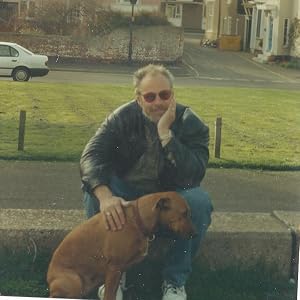
Ron Schultz has written, co-written and edited 25 published books on social innovation, meditation, emergence, science, and entrepreneurship.
Among his books are: Creating Good Work – The World’s Leading Social Entrepreneurs Show How to Build a Healthy Economy (Palgrave Macmillan, 2013); The Complex Buddhist – Doing Good in a Challenging World, (Emergent Publications 2015); Open Boundaries: Creating Business Innovation through Complexity, (Perseus Books, 1998) and Unconventional Wisdom – Twelve Remarkable Innovators Tell How Intuition Can Revolutionize Decision Making (HarperCollins, 1994).
Jake spends much of the novel searching for “Something Other.” What inspired you to build the story around his lifelong need for answers?
That lifelong need, as one might imagine, is one I shared. It was why nearly 35 years ago I became a practicing Buddhist. There is no “something other” in Buddhism and if there is it doesn’t make a difference.
Art becomes much more than a profession for Jake—it is closely connected to freedom, imagination, and resistance. What did you want the novel to say about the power of art?
It’s a power that terrifies those who build walls and fences to keep uncertainty out. Art expresses our boundless ability to imagine something other.
Jake and Richard have a complicated friendship built around ideas, questioning, and very different emotional struggles. How did their relationship develop as you wrote the novel?
I knew this relationship, because in some ways, they were two sides of the same person. Jake and Richard would probably agree with that. But then they would also be wrong. Richard pushed Jake with his totally other life experience and Jake was eager to be pushed. Their relationship comprised what real friends are supposed to be, unconditionally supportive and willing to dive into the deep end if that’s what’s required.
The novel mixes serious philosophical questions with sex, drugs, absurd situations, and dark humor. How did you find the right balance between comedy and the book’s more serious concerns?
I am inherently a silly person. When something starts getting too heavy, I usually break that tension by saying something funny. My characters aren’t too far removed.
Jake moves from a countercultural artistic world into political life. What interested you most about placing a character like him inside the machinery of American politics?
I have always been fascinated by politics. I spent two years working with former California Governor, Jerry Brown, and two years before that writing for the California Confederation of the Arts, at the time the leading arts lobbying organization in California. It was undoubtedly within those experiences I first witnessed the collision between art and power.
Coincidences and unusual encounters often leave Jake wondering whether something larger is at work. How important was it to keep those moments open to different interpretations?
Essential, because I wanted Jake’s search to be constantly missing what was right in front of him.
The novel explores the tension between freedom and control on both personal and social levels. Was that connection present from the beginning, or did it emerge while you were writing?
It has always been there for me. It was part of my upbringing.
What first inspired you to become a writer, and when did you begin taking writing seriously?
There’s a story I like telling about sitting in a coffee shop I frequented in Santa Fe, NM and the late Nobel Physicist, Murray Gell-Mann, who I had known for years was also known to show up. One day he walked in with his twelve-year-old adopted son, whose mother was a poet. Murray saw me across the room, and he placed his arm around the young boys shoulder and pointed at me, saying in a whisper that echoed through-out the establishment, “That’s what happens when both your parents are poets.”
Since my parents were that, there was no denying the path in front of me.
How would you describe your writing process, from the first idea to the finished manuscript?
I start slowly and then once I’ve gotten into it, I become totally directed. I would liken my writing style to that of a being 200-yard sprinter, I write fast, but usually not for long.
Do you plan your novels carefully before writing, or do you prefer to discover the story as you go?
Yes. I plan the book and then discover the story as it unfolds.
Which part of writing comes most naturally to you, and which part do you find the most challenging?
As a talker, dialogue has always been natural. Description is not all that challenging, but I prefer people talking, because that’s where relationships, for me, develop.
Are there particular authors or books that have influenced your writing style or approach to storytelling?
Three in particular: Tom Robbins, Jim Harrison and Gabriel Garcia Marquez. Robbins for his willingness to be out there with a brilliant outrageousness. Jim Harrison, because of the way he writes women. And Marguez for his mastery and his use of magical realism, which he claims that there was nothing magical about it.
What advice would you give to aspiring writers who are struggling to finish their first book?
My dear friend and co-author, Sarah Lovett’s partner John, had her print out three letters, which I have done like wise. Putting them on the wall in front of me. They are FTB. Simply, Finish the Book.
Without giving away the ending, what do you hope readers will still be thinking about after they finish All There Is to Know?
That censoring creativity should be the crime, not the art being produced.
***


Leave a comment