Welcome to BookView Interview, a conversation series where BookView talks to authors.
Recently, we interviewed Pedro Israel Orta about his writing and recently released book, The Broken Whistle: A Deep State Run Amok — Memoir of a CIA Whistleblower, a document-rich, intensely personal reckoning with secrecy, power, and the battle to put one’s story on the record (Read the review here.).
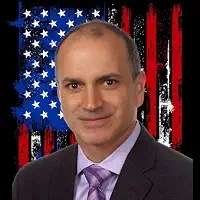
Pedro Israel Orta is a Miami-born son of Cuban immigrants who fled the tyranny of Fidel Castro’s communism. He brings his 18-year experience as a Central Intelligence Agency veteran to this memoir, having served in war-torn regions like Iraq, Afghanistan, and the Middle East, and at the Inspector General for the Intelligence Community, working on whistleblower issues. Orta’s bravery in exposing abuses of power led to his retribution and termination despite earning eight Exceptional Performance Awards for his contributions to U.S. national security—mostly in counterterrorism operations.
He holds a Bachelor’s degree in Political Science from Florida International University, a Summa Cum Laude graduate, and a Master’s degree in Security Policy Studies from George Washington University—specializing in Defense Policy, Transnational Security Issues, and Political Psychology.
Prior to his U.S. Government experiences, Orta served in the U.S. Army with an honorable discharge and worked in the business world for 14 years as a professional salesperson, account manager, territory manager, and buyer—mostly in perishable commodity sales. Earning numerous accolades for his professionalism, performance, and customer service.
He has been a licensed Christian minister since 1991 with the Evangelical Church Alliance out of Bradley, Illinois, and an ordained minister since 2021 with the Orlando, Florida-based Christ for All Nations. when he completed the Evangelism Bootcamp program. In May 2023, Orta earned a diploma from Rhema Bible Training College in Tulsa, Oklahoma.
Orta’s passions include Astronomy and photography, with an award-winning landscape, travel, and nature portfolio featured at Viewbug and 500px under the name IsraelOrta.
He calls Tulsa, Oklahoma, home, dedicating his time to writing, speaking, ministry, and photography—advocating for integrity, honor, and respect in government and society. You can write to him on his website with a url under his full name.
After eighteen and half years with the CIA, what ultimately convinced you that you needed to tell your story publicly?
After eighteen and a half years with the CIA, I did not leave eager to tell secrets or attack the institution. I spent years trying to work through the channels the government itself created for reporting wrongdoing and retaliation.
What ultimately convinced me to tell the story publicly was realizing that those mechanisms had failed, that the documentary record was too important to be lost in a bureaucracy, and that silence would only protect the system that had failed me.
But the Prologue and Epilogue capture an even larger point. Our constitutional republic is far more fragile than many people realize. It depends on robust oversight, accountable institutions, and citizens who remain informed and engaged in government rather than assuming someone else will safeguard it for them.
At some point, the question became very simple: if I had the evidence, the experience, and the ability to explain what happened, and still chose to remain silent, then what was the point of blowing the whistle in the first place?
The Broken Whistle became my way of bringing the record to the public, not simply to tell my story but to remind readers that self-government requires vigilance, accountability, and people willing to act when institutions fail.
The title The Broken Whistle is a powerful metaphor. What does the “broken whistle” represent to you personally?
A painful memory and an enduring lesson about the perils of whistleblowing within the Central Intelligence Agency and the Intelligence Community. Frankly, calling the whistle “broken” may be too kind. My documented experience depicts a hostile bureaucracy capable of turning aggressively against those who challenge it. But I needed a title that captured the narrative simply and powerfully. The Broken Whistle does that.
You spent much of your career serving an institution you later challenged. How did you reconcile your loyalty to the CIA with your decision to speak out?
Every government employee takes an oath to uphold the Constitution and the laws of the United States. My ultimate loyalty was never to an agency or bureaucracy; it was to the United States of America and our constitutional republic.
CIA officers are required by law, executive orders, federal regulations, and agency policies to report conduct they reasonably believe evidences violations of law or abuses of authority. From my perspective, reporting wrongdoing was not an act of disloyalty. Failing to report it would have been.
Having worked with whistleblower issues before becoming a whistleblower yourself, what surprised you most when you experienced the process from the other side?
The extraordinary gap between rhetoric and action.
Many people publicly demand good governance, accountability, and protection for whistleblowers. But when I needed those principles applied to an actual case, many of those voices disappeared.
Begin with Mike Pompeo, who, as a congressman, sharply rebuked senior Central Command leadership in the wake of whistleblower allegations. Yet when it was his turn to act on my case as Director of the CIA, he washed his hands like Pontius Pilate and handed me back to the CIA bureaucracy to crucify me.
The same can be said of Senator Marco Rubio, who at the time served on the Senate Select Committee on Intelligence. When presented with my case, he too washed his hands and punted, refusing to act on my behalf.
My efforts extended to officials and institutions associated with DNI Daniel Coats, PDDNI Sue Gordon, CIGIE Chairman Michael Horowitz, ICIG Michael Atkinson, and members of the White House Faith Office.
That was the lesson that surprised me most: institutions can contain an enormous number of watchdogs, oversight mechanisms, and people speaking the language of accountability—and still leave a whistleblower standing virtually alone. Too many watchdogs seemed to have plenty of bark but very little bite.
Your book contains extensive documentation, correspondence, policies, and timelines. Why was creating such a detailed record important to you?
Because blowing the whistle and alleging retaliation require evidence.
That means creating a detailed evidentiary trail showing who knew what, who did what, and when events occurred. At its core, The Broken Whistle is not merely a memoir. It is also a documented case history of what happened to one CIA officer after he reported what he believed to be wrongdoing and subsequently alleged retaliation.
I could have written a much shorter book simply alleging that I had been retaliated against. But allegations without supporting evidence would have little value. The documents, correspondence, policies, chronology, and contemporaneous records are what allow readers to examine the case for themselves.
You write about assignments in Iraq, Afghanistan, the Middle East, and at CIA headquarters. Which experiences most changed the way you understood leadership and accountability?
Baghdad Station, from July 2004 through August 2006, provided some of the most important leadership lessons of my CIA career.
During that period, I worked for three chiefs of station, four deputy chiefs of station, three chiefs of operations, and approximately two dozen other GS-15 and senior executive officers. It was essentially a who’s-who of officers who would later occupy very senior positions at CIA headquarters.
They were capable, astute, wise, demanding, and fair. Most importantly, they understood how to exercise authority while putting people ahead of bureaucracy.
We had personality clashes. We disagreed. We sometimes preferred completely different ways of accomplishing the mission. Yet Baghdad remained a well-oiled machine because professional disagreements did not become petty personal vendettas.
Those leaders understood something simple: right was right and wrong was wrong. They knew how to lead with integrity, particularly when circumstances were difficult.
You contrast your own whistleblower experience with the handling of the 2019 Ukraine whistleblower complaint. What did that episode reveal to you about the system?
To me, it exposed a profound inconsistency in how whistleblower cases can be handled.
My experience involved allegations concerning internal Intelligence Community conduct and retaliation, and I encountered years of delay, jurisdictional obstacles, referrals, and institutional resistance.
Then I watched the machinery of government respond extraordinarily quickly and visibly to the 2019 Ukraine whistleblower complaint involving the president of the United States.
Whatever one’s political position on that case, the contrast was impossible for me to ignore. It reinforced my belief that whistleblower protections can operate very differently depending upon the institution involved, the allegation being made, and the political significance of the complaint.
At what point did you realize that your disagreements with the agency were no longer simply professional disputes but something that could permanently alter your career?
Chapter 18: “The Pit of Hell, CIA Headquarters.”
I open it with Shakespeare: “Hell is empty and all the devils are here.”
I had done what I was instructed to do, yet I encountered roadblock after roadblock. I had no meaningful follow-on assignment comparable to the operational work I had previously performed, and eventually I found myself effectively exiled to the Office of the Inspector General of the Intelligence Community.
That was when I understood that what had begun as disagreements over management and accountability had become something capable of permanently altering my career.
Writing about intelligence work involves obvious restrictions surrounding classified information. How did those limitations shape what you could—and could not—tell readers in this book?
The restrictions actually helped shape the book’s narrative style.
Because I could not always identify people, places, or operational details directly, I had to find other ways to convey character, atmosphere, and institutional dynamics.
Throughout Chapters Seven through Twelve, for example, I use allusive and symbolic pseudonyms as a form of narrative shorthand. Names such as Potemkin Station, Napoleon, and Moe, Larry, and Curly carry historical and cultural associations that deepen characterization while also driving home the underlying institutional critique.
The challenge was to protect what needed to remain protected without stripping the story of its personality, meaning, or institutional context.
After everything you experienced, what changes do you believe are most necessary to ensure that Intelligence Community employees can raise serious concerns without fearing retaliation?
Several reforms are necessary.
First, there must be meaningful accountability for proven past reprisals. Without accountability, new policies and promises will have little credibility.
Second, I believe responsibility for investigating Intelligence Community whistleblower-retaliation allegations should be transferred away from the agencies and inspectors general whose institutions may themselves be implicated. An independent entity such as the Office of Special Counsel offers one possible model.
Third, Intelligence Community whistleblowers should have meaningful access to judicial review, including the ability to pursue compensatory damages and, where legally appropriate, punitive remedies.
Ironically, stronger external remedies could encourage these secretive agencies to resolve legitimate internal problems earlier. When institutional failure carries real consequences, institutions have a powerful incentive to correct problems before they escalate.
What was the most challenging part of turning your real-life experiences into a compelling narrative?
The people who abandoned the project.
Individuals were paid at different stages to help write, publish, promote, or advertise the story. Some eventually withdrew or refused to continue because they became uncomfortable with the material.
That created enormous difficulties. At times, it felt less like ordinary professional disagreement and more like an effort to stop the project from reaching completion.
The challenge became not merely writing the story, but ensuring that the story survived long enough to be published.
How did you decide what to include in the book and what to leave out?
Everything had to connect.
If a story could not be tied to an event, allegation, character issue, or theme that became important later in the book, I cut it.
For example, Chapter Three discusses my earlier professional experience in Miami and establishes my ability to communicate and function effectively in demanding professional environments. Later, Chapter Fifteen includes an episode in a Turkish carpet shop demonstrating my ability to think clearly and operate despite extreme sleep deprivation.
Those episodes become relevant because later personnel allegations questioned my mental health, personality, and communication abilities.
That is how the book was constructed. If an episode survived the editing process, it was there because it connected to the larger narrative. Very little exists simply as autobiography for autobiography’s sake.
How did you balance personal memories with documents, records, and research while writing the book?
I essentially sequestered myself in a private coworking office and mentally walked back through my life from beginning to end.
The memories began flowing almost like opening a water tap.
But memory alone was never enough. I repeatedly checked those memories against journals, logs, emails, correspondence, documents, and my personal archives. Wherever possible, I wanted the contemporaneous record to anchor the recollection.
The goal was not simply to remember. It was to reconstruct events as accurately as I possibly could.
Did the process of writing The Broken Whistle change the way you understood or remembered any of the events you experienced?
It forced me to confront what I consider one of my greatest misjudgments.
I believed that people who publicly demanded good governance, integrity, and accountability would step forward when presented with a documented case requiring those principles to be defended.
I was wrong.
Writing the book forced me to distinguish between rhetoric and action. I came to believe that some of the loudest political rhetoric about corruption and accountability ultimately generates outrage, attention, influence, and even profit without necessarily producing courageous action when an individual actually needs help.
That realization is captured in the Epilogue by the line attributed to Winston Churchill: “The malice of the wicked was reinforced by the weakness of the virtuous.”
Who did you imagine as your ideal reader while you were writing, and what did you most want that reader to take away from the book?
My ideal reader is someone who believes that talking about injustice is the same thing as confronting it.
We live in an age of extraordinary political activism, commentary, conferences, podcasts, speeches, social-media posts, and public outrage. But gathering together and talking about courage is very different from exercising courage when doing so has a cost.
That is why the Epilogue ultimately asks a much more personal question: Who will speak for you when you are the one standing alone?
And then comes the challenge:
“Arise, speak up, and act.”
That is what I want readers to carry away from the book.
Now that The Broken Whistle is complete, are there other stories or subjects you would like to explore in a future book?
In many respects, the sequel to The Broken Whistle became the documentary feature Deep State Gangsters.
I served as executive producer and brought together three additional whistleblowers so viewers would not have to evaluate my experience in isolation. They could hear from other people who had confronted powerful government institutions and draw their own conclusions about whether these cases represented isolated events or something more systemic.
For me, the central issue remains unresolved. The whistle is still broken, and substantial work remains to repair it.
But meaningful reform will be extraordinarily difficult if people celebrate whistleblowers in principle while abandoning them in practice.
***


Leave a comment